
Richard S. Booth: Confronting Climate Change — Lessons From the Adirondacks
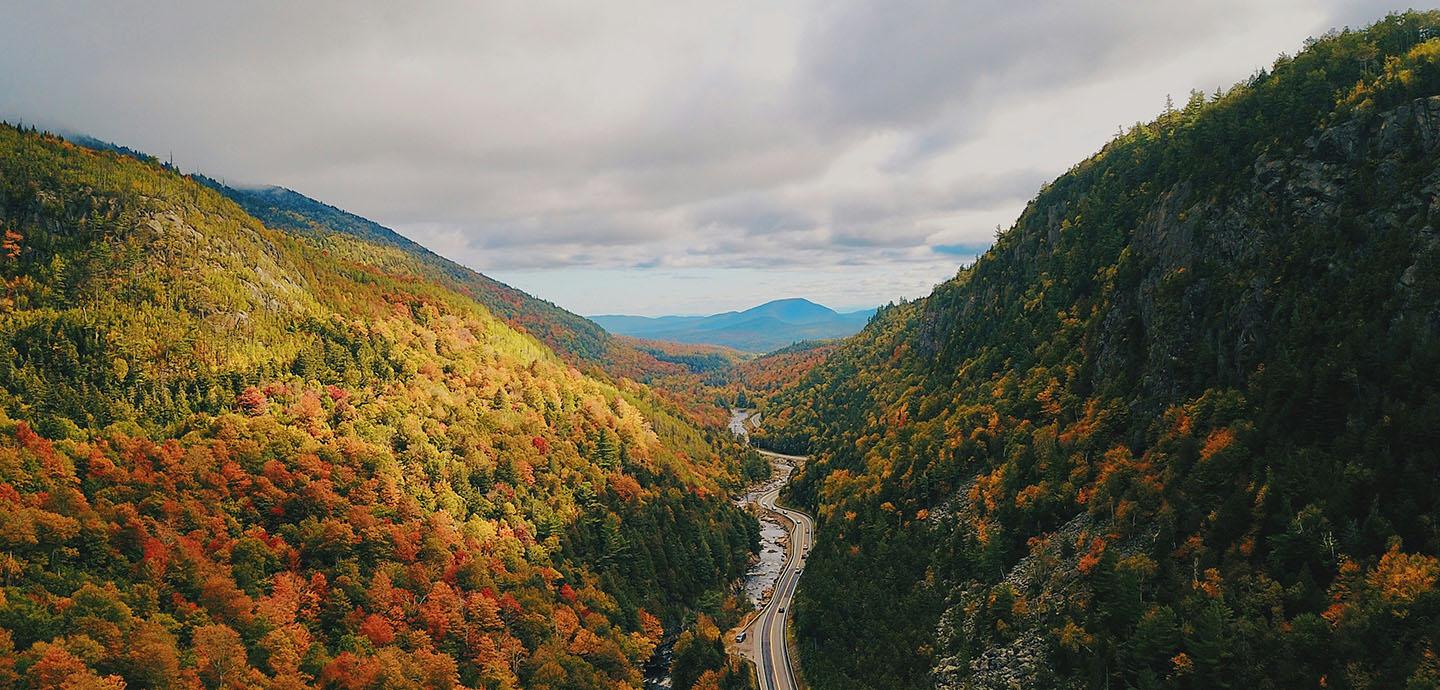
image / Jordan Finnerty on Unsplash
Abstract
Implementing carefully designed controls on land use activities can reduce the emission of atmospheric gases that are affecting the globe's climate and moderate the effects of climate change on our communities. Local governments make most land use decisions in the United States. Consequently, it is very difficult to effect large-scale change in how we manage land. A state government's implementation of land use controls across large regions may significantly help limit land use choices that exacerbate this crisis.
New York State's (NYS) efforts over the past half-century (and more) to protect land resources in its six-million-acre Adirondack Park offer important lessons for confronting the climate change crisis. The Adirondack Park is unique. NYS owns almost half of it, while the remainder is nearly all privately owned, and the Park's huge, rugged landscape encompasses numerous small communities.
Three sets of Adirondack lessons relative to climate change are important. The first two flow from NYS's institutional choices regarding the Park's management and the environmental protection mechanisms the state has created to protect the Park's resources. These more specific lessons generate a series of overarching lessons about managing land resources across a large region.
Biography
Richard Booth has mixed his responsibilities as a professor with substantial periods of public service. For example, from November 2007 through June 2016, he served as a member of the New York State Adirondack Park Agency, pursuant to appointments by three governors. He was elected to two four-year terms on the Tompkins County Legislature and served there from 2002 to late 2007 when he resigned to take his seat on the Adirondack Park Agency.
Pursuant to an appointment by a fourth governor, he also served from 1991 to 1995 as a member of the New York State Low-Level Radioactive Waste Siting Commission. In addition, he was elected three times to the City of Ithaca's Common Council (two four-year terms and one two-year term). His 10 years of service (1986–96) on the Common Council included six years as chair of the City's Budget and Administration Committee.
He worked in the public sector before joining the Cornell faculty in 1977. From 1975 to 1977, he was a lawyer for the New York State Department of Environmental Conservation, rising to the position of assistant counsel dealing with land use affairs. Prior to that, he was a senior attorney with the New York State Adirondack Park Agency.
He received a J.D. from George Washington University Law School in 1972 and a B.A. from Amherst College in 1968.