Erin Benay: Sharing the Same Park Bench — Art as Urban Development in the Rust Belt
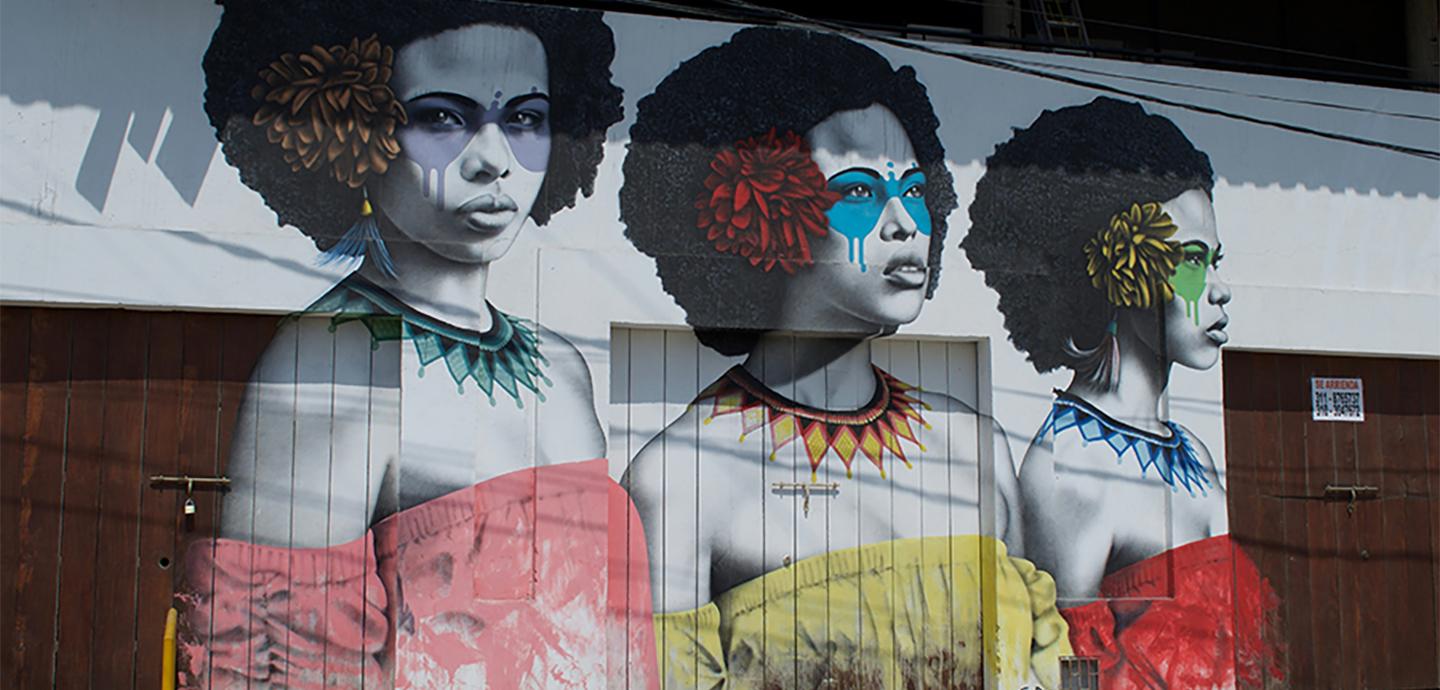
image / DJ Johnson on Unsplash
Abstract
Since antiquity, walls have been sites for decoration, for mobilizing political action, and for coalescing community. More recently, murals (and other forms of public art) have become integral to the urban process of gentrification in major cities, offering pleasant decorative filler in spaces that were formerly seen as 'abandoned.' How do these sites animate local histories, erase or create collective memory, and ignite change? Further, how can current mural campaigns engage with the rich history of representation and dissent that is intrinsic to the medium itself?
During the spring of 2020, students and faculty at Case Western Reserve University in Cleveland, OH, partnered with the urban planning and public art non-profit LAND Studio to pursue these questions. Working collaboratively, we generated a strategic plan for the Inter|Urban mural project. This initiative pairs recipients of the esteemed Anisfield-Wolf book award with internationally recognized artists to produce murals that engage issues of social justice and racial equity.
The case study discussed in this talk emerged from a collaborative, community-partnered course and quickly blossomed into a larger Public Humanities project and app. At its core, my work explores what happens when we take up the "gritty spadework of community activism" in the university setting. Weaving together history, theory, and practice, I ask us to consider what art (and the humanities writ large) can do for society.
Biography
Erin Benay is Associate Professor of Art History at Case Western Reserve University. Her research and teaching address global early modernisms and community and socially-engaged art historical practices. Prof. Benay has written three books and numerous articles on a range of topics — from early modern intersections between Italy and India, to Black printmakers in midcentury America. She is also dedicated to the cultivation of public humanities initiatives in Cleveland and works closely with area non-profits to incorporate art history into community-engaged practice. In 2023, she was named the Distinguished Scholar in Public Humanities, recognizing her community-engaged work at the intersection of Public Humanities & Art History.