The College of Architecture, Art, and Planning’s Gensler Family AAP NYC Center (AAP NYC) is settling into its new location on the fourth floor of the Tata Innovation Center on Roosevelt Island. With expanded New York City-based options, increased student interest, and AAP’s ongoing commitment to immersive, multi-disciplinary learning and research, AAP NYC now has a permanent home offering 16,000 square feet of customized yet adaptable space for curricular and co-curricular activities. In celebration of this milestone, beginning this fall, architect Peter Eisenman (B.Arch. ’55) and critic Cynthia Davidson will host Island Editions, a curated series of conversations with some of the architecture discipline’s leading practitioners at the center.
Iterating and Evolving
The establishment of robust New York City-based programming as a hallmark of the AAP student experience over the last two decades has largely been due to the commitment of the AAP community, which has consistently invested in the city’s unique experiential learning and professional development opportunities. The center was founded in 2006 by then AAP Dean Moshen Mostafavi in collaboration with late alumnus Art Gensler (B.Arch. ’58), and expanded incrementally through an ongoing partnership between Gensler and AAP Dean Kent Kleinman (2008–18). During AAP Gale and Ira Drukier Dean J. Meejin Yoon’s current tenure, AAP NYC’s future was further solidified with a $10 million gift and ongoing support from the Gensler family.
“The program has been around for nearly two decades, and there’s been a constant cycle of iterating and evolving; it’s never ever been static,” said Robert Balder (B.S. URS ’89), AAP NYC’s longtime executive director. “Over the 15 years I’ve been here, there has been this ability to stretch, change, modify, and amend. We’ve gone through significant changes in both the physical space and in what we can do. Almost every year, there’s something new and different we have to offer any student who comes to New York.”
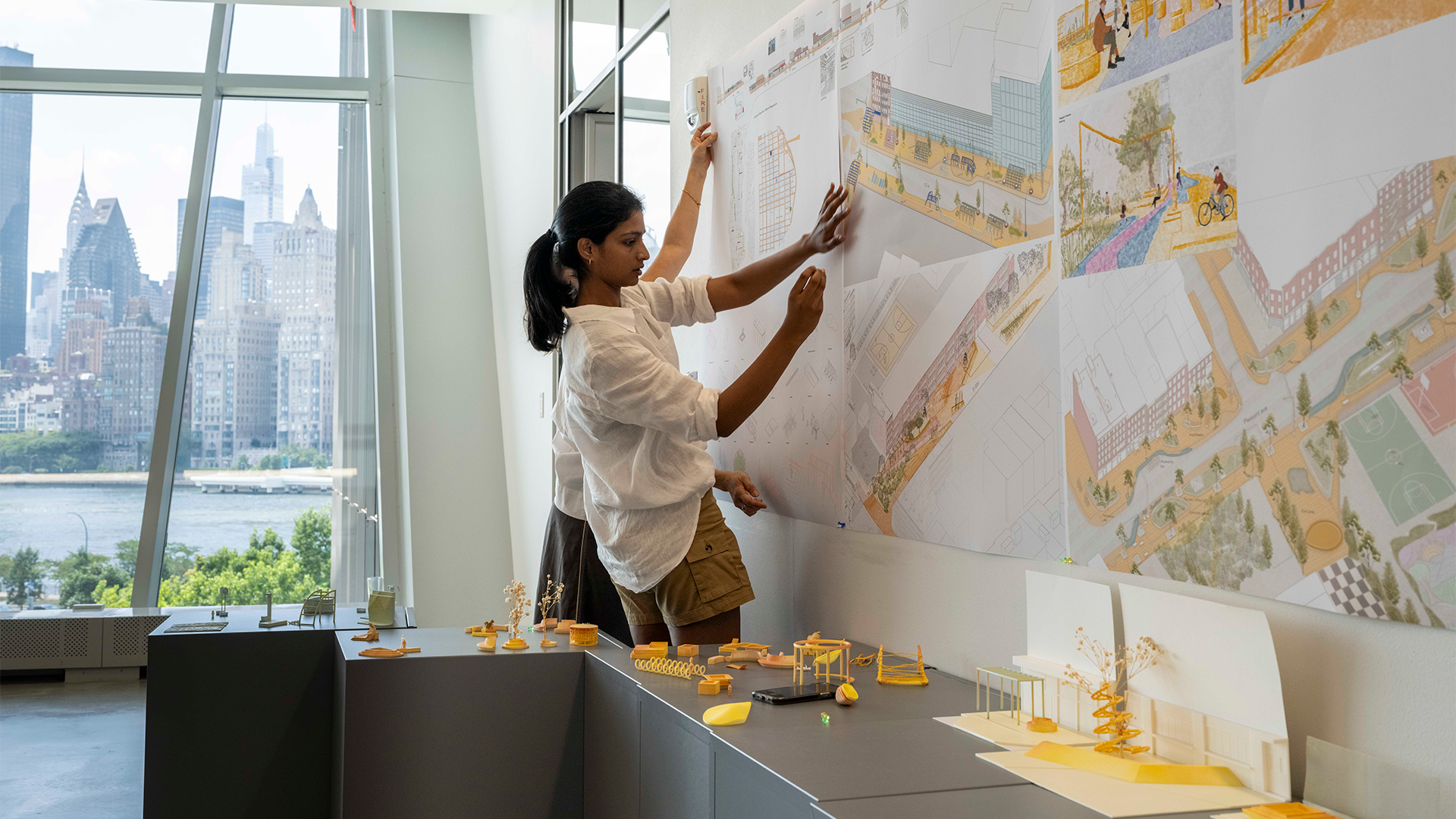

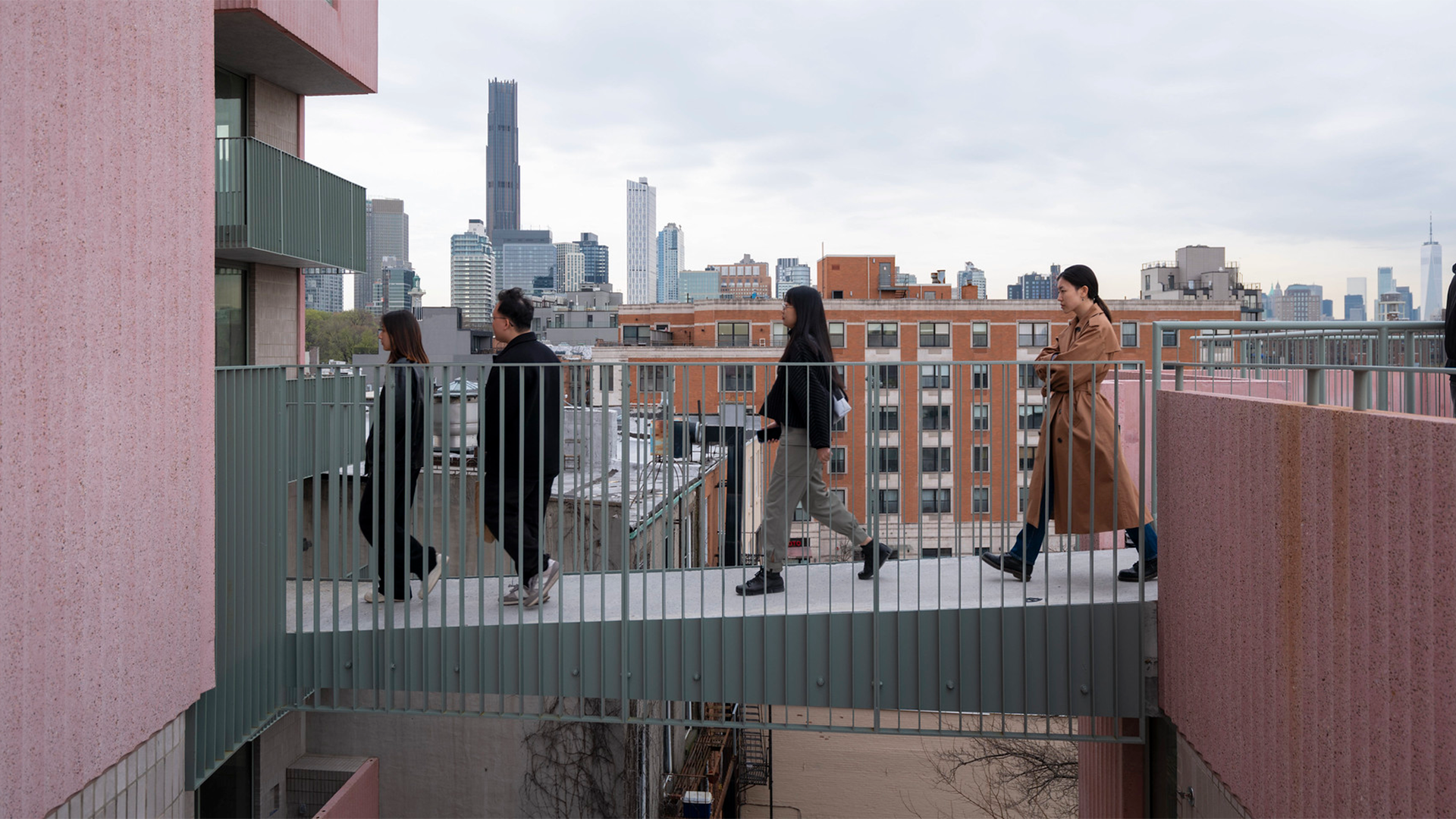
Studio and seminar topics remain current and often vary widely according to the interests and expertise of leading faculty and practitioners who regularly teach at AAP NYC, and the program’s expansive itinerary of visits to sites across the five boroughs, cultural institutions and events, guest speakers, and conversations with New York City-based alumni and practitioners changes each semester.
Along with lectures, a book launch, and other events this year at their new home, the Island Editions conversation series will welcome guests, including Bernard Tschumi, Steven Holl, Nader Tehrani, Elizabeth Diller, Toshiko Mori, and AAP Dean J. Meejin Yoon, across the fall and spring semesters. Hosts Peter Eisenman and Cynthia Davidson will engage them in discussions that invite candid reflections and speculations on design, its evolution, and many points of impact.
“AAP NYC has always been about providing our students with opportunities to encounter New York as a dynamic living laboratory where they can observe the city’s challenges and complexities firsthand and learn from scholars and practitioners who are actively shaping urban spaces across scales and contexts,” said Yoon. “The program’s new home fosters an energizing synthesis of the immersive and the scholarly — students, faculty, and the program itself reap the benefits of immersion in real-world scenarios throughout the five boroughs, which informs studios, advances discourse, and drives research.”
Synergies and Support
In addition to the undergraduate and graduate students in architecture and city and regional planning who have an opportunity to study for one semester in New York City, AAP departments have also recently launched a one-year Master of Science in Advanced Urban Design based entirely in the city, a second year of study in New York for students selecting the M.S. in Design Technology’s studio track, and an option for students in the Baker Program in Real Estate program to spend their entire second year in NYC. Next July, the center anticipates hosting City Visionaries: Precollege Explorations, AAP’s first New York City-based summer program for high school students interested in the creative fields that shape the design of cities and communities.
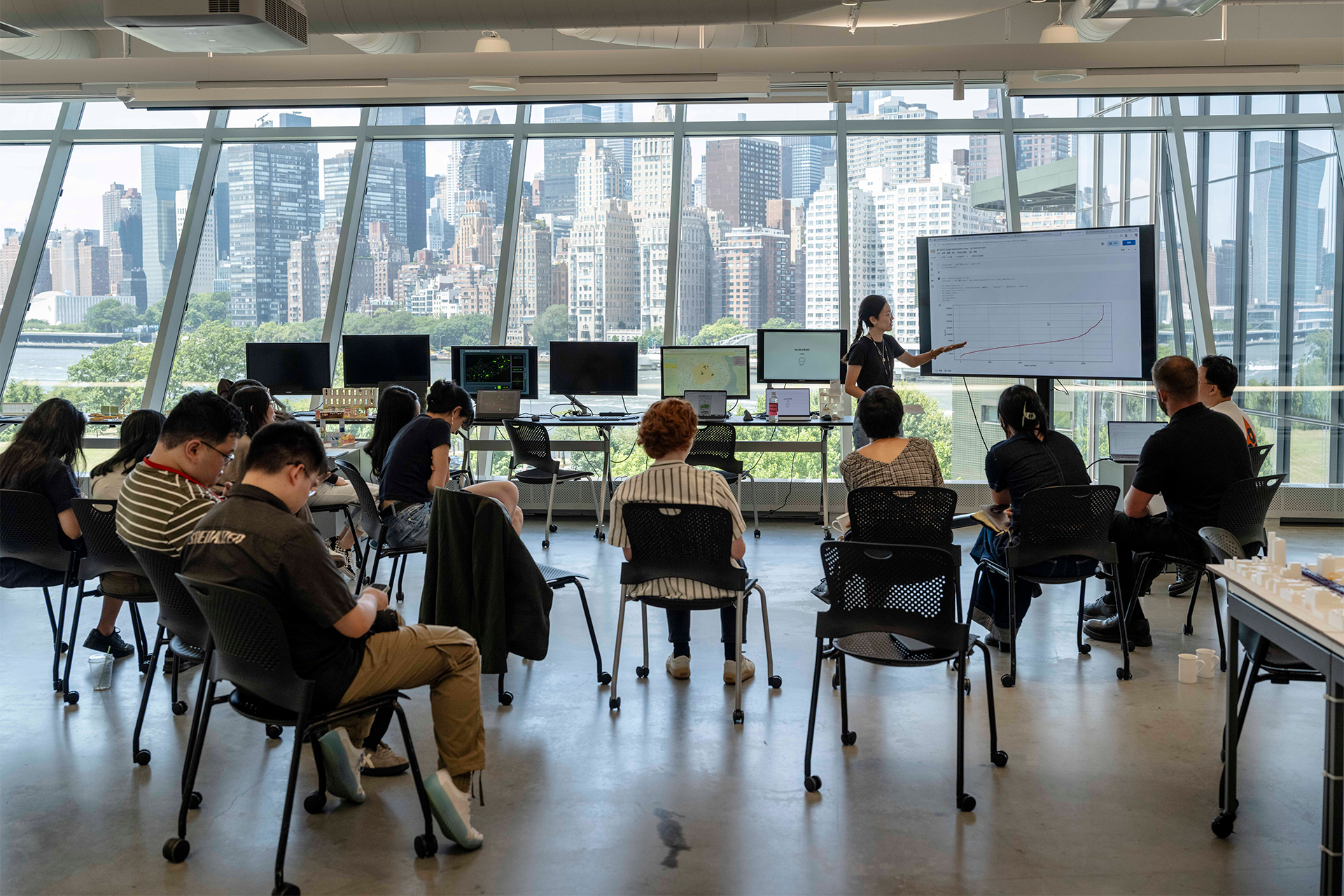
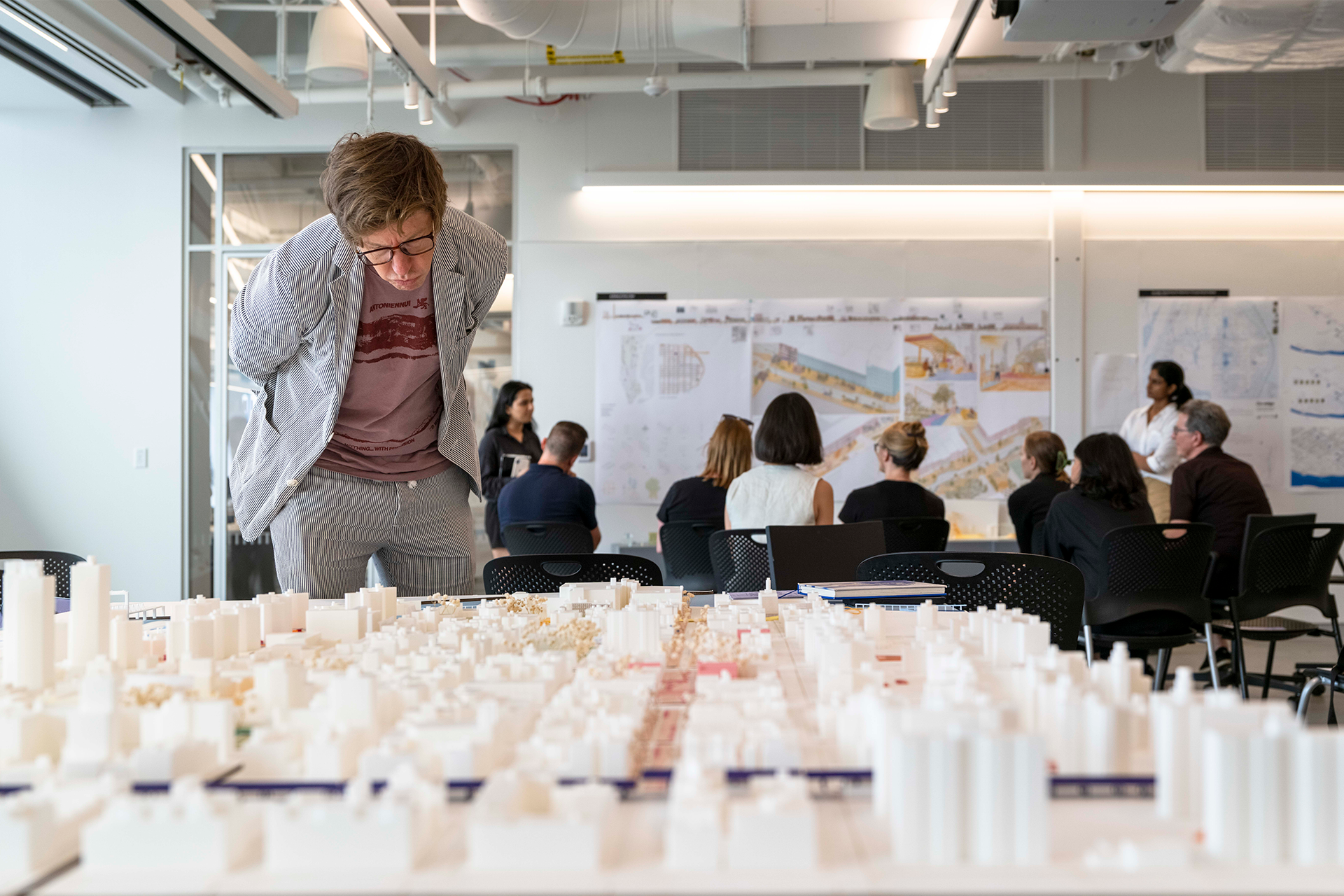
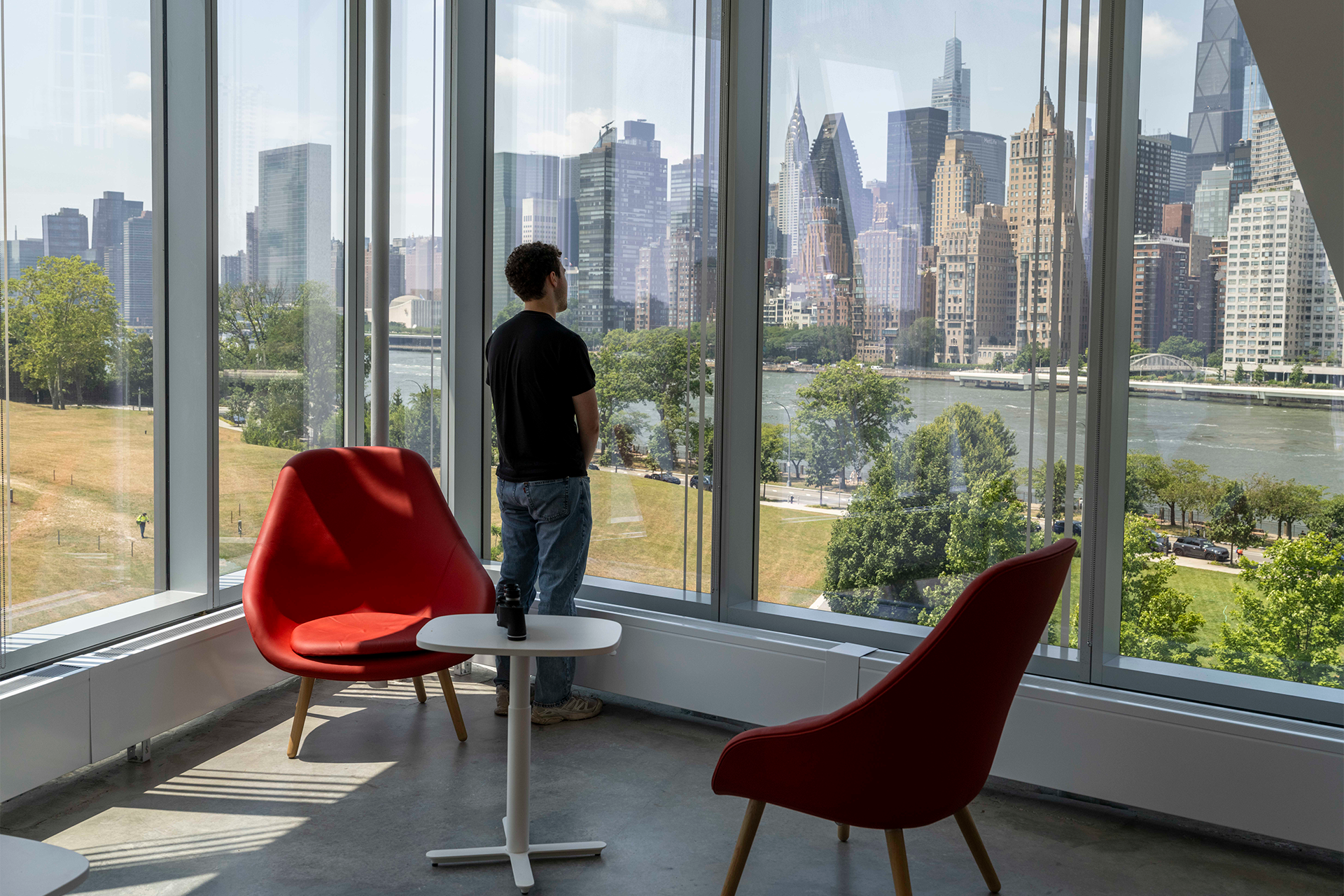
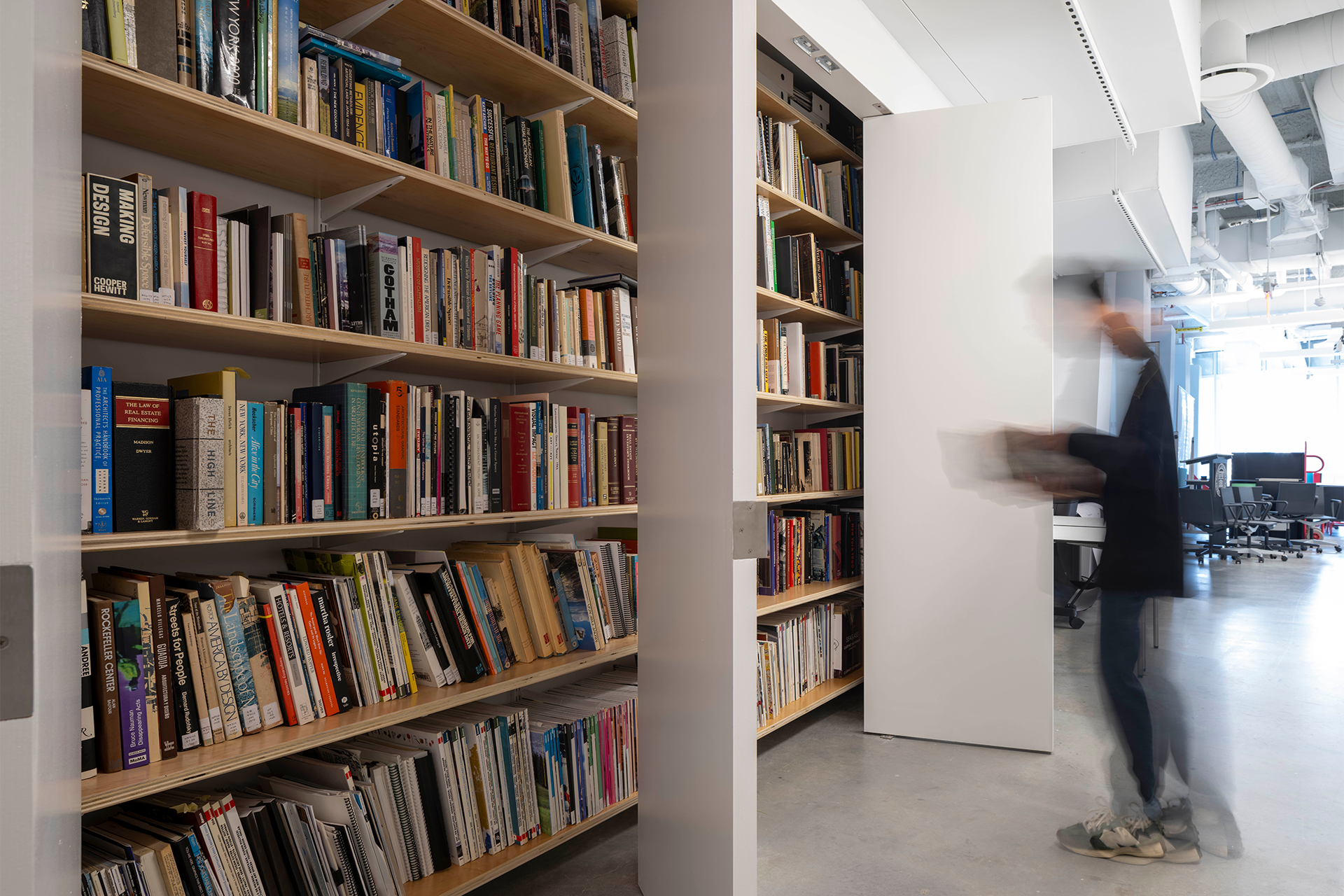
With the relocation to the Weiss/Manfredi-designed Tata Innovation Center, AAP NYC has now landed squarely within Cornell University’s New York City ecosystem and is situated just around the corner from Cornell Law School students on campus for the semester and only one floor up from the SC Johnson College of Business’s Cornell Tech location. The center’s new space, designed by NBBJ, includes a studio for 120 students, a workshop, a library, class and conference rooms, faculty and staff offices, a flexible gallery, and a shared cafe that together create synergies and open possibilities for collaboration and innovation.
Glimpsing the Future
After nearly two decades, AAP NYC’s new location builds on the program’s strong academic foundations, offering a stable place to continue teaching and learning, a captivating wide-angle view of Manhattan and the East River, and a range of resources and opportunities for students and faculty to explore with colleagues at Cornell Tech.
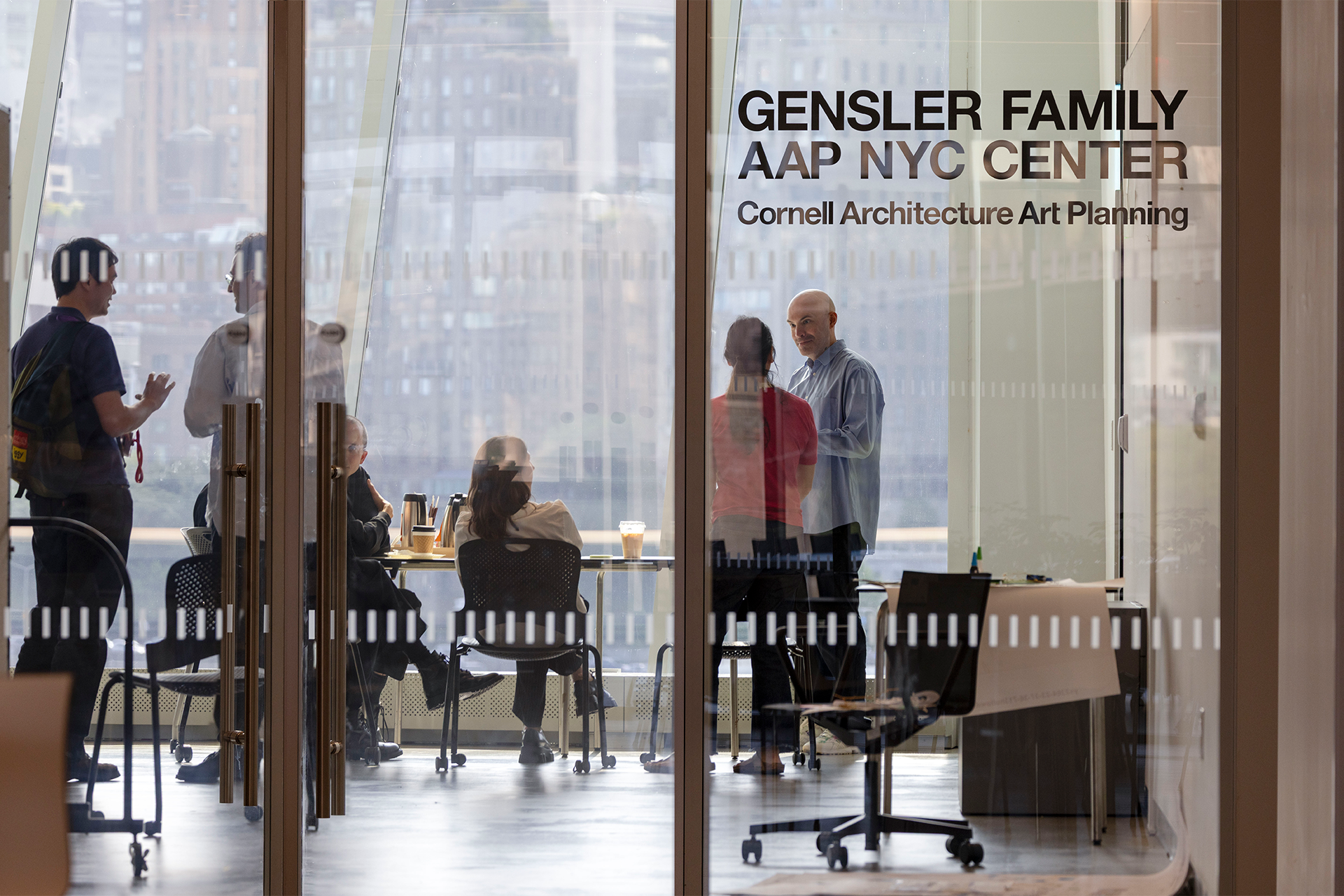
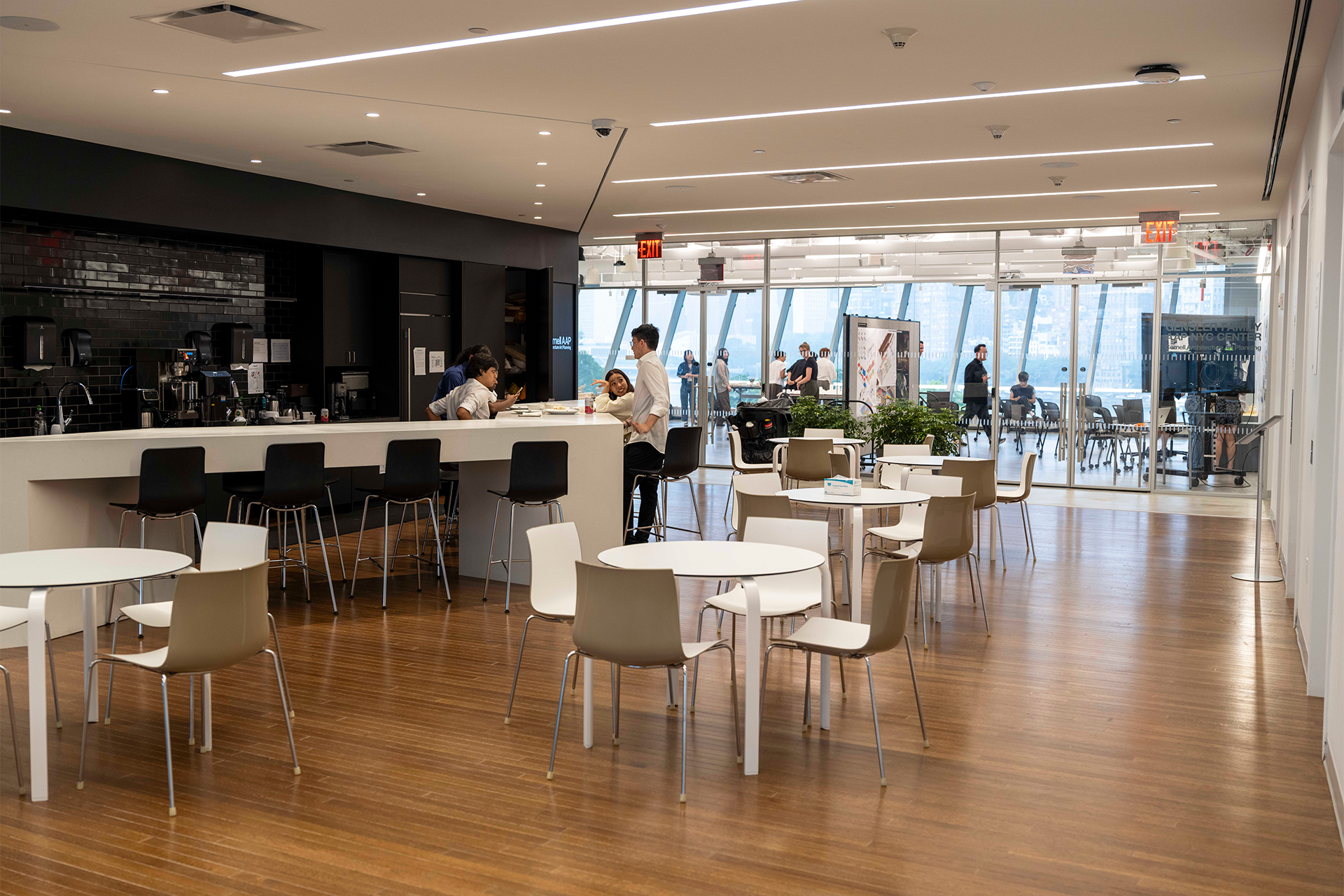
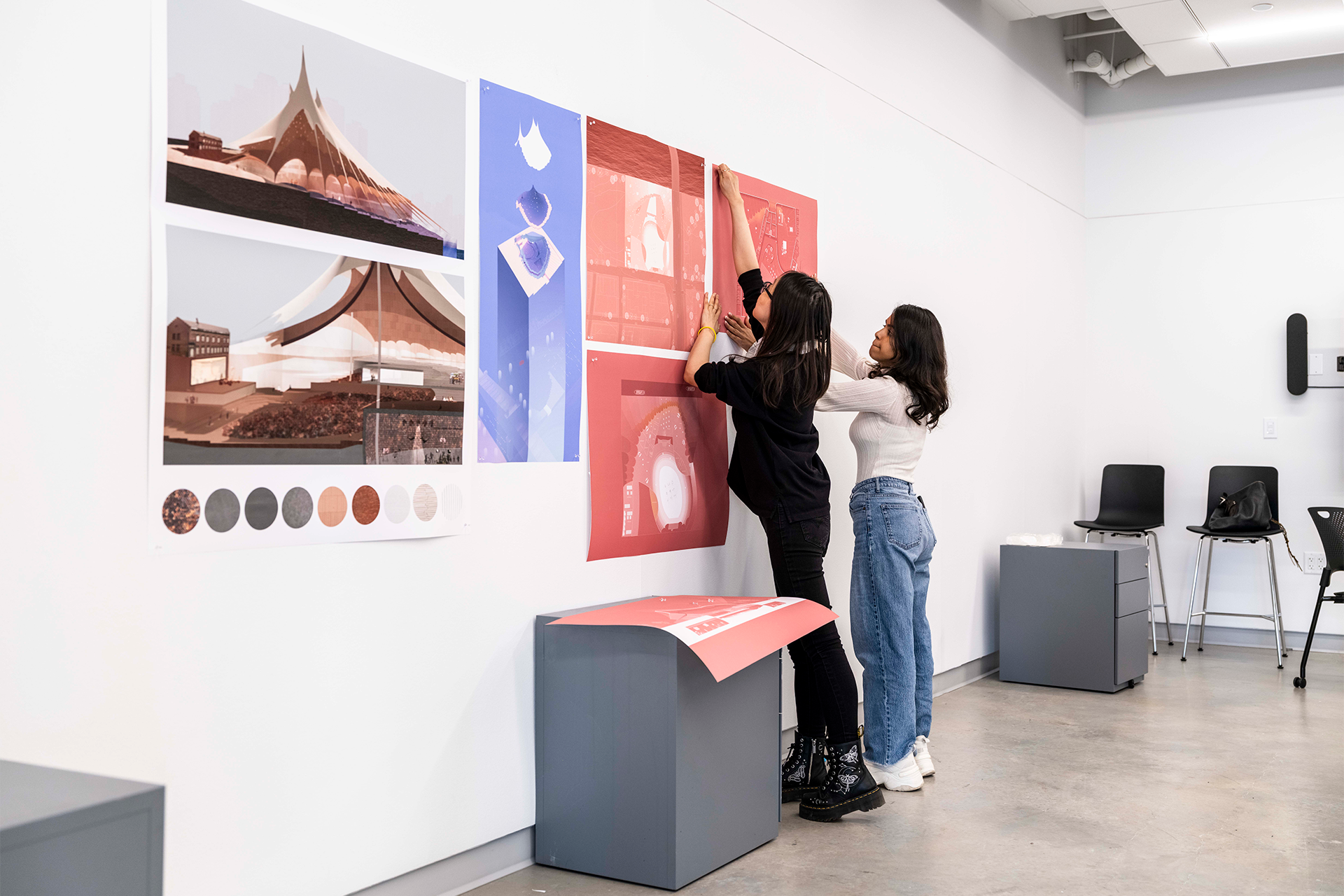
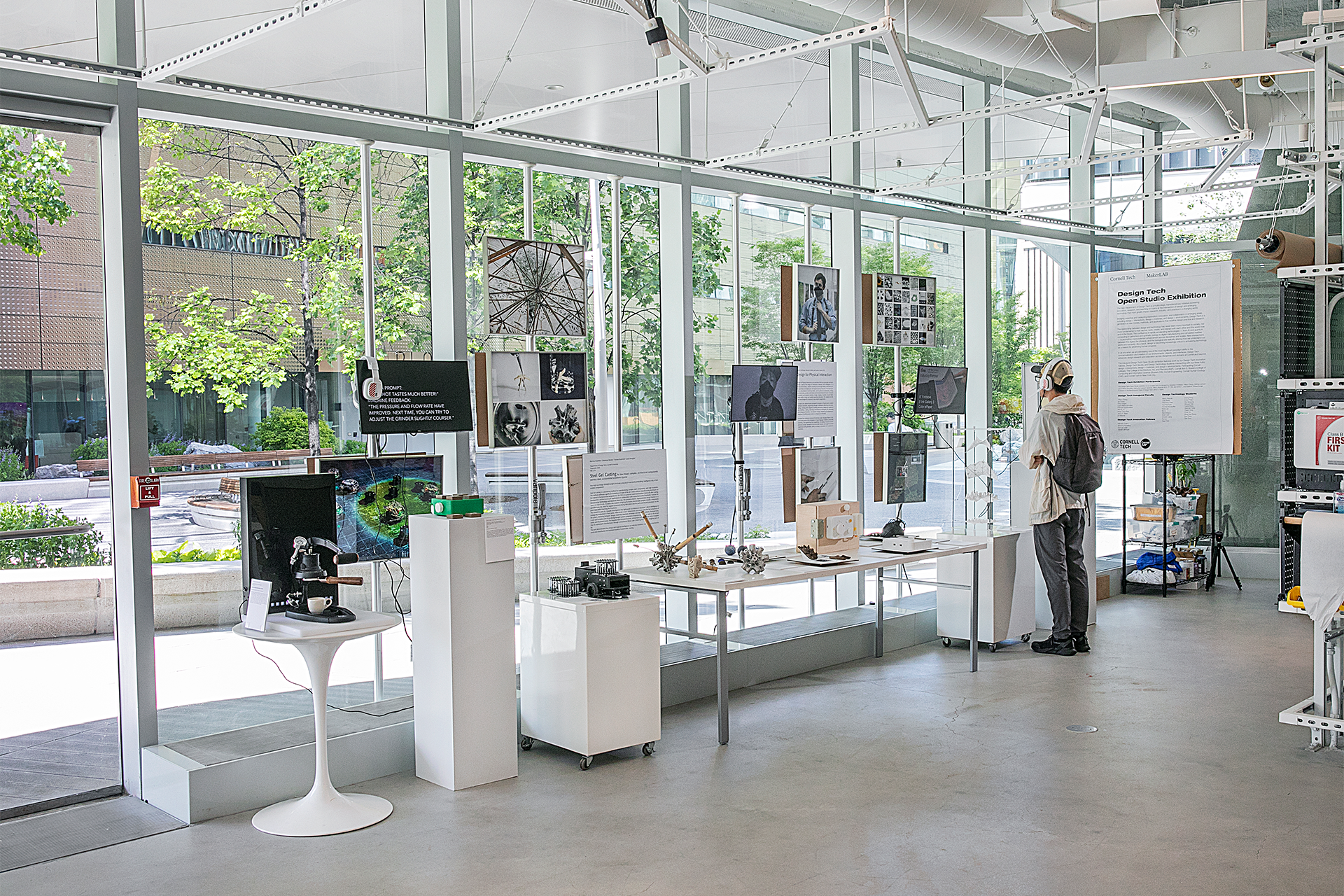
“As we settle in, it’s encouraging that we’re already seeing students bring critical perspectives — shaped by their exposure to the city’s complexities and adjacent design fields — to their work, expanding the possibilities of their creative practices,” added Balder.
For more information about academic programs and public events, please visit the Gensler Family AAP NYC Center’s website.