

In 1871, Andrew Dickson White, the first president of Cornell University, proposed to give his architectural library, the largest collection in the country at that time, to the university in return for the creation of a Department of Architecture. The new architecture program was immediately popular, registering 32 students by 1876.
The College of Architecture was formed in 1896. For many years it was strongly influenced by Beaux-Arts principles, in which design was seen as an art form. As the program grew so did its library, which acquired the working drawings of leading architects. By 1920, enrollment reached 130.
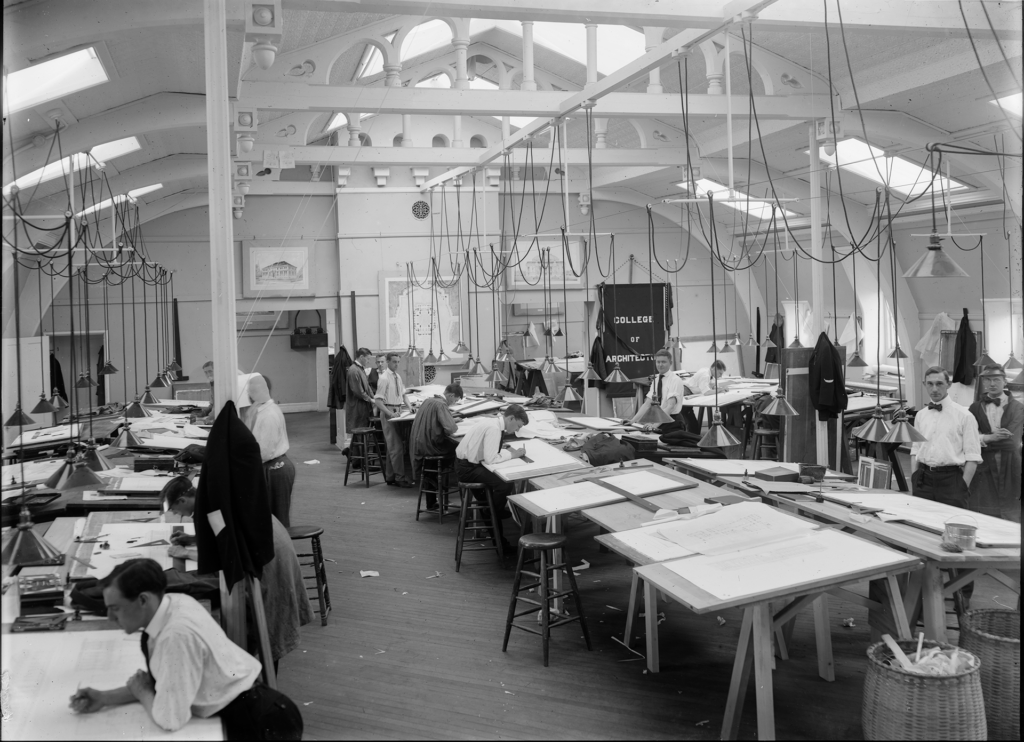
In the 1920s, the college offered three five-year programs, with undergraduate and graduate degrees in architecture, landscape architecture, and fine arts and supported collaboration across the disciplines. In 1952, a new department, city and regional planning, was formed within the college and chaired by John Reps.
The visiting critic program in architecture was founded in 1947 and expanded through the 1950s. Among the prominent figures visiting as lecturers or critics in this era were Walter Gropius, Philip Johnson, Frank Lloyd Wright, and Buckminster Fuller.
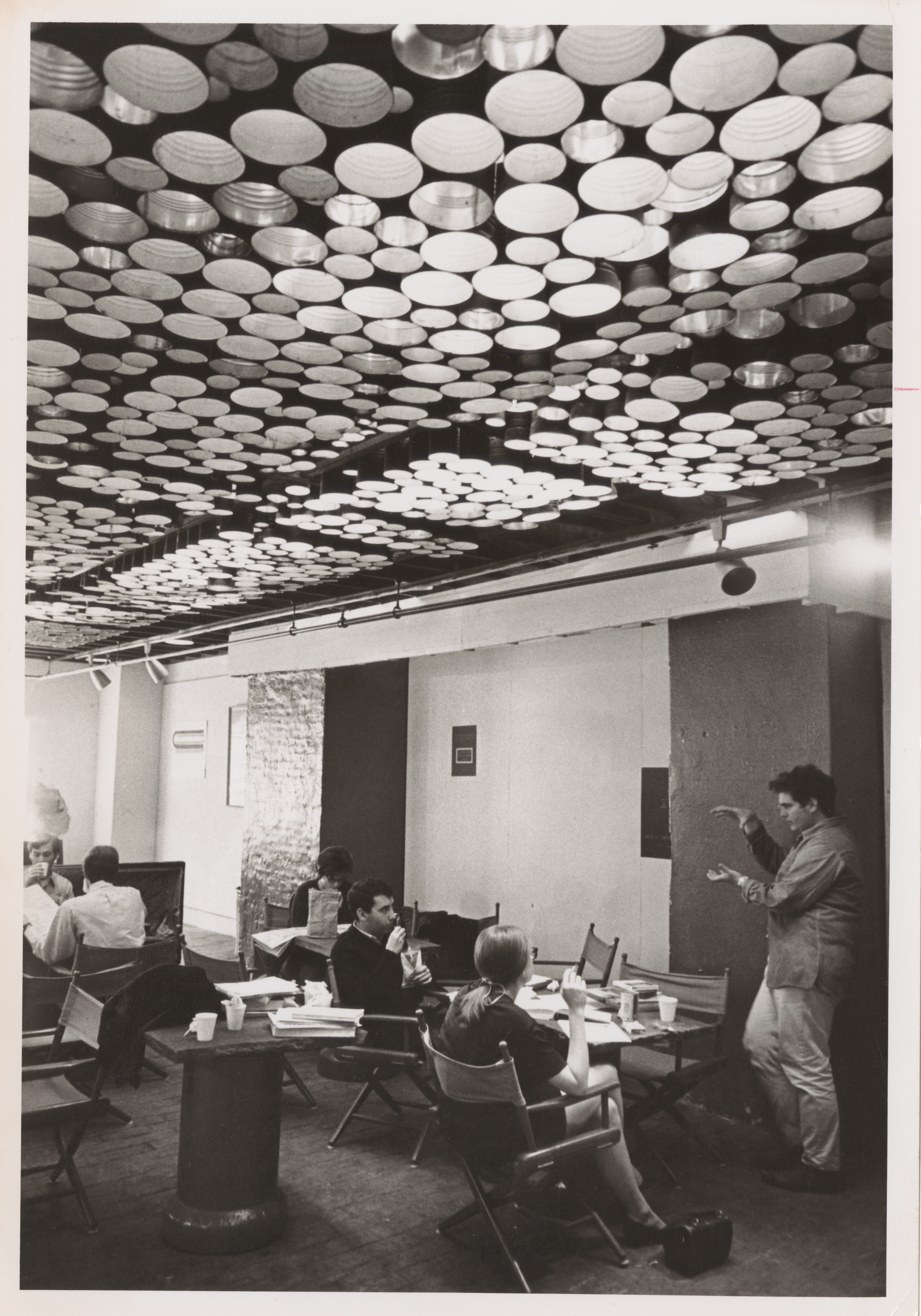
In 1956, the degrees were revised to include a five-year bachelor of architecture, a four-year bachelor of fine arts, and master’s degrees in architecture, fine arts, regional planning, and landscape architecture. M.A. and Ph.D. programs in architectural history and a graduate program in urban design jointly administered by architecture and city and regional planning were added in the 1960s. In 1967, the college was officially established as the College of Architecture, Art, and Planning (AAP). The departments moved to their current location at the north end of Cornell’s Arts Quad in what are now Rand, Sibley, and Tjaden halls by the 1970s.
As the college was established as it is known today, architectural historian and theorist Colin Rowe, named the most significant architecture teacher of the second half of the 20th century, had begun nearly three decades of teaching at Cornell. From 1969 to 1974, the Department of Architecture was headed by Oswald Mathias Ungers. The intellectual friction between Rowe and Ungers generated a distinctive pedagogy and work focused on urban morphology, influencing generations of practitioners and teachers.
The Cornell in Rome Program began in 1987 and continues to offer undergraduate architecture students an exceptional opportunity to study on-site some of the world’s greatest works of art and architecture, with extensive studio work, lectures, and field trips. Bachelor of architecture students spend one semester in Rome.
AAP’s New York City program–the Gensler Family AAP NYC Center–was initiated in 2006 in Lower Manhattan by alumnus Art Gensler and then AAP dean Moshen Mostafavi to offer students an opportunity to focus on contemporary leading practitioners and scholars in architecture, art, and planning.

In response to a growing student body and the need for competitive and contemporary facilities, Milstein Hall, designed by Rem Koolhaas and OMA, was built and it opened in August 2011, providing an expansion of special resources and offers opportunities for development and experimentation for students and faculty alike.
In 2019, the historic Rand Hall (1911) was renovated to house the Mui Ho Fine Arts Library, home to one of the most unique circulating collections of fine arts and design materials in the country. The new library was designed by architect Wolfgang Tschapeller (M.Arch. ’87), whose goal for the project was a 21st-century interpretation of the grand reading rooms associated with great research collections. Below the library, on the building’s ground level, is the fabrication facility, which includes a fully equipped digital fabrication lab, wood shop, metal shop, and work area.
The 2021–22 academic year marked the department’s 150th anniversary, a testament to the strength of Cornell’s community of talented and dedicated students and internationally renowned faculty who work together to push the boundaries of the discipline toward a more just, sustainable, and meaningful future.
Today, the Department of Architecture enrolls about 340 students in its Bachelor of Architecture program and approximately 135 students in its graduate programs, roughly 85 of whom are in the professional master’s degree program, 24 are M.S. AAD students, 9 are M.S. AUD students, and 11 are Ph.D. HAUD students. The M.S. AUD program resides in New York City at the Gensler Family AAP NYC Center, which moved from its original home in Lower Manhattan to Roosevelt Island in 2025.
Dragon Day
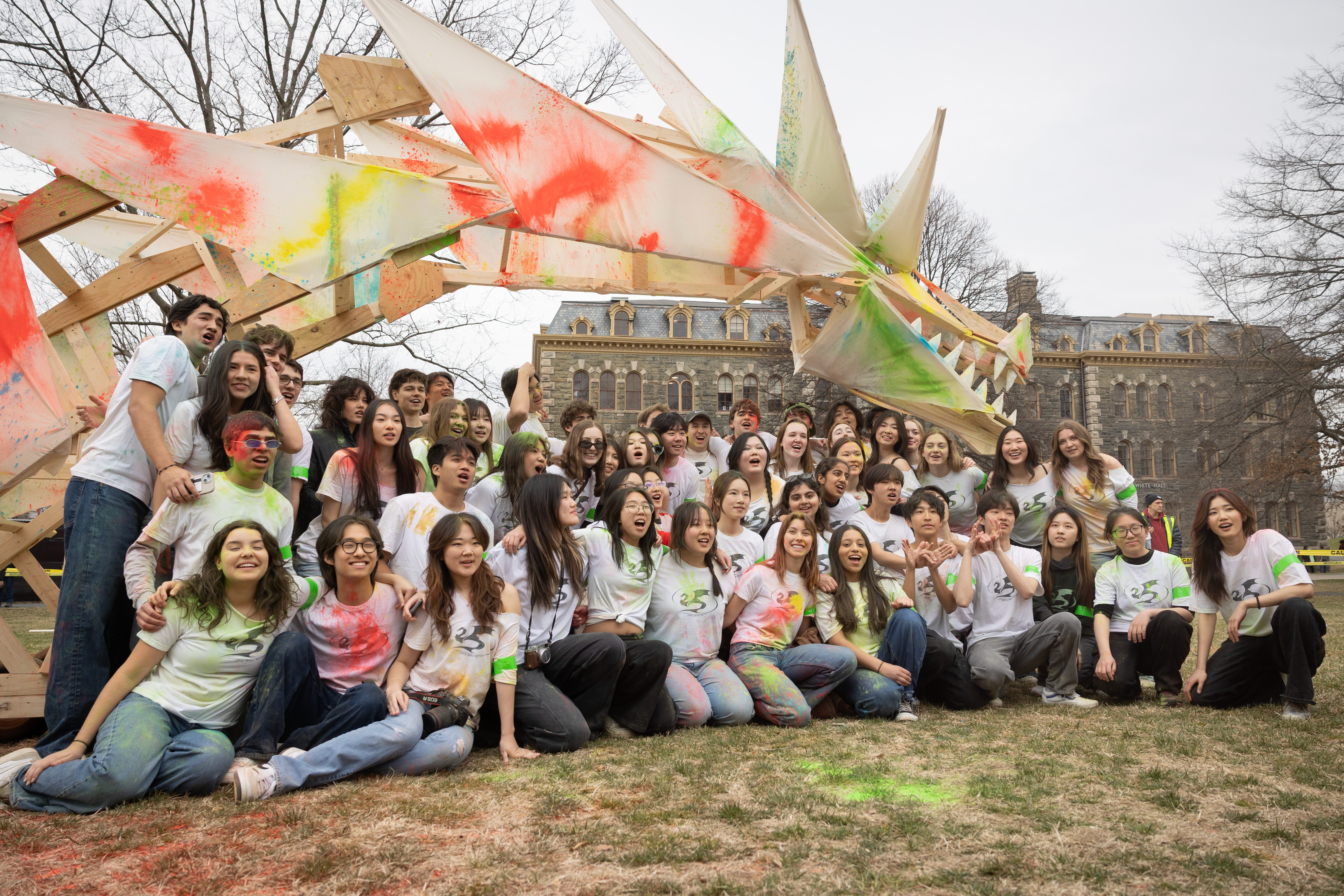





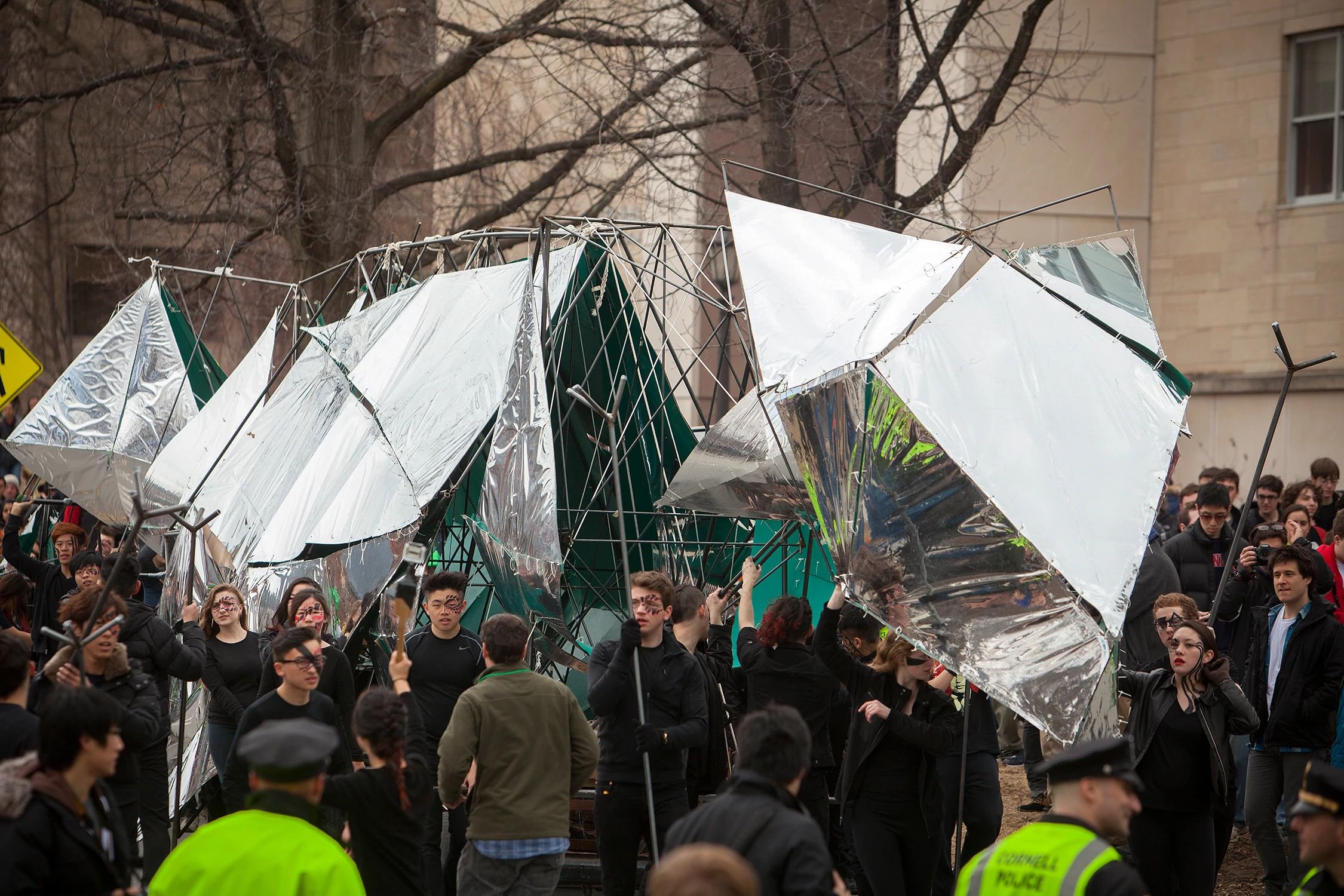

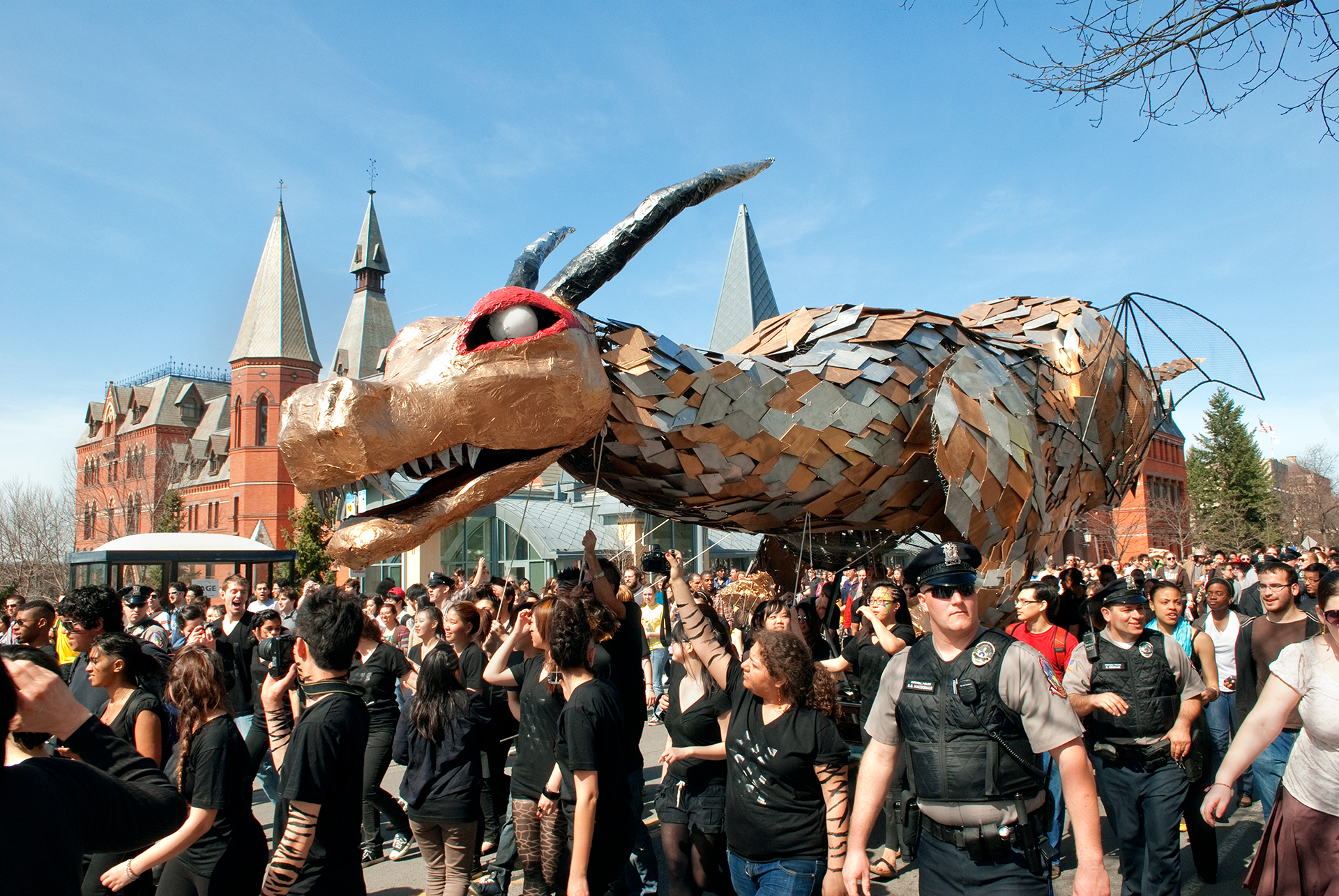
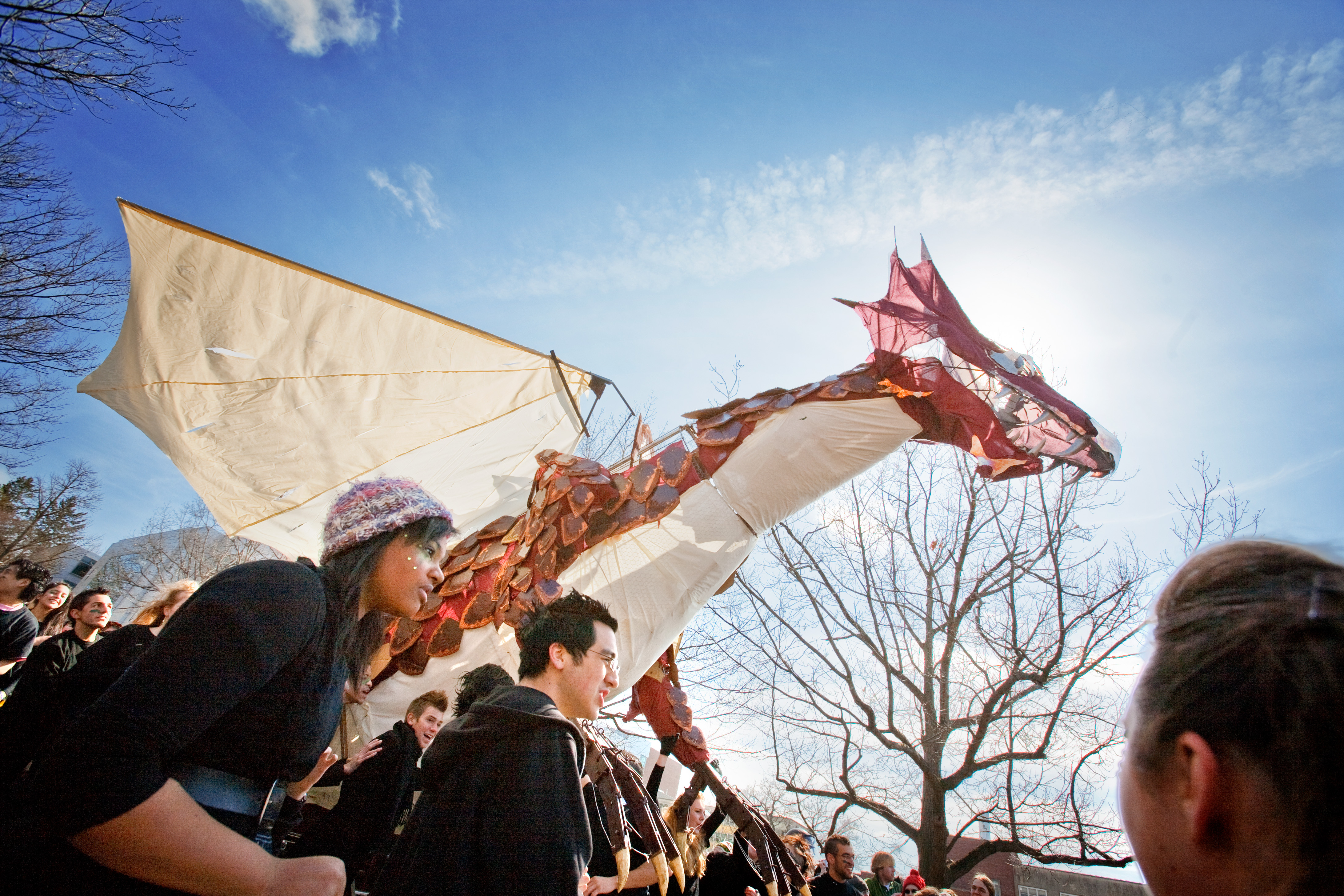
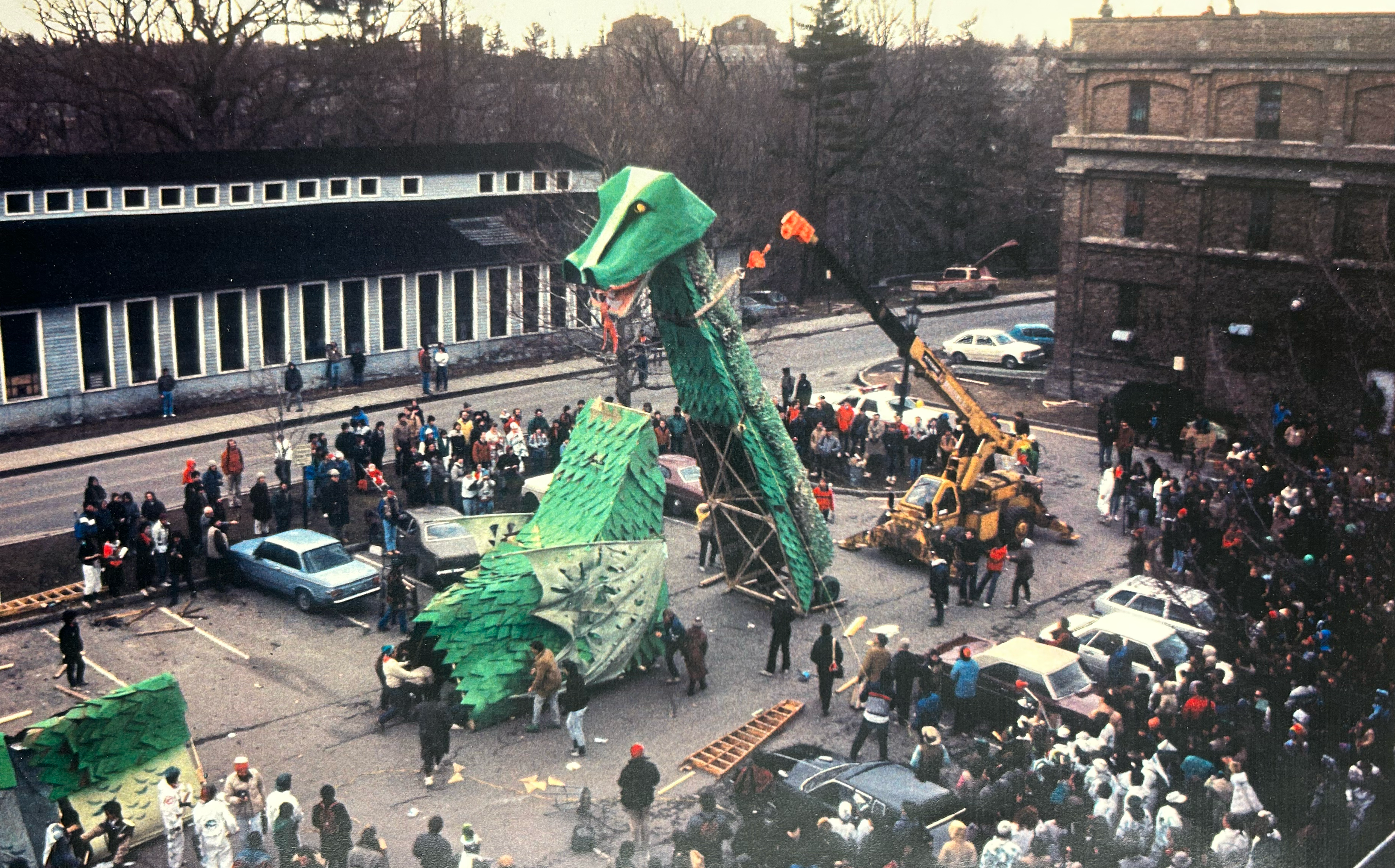
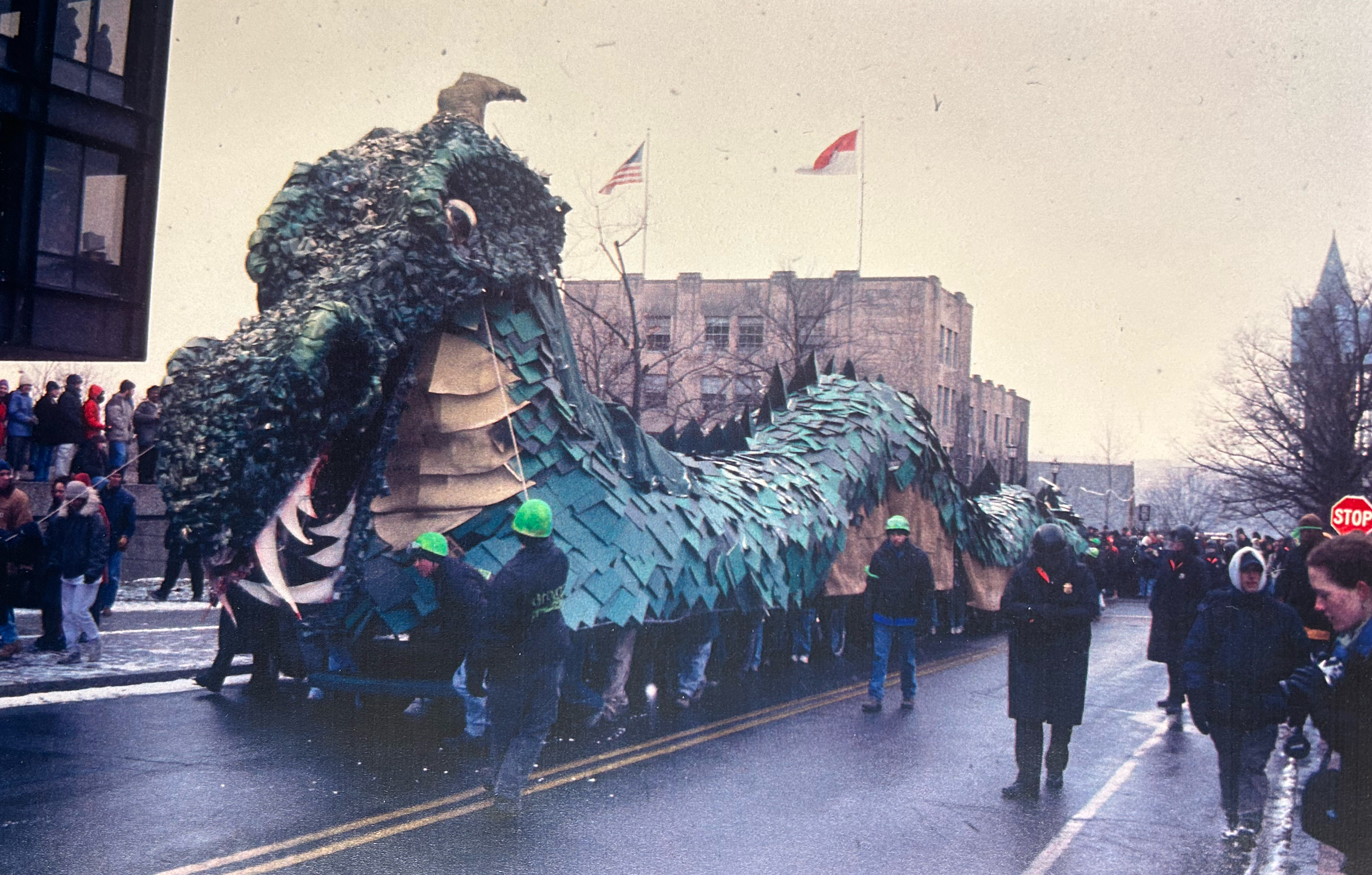

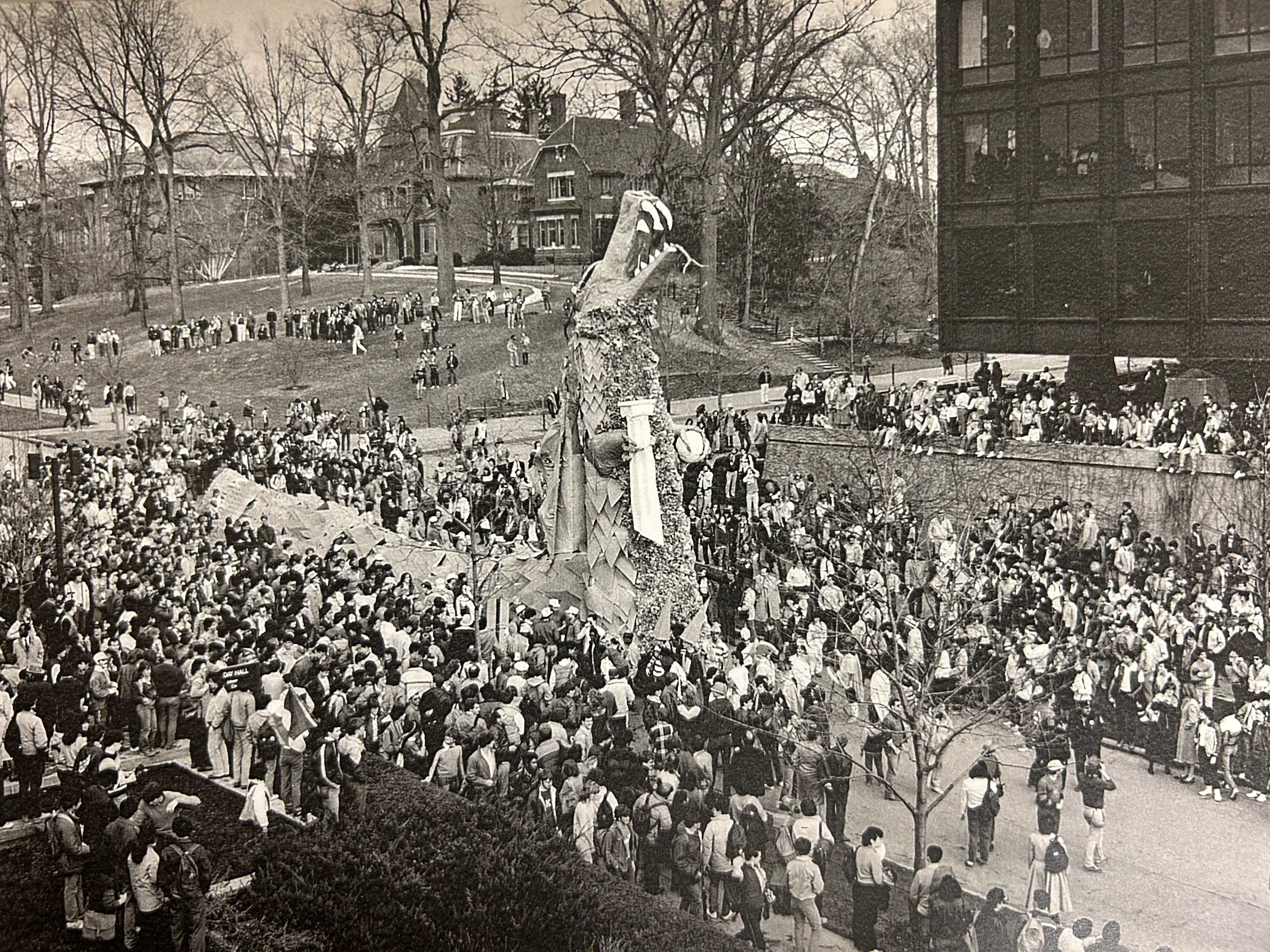

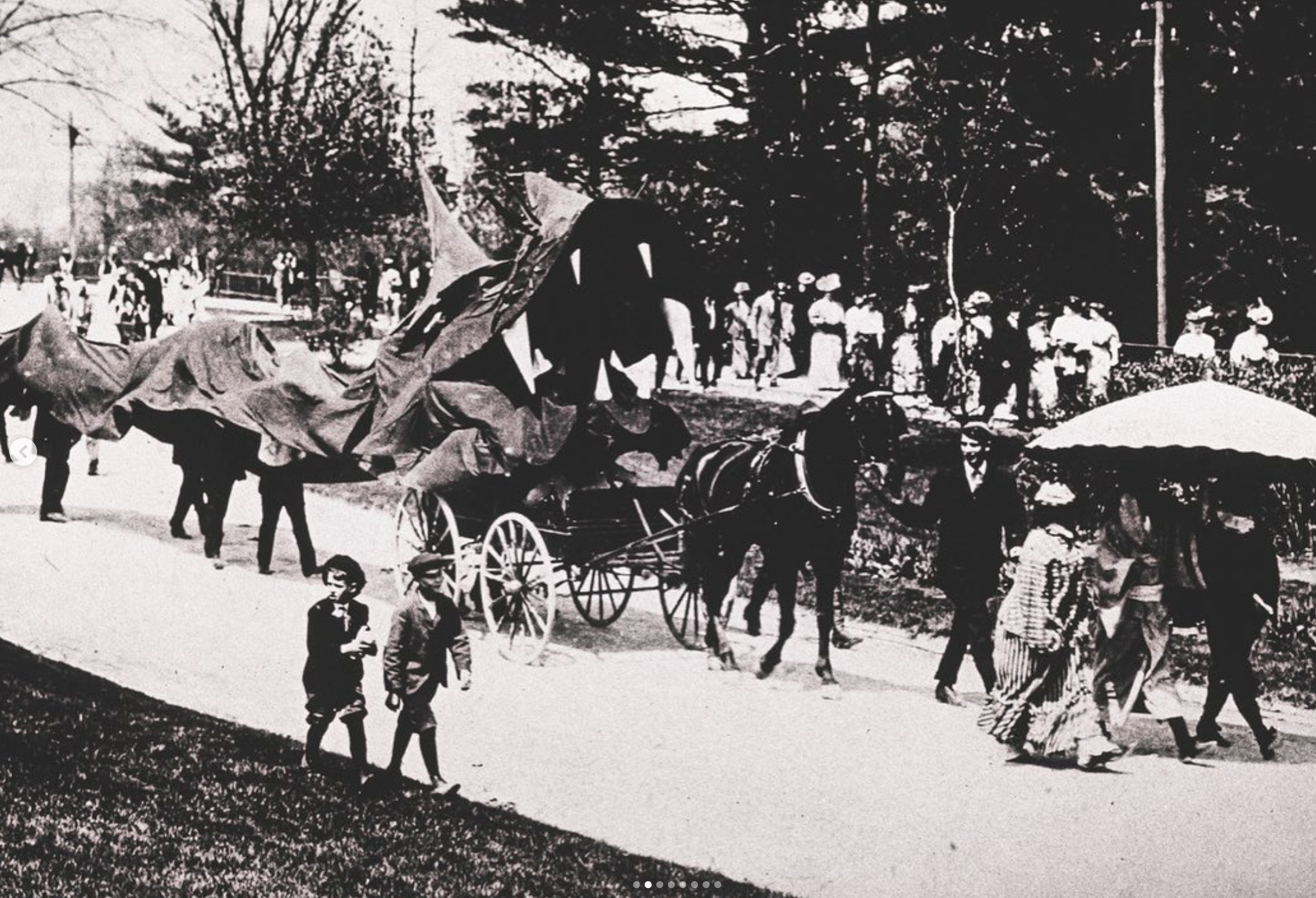
Every year, in a tradition that goes back more than 100 years, an enormous dragon created by first-year architecture students parades across campus. Accompanied by AAP students in outrageous costumes, the dragon lumbers to the Arts Quad where it does battle with a phoenix created by rival engineering students. This rite of spring is one of Cornell’s best-known traditions.
History of Dragon Day
The idea of Dragon Day is credited to Cornellian Willard Dickerman Straight (1901), who believed that there should be a distinctive College of Architecture Day. At the time, he chose St. Patrick’s Day and the first College of Architecture Day was celebrated with the hanging of orange and green banners (orange to appease the campus’s Protestant population), shamrocks, and other thematic decorations on Lincoln Hall, which at the time housed the College of Architecture. Later, the additional theme of celebrating St. Patrick’s success in driving the serpents out of Ireland became attached to the holiday.
How the first parade evolved into a well-known and celebrated rite of spring for the first-year architecture class — ending with the burning of the dragon on the Arts Quad, a tradition that has since been abandoned — has not been revealed. Dragon Day as it is celebrated today (with an actual constructed dragon, and the associated ceremonies) evolved sometime in the 1950s when the serpents previously used “grew up.” Though history also isn’t clear when the actual phrase “Dragon Day” was introduced, speculation suggests that it might have also been in the 1950s. Prior to this time, the holiday was still celebrated as primarily College of Architecture Day, and the theme was less focused around the dragon.
The rivalry between the architecture and the engineering students before and during Dragon Day celebrations seems to have simply developed through history, and is now embodied through engineering students’ construction of a creature to challenge the dragon symbolically — specifically, a phoenix.
For several decades, Dragon Day was celebrated either on St. Patrick’s Day or immediately before Spring Break — whichever date happened first. When a new academic calendar was introduced in 2013, Spring Break moved later into the month of March, and Dragon Day is now routinely celebrated the day before students leave campus for a weeklong break.
History is excerpted from the University Archives.