Devi Ganga Lakshmi (M.R.P. '26)
Kochi, Kerala, India
CRP 5190 Urban Theory
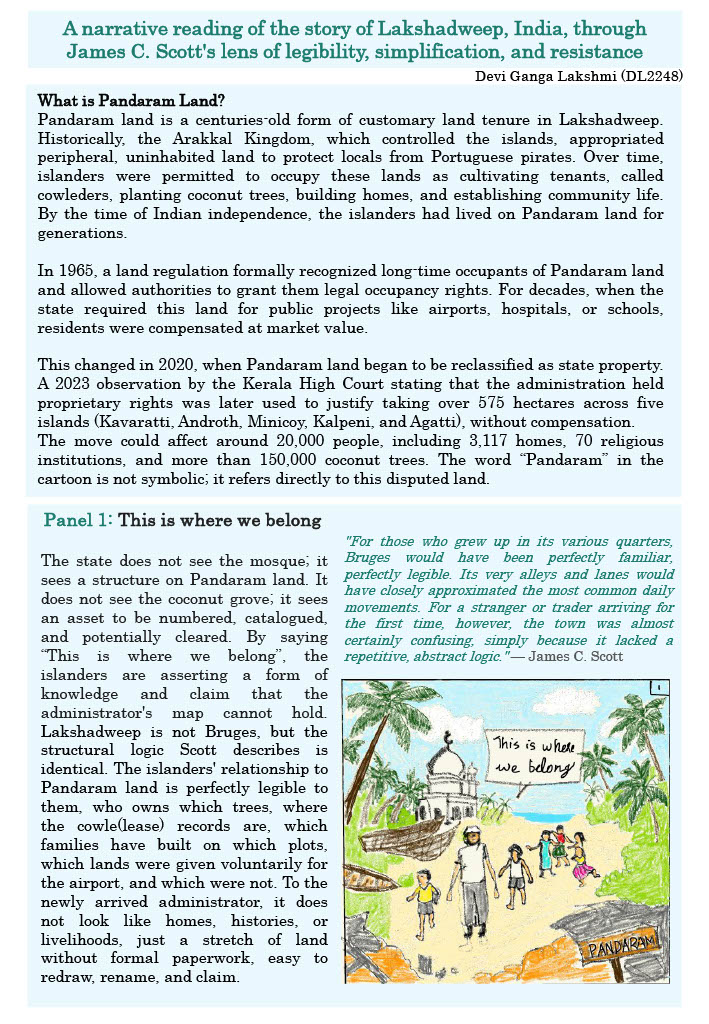
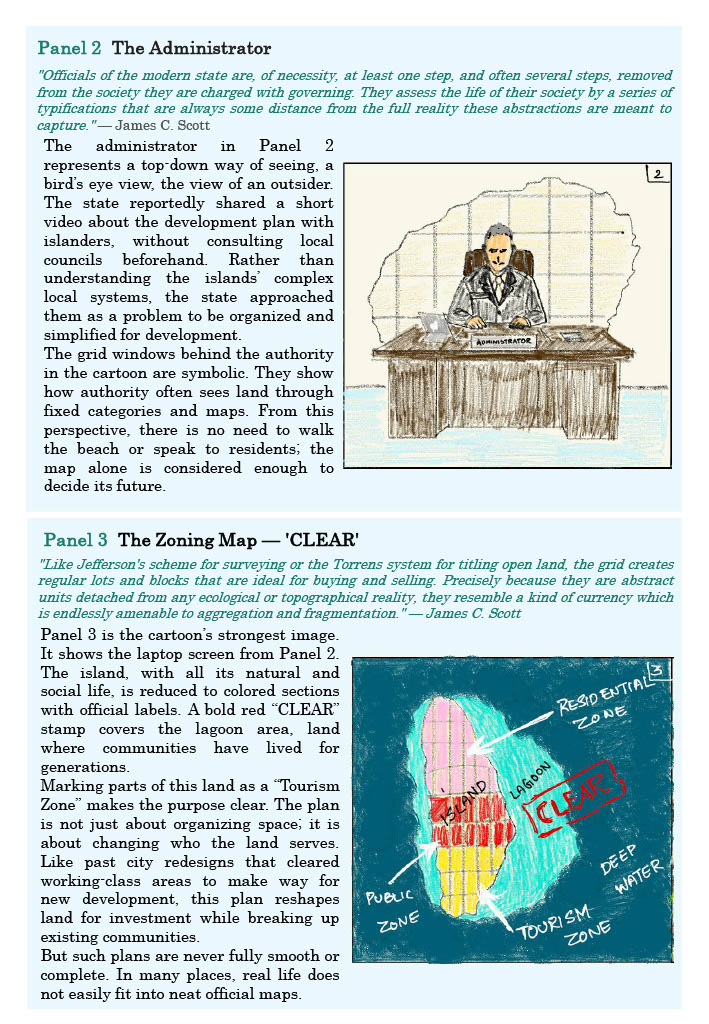
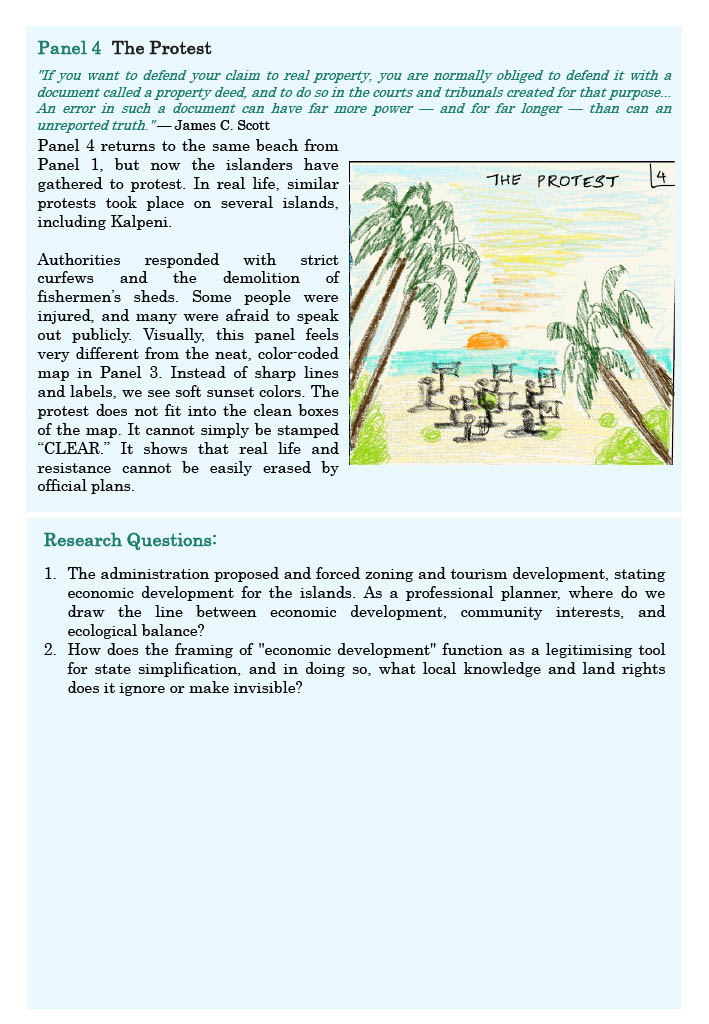
This piece uses James C. Scott’s idea of “legibility”, how states simplify complex places into maps and categories they can control, to analyze the land conflict in Lakshadweep. For generations, islanders lived on Pandaram land under a customary system: planting coconut trees, building homes, and passing down knowledge of who owned what. This was formally recognized in 1965, but in 2020, the state began reclassifying the land as its own property, eventually seizing 575 hectares across five islands without compensating the roughly 20,000 people affected. The comic’s four panels trace this shift: islanders asserting their deep, local knowledge of the land; a distant administrator planning from behind a desk, disconnected from the community; a zoning map that reduces homes and history into color-coded “zones” for tourism; and a protest met with curfews and demolitions. Together, the panels show how converting a lived-in place into an abstract map makes it easier to seize, and how local resistance refuses to be so easily erased.