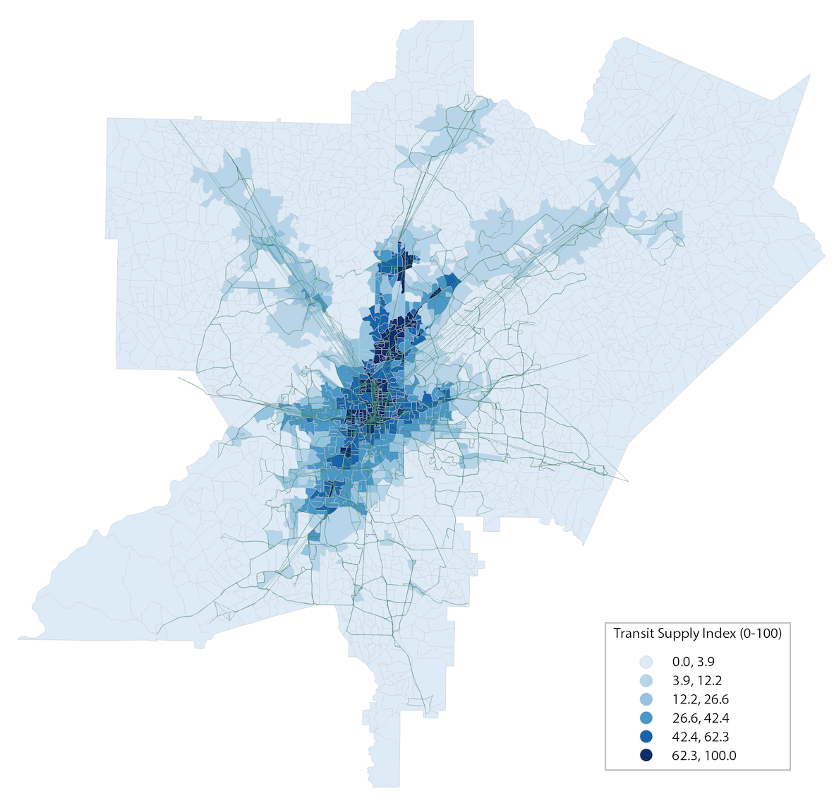
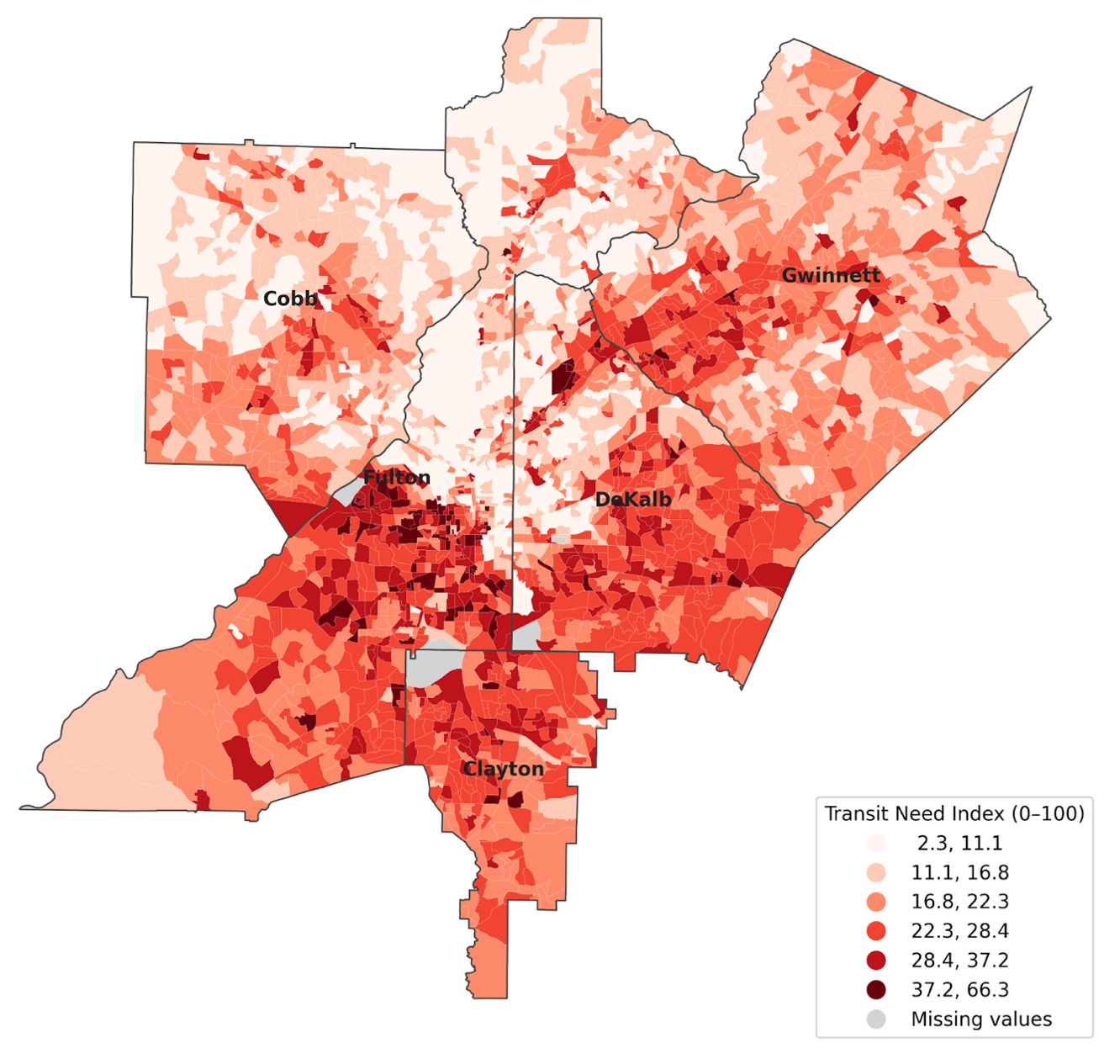
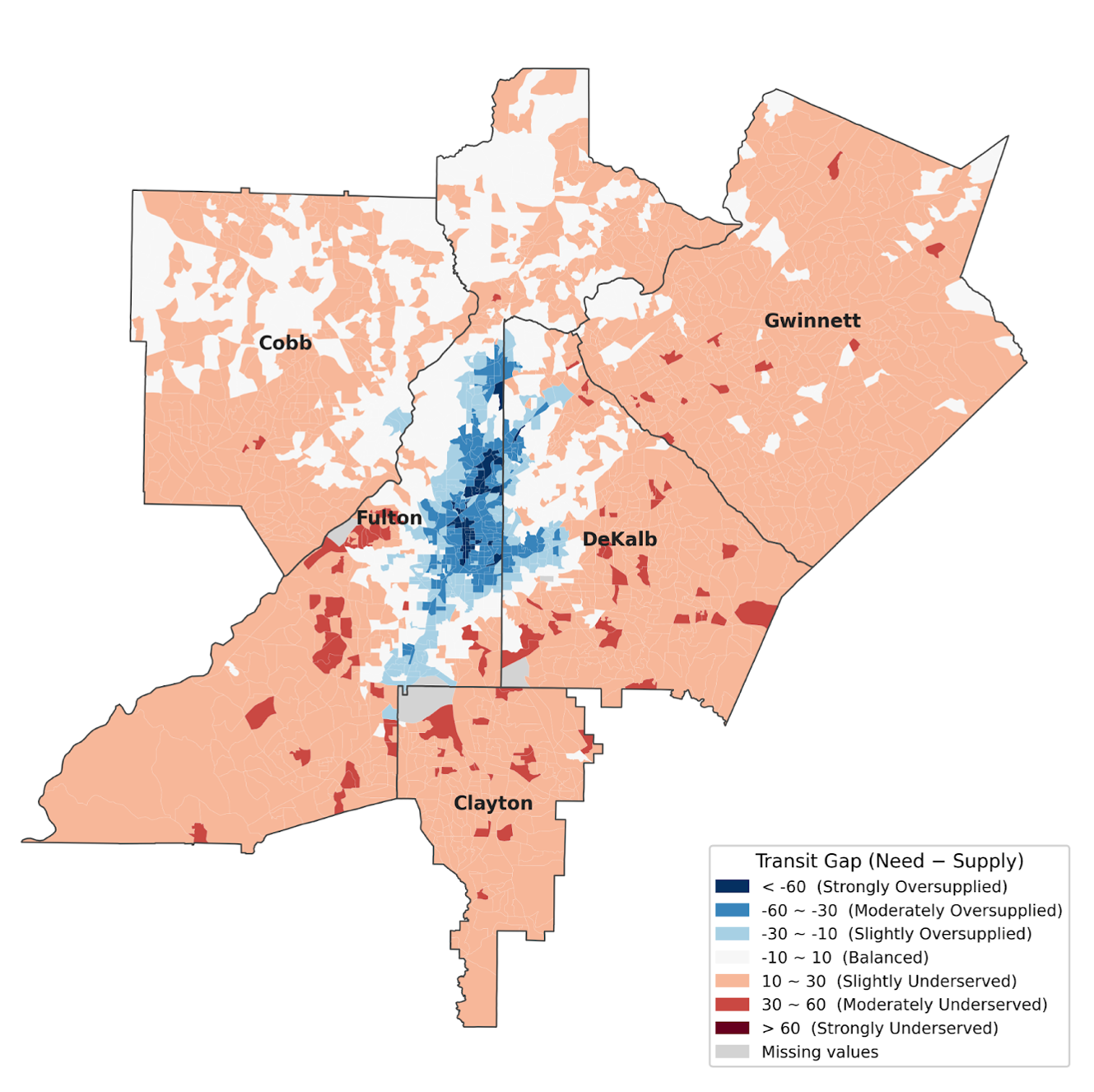
This study examines transit inequity in Metro Atlanta by measuring the spatial mismatch between transit supply and disadvantaged populations’ needs across five counties. Using a GTFS-based model, transit supply is measured by 60-minute job accessibility; a composite need index aggregates six metrics from ACS data. Results reveal a core-periphery pattern: MARTA corridors in central Fulton and western DeKalb are oversupplied, while Clayton, southern DeKalb, and southern Fulton are strongly underserved. Two distinct inequity patterns emerge: a county-wide infrastructure vacuum in Clayton from institutional exclusion, and an intra-county racial disparity in DeKalb from residential segregation and skewed investment. Both patterns reflect that institutional inclusion in MARTA has not translated into substantive accessibility for predominantly Black communities.