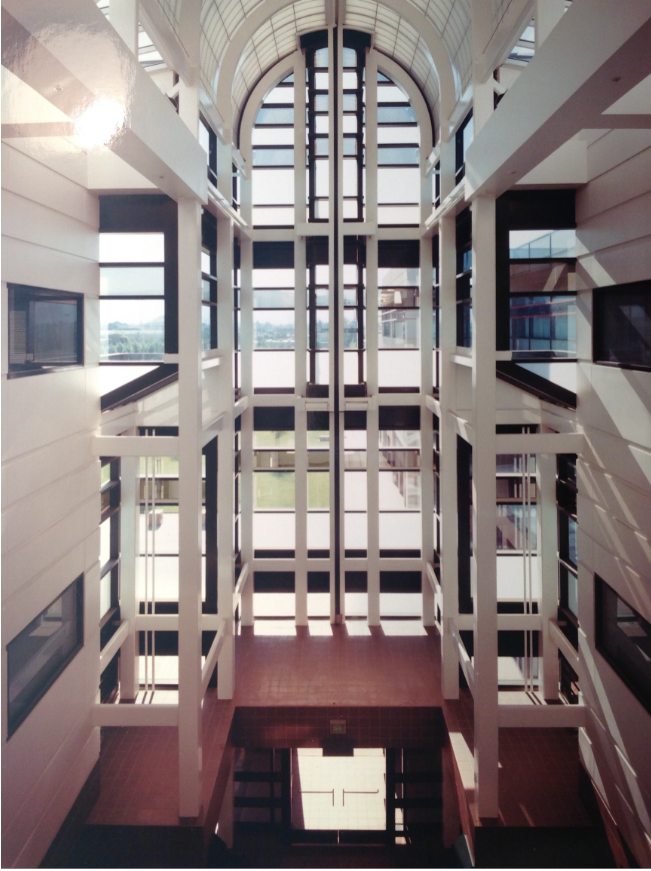
Now a multifaceted designer and innovator in the field of architecture, Chauncey Jones (B.Arch. ’74) began his undergraduate career at Cornell with a personal interest in engineering and a good amount of curiosity. During his time as a student, Jones explored multiple disciplines and expanded his knowledge in as many directions as possible. “You can build on things at Cornell,” he said. “The architectural school could provide an opening, and if you wanted to delve further into that curiosity, there are other colleges at the university where you could pick up those other bits of information.”
Jones sought out diverse perspectives, bolstering his architectural education with courses in photography, Japanese landscape architecture in the College of Agriculture and Life Sciences, Asian art history in the College of Arts and Sciences, and silk screening in the College of Human Ecology.
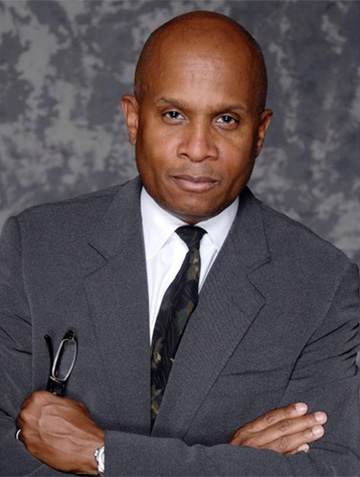
During Jones’s undergraduate years, several influential architecture scholars and practitioners taught at AAP, making it an exciting time to study architectural theory and design at Cornell. As a student, Jones operated the slide projector for professor Colin Rowe’s classes, and had the opportunity to study under pioneers in the discipline such as Alan Chimacoff, Michael Dennis, Roger Sherwood, Fred Koetter, and Henry Richardson — all of whom made a distinct and lasting impression.
Jones went on to earn an M.S. in Architecture and Urban Design at Columbia University and then worked on smaller community urban revitalization projects in New York State, New York City, and Mississippi. He worked for various architectural firms in New York City during a seven-year period and then transitioned to the corporate world in 1983, when he joined Pitney Bowes’s corporate real estate department. “It wasn’t a difficult transition because of the curiosity I had,” Jones said. “I asked: ‘How do you make this whole building happen? What is the whole package?'”
Throughout his career, Jones has integrated his knowledge of architecture and urban design into large-scale corporate projects to create efficient and cost-effective designs. Jones describes his approach to work as based on his belief that designing for the client’s needs and communicating clearly with many types of professionals during the process are vital to successful building development. His understanding that cohesive coordination of basic building functions ultimately allows for design possibilities to flourish has driven his creative process throughout his career. “I think it’s very important to understand how a building is put together,” Jones said. “It allows you to push the envelope in terms of design. And this is what it means to be a master builder.”
I think it’s very important to understand how a building is put together. It allows you to push the envelope in terms of design. And this is what it means to be a master builder.
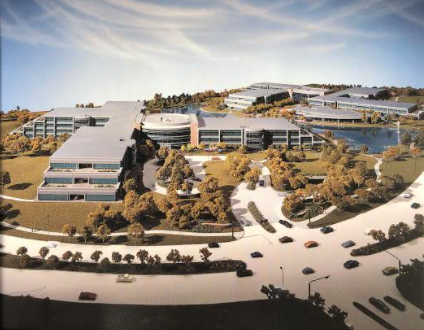
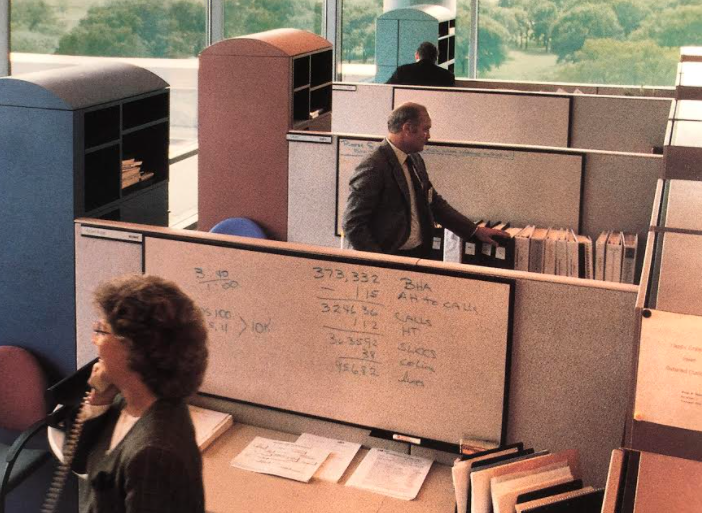
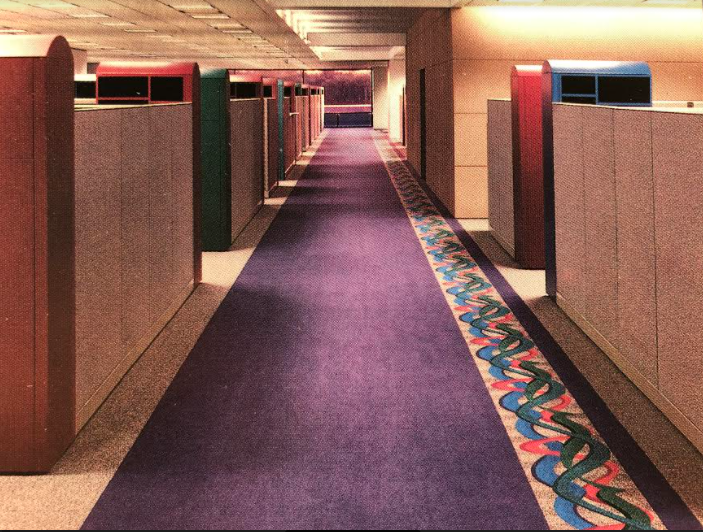
The GTE telecommunications headquarters in Dallas, Texas, demonstrates how considering form and function leads to a long-lasting result. This project consolidated 11 separately operating U.S.-based companies at one location. “It has stood the test of time because we’re talking about a building that was built 35 years ago, and it’s still viable,” Jones explained. “And it’s viable because of things that we built into it from the beginning.”
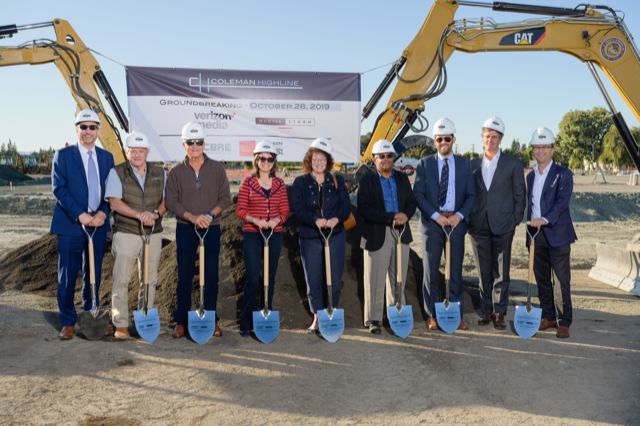
After his time with GTE, Jones worked for big names such as JP Morgan, Deloitte & Touche, and Gensler, and also had his own advisory project consulting firm. He joined Verizon in 2013 as the director of design and construction and, as of fall 2020, continues to lead a strong team of architects and professionals. “I had some great mentors in my working career, so I try to be the same type of mentor to my team,” Jones said. Leveraging his past experiences, Jones cultivates a dynamic and collaborative environment in which his team can openly discuss strategies for development and design.
For more than three decades, Jones’s designs for work environments continue to push the envelope, benefitting those who occupy them. And perhaps as noteworthy as his career accomplishments, he continues to delve into an expansive array of subjects and areas of inspiration, much as he did while a student at Cornell.
Projects
Click to view project images full screen.
GTE Government Systems Group
1988
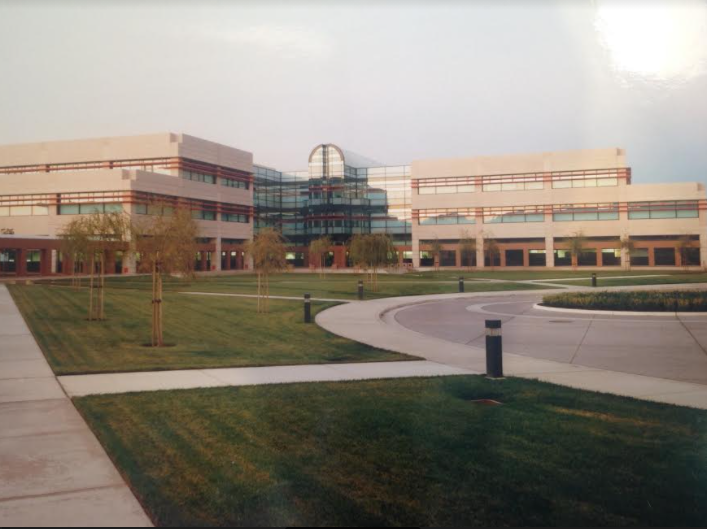
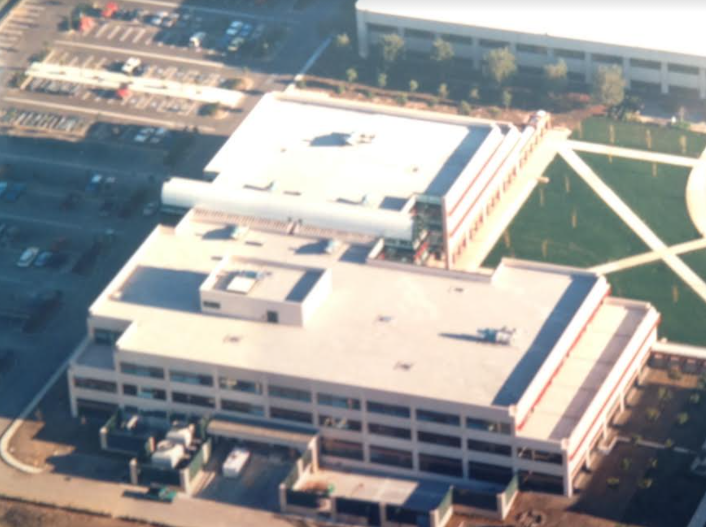
GTE Telephone Operations Consolidated Headquarters
1993
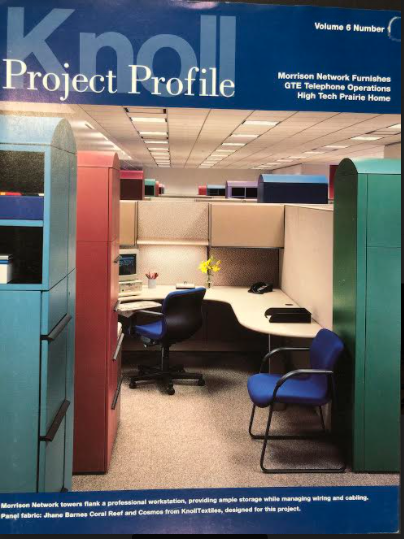
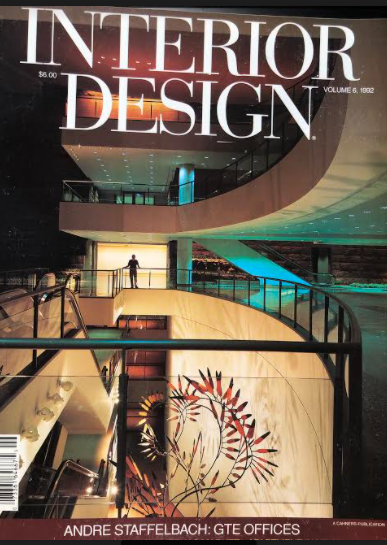
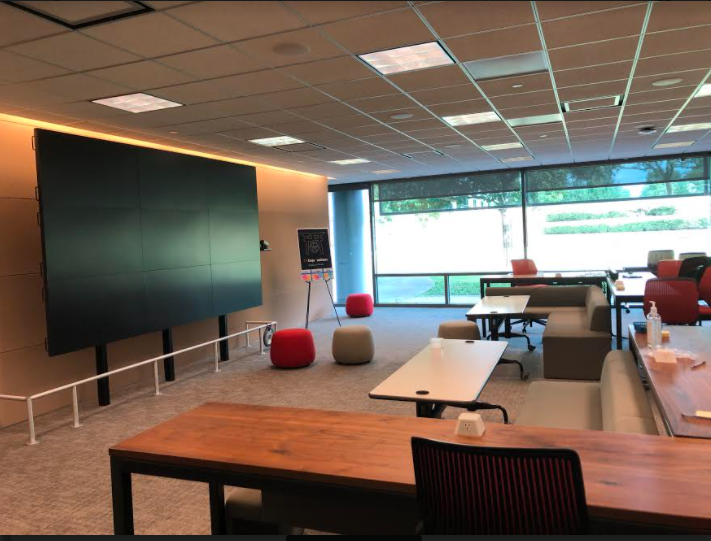
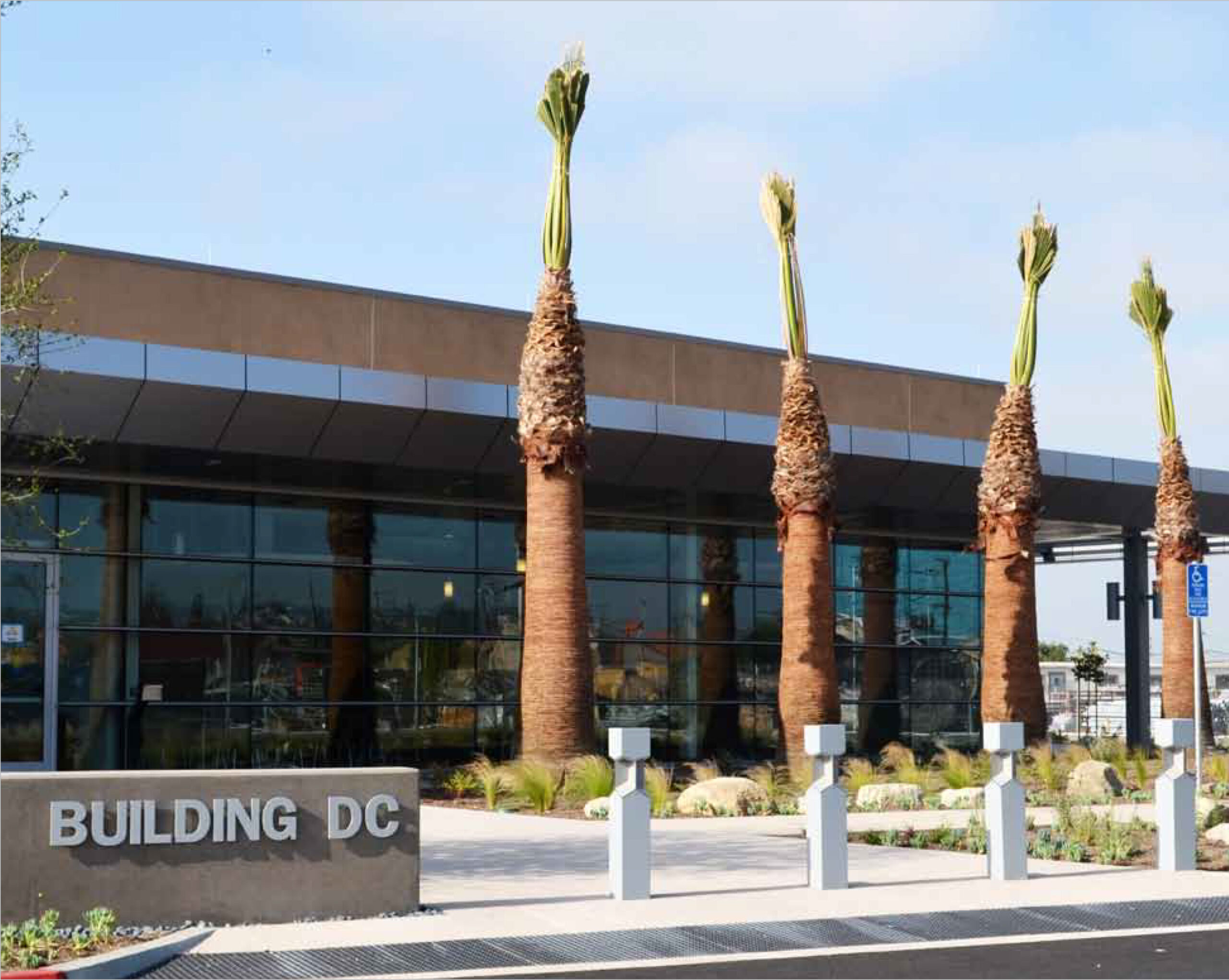
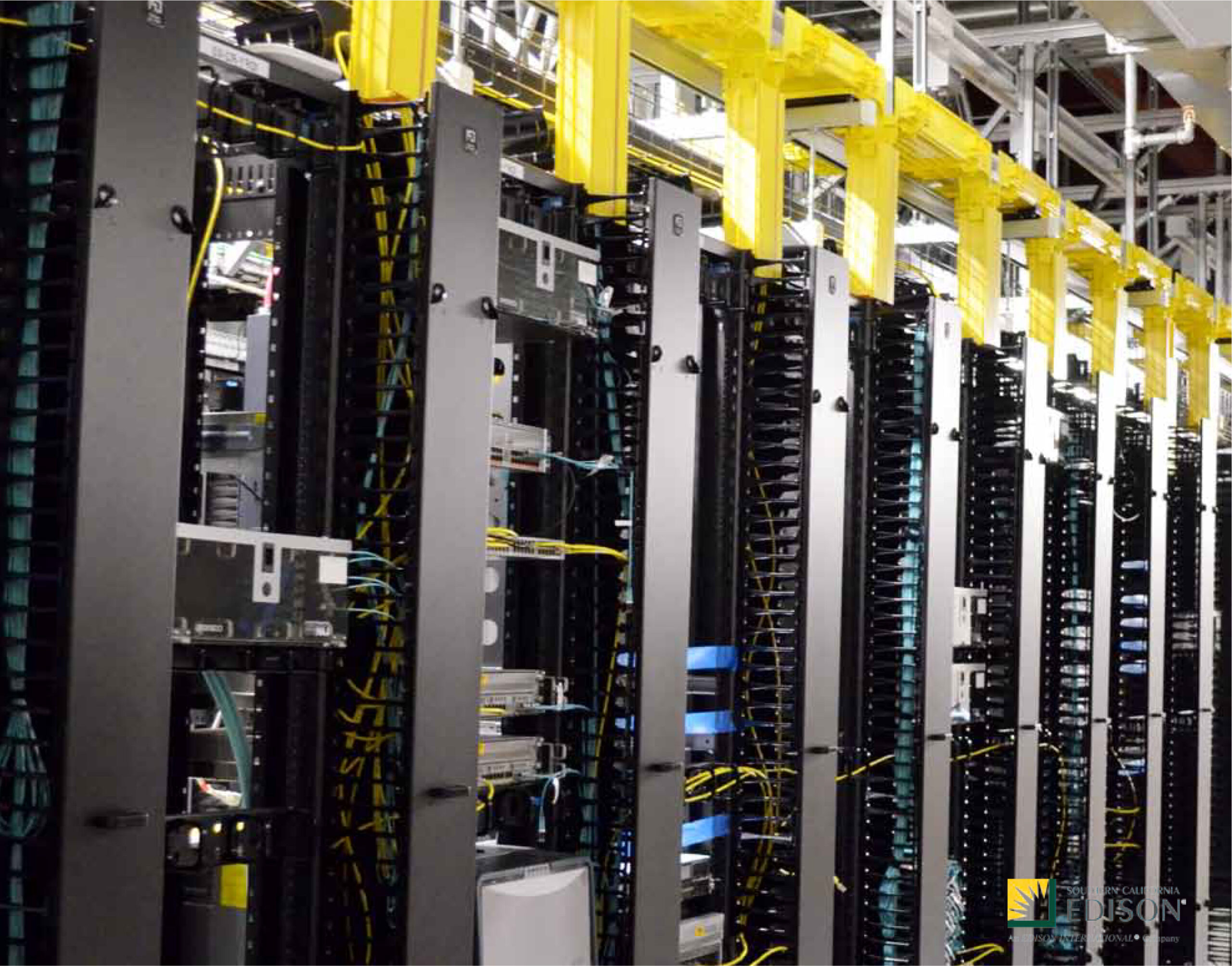
Southern California Edison Co-Primary Data Center
2013

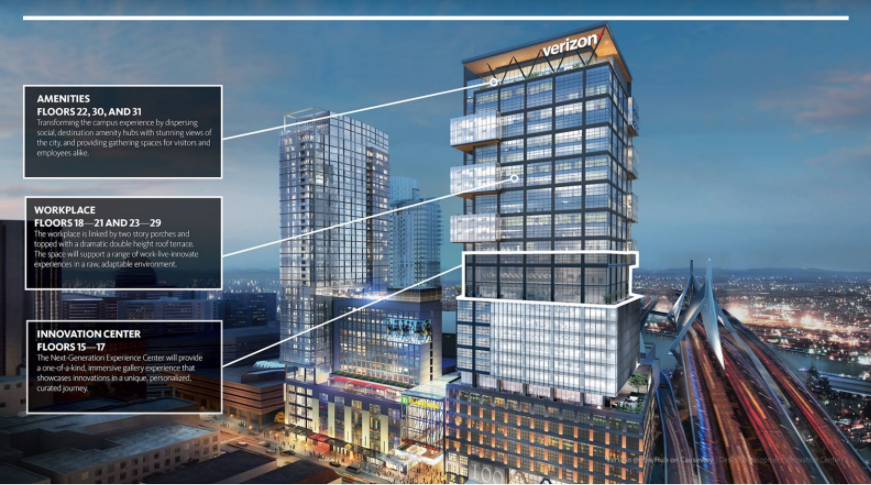
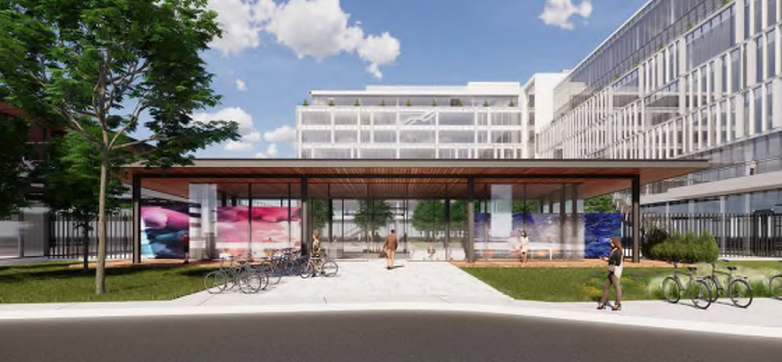
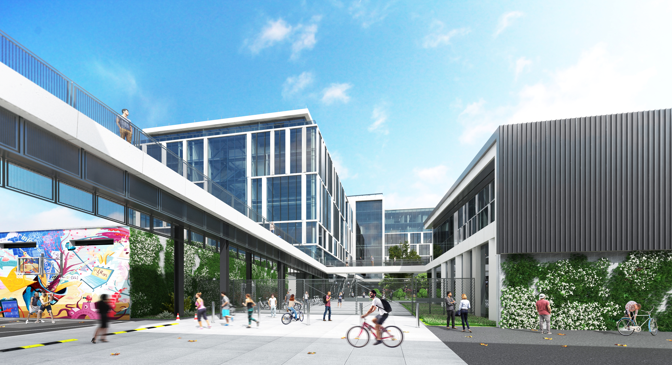
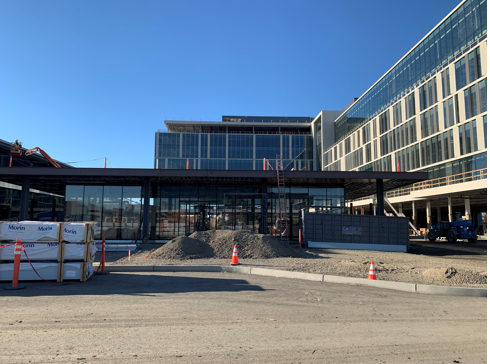
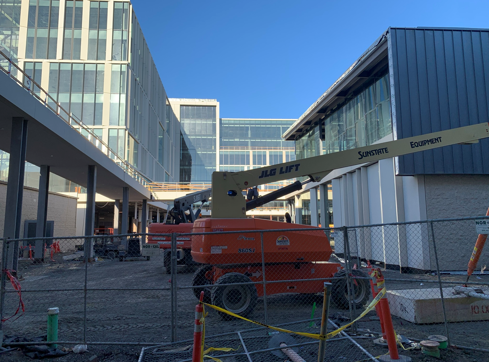
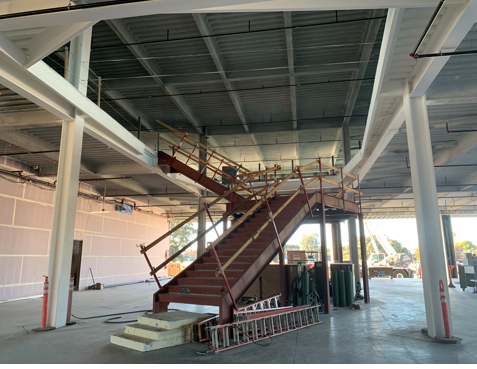
Verizon Boston Hub Causeway
2021
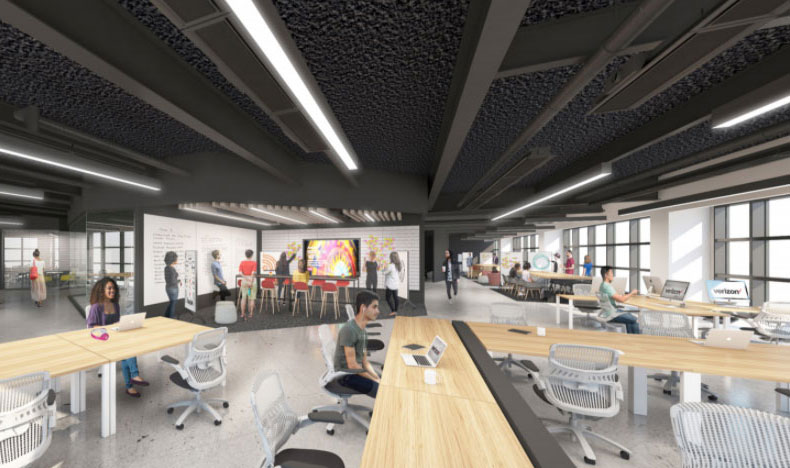
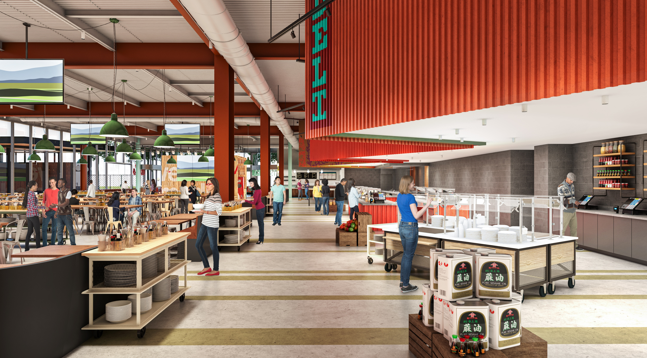
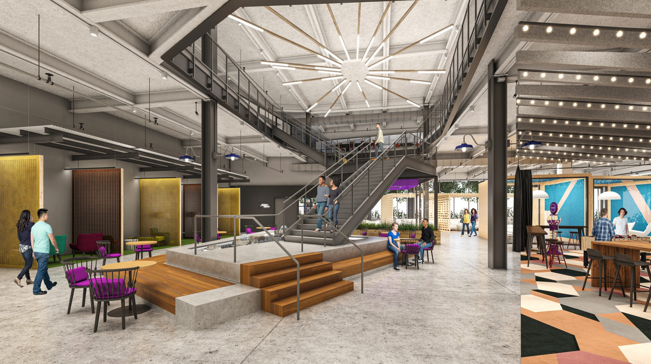
Verizon Media Headquarters
2021
Explore the Archive
-
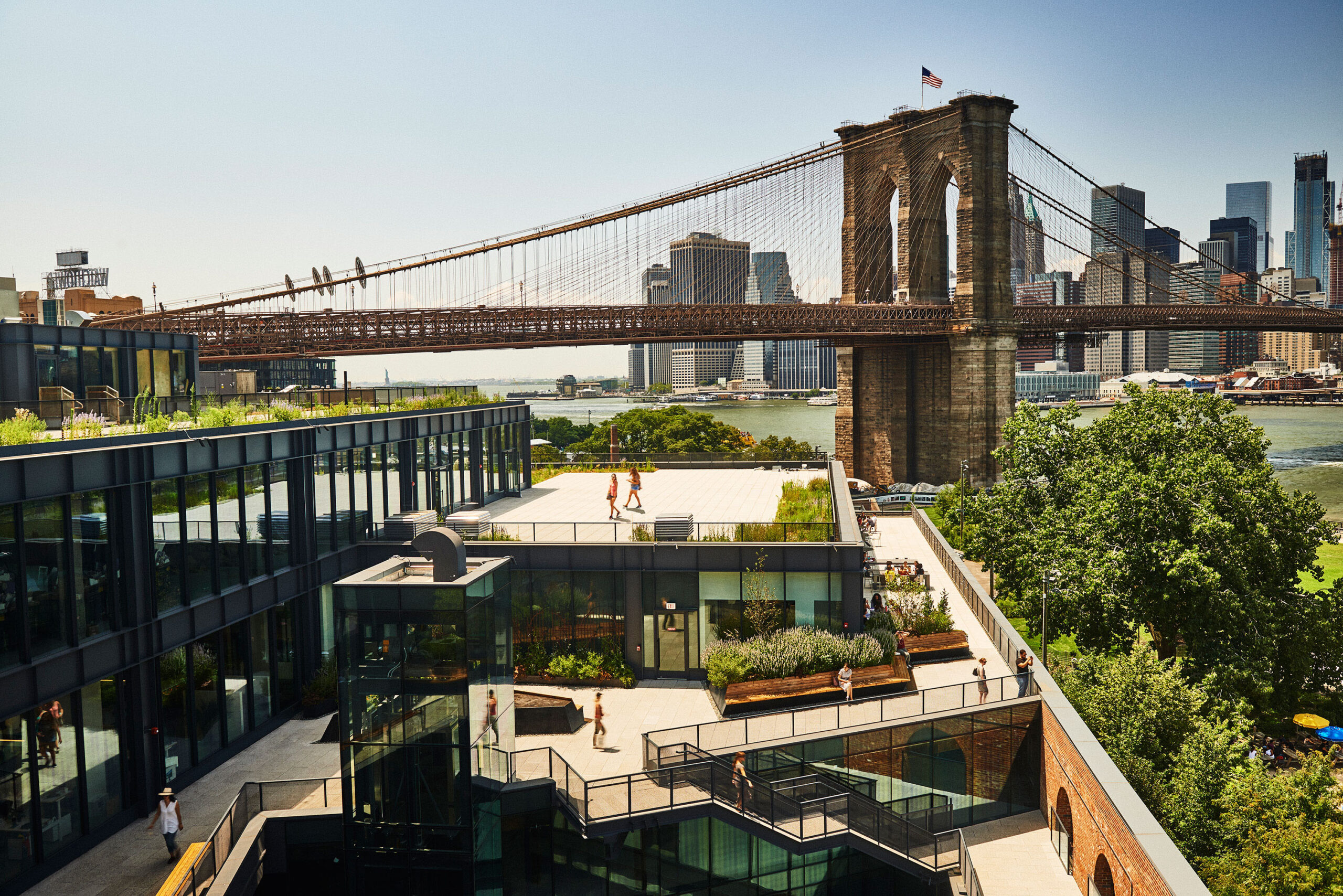
Jay Valgora
B.Arch. ’85
![The Brooklyn Bridge forms the backdrop for a roof with greenery and benches.]()
-
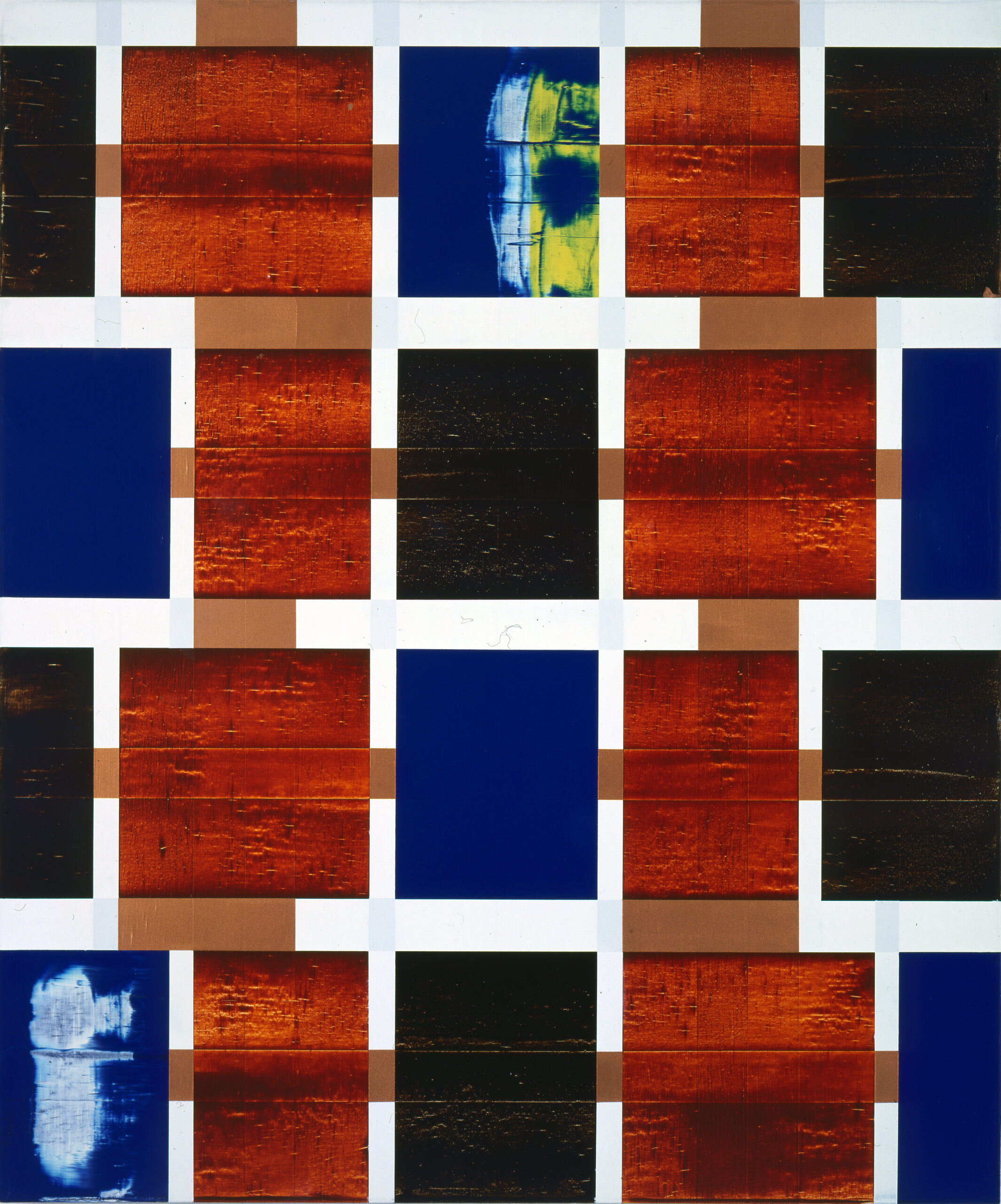
Stephen Ellis
B.F.A. ’73
![Painting with red, blue, and black rectangles]()
-
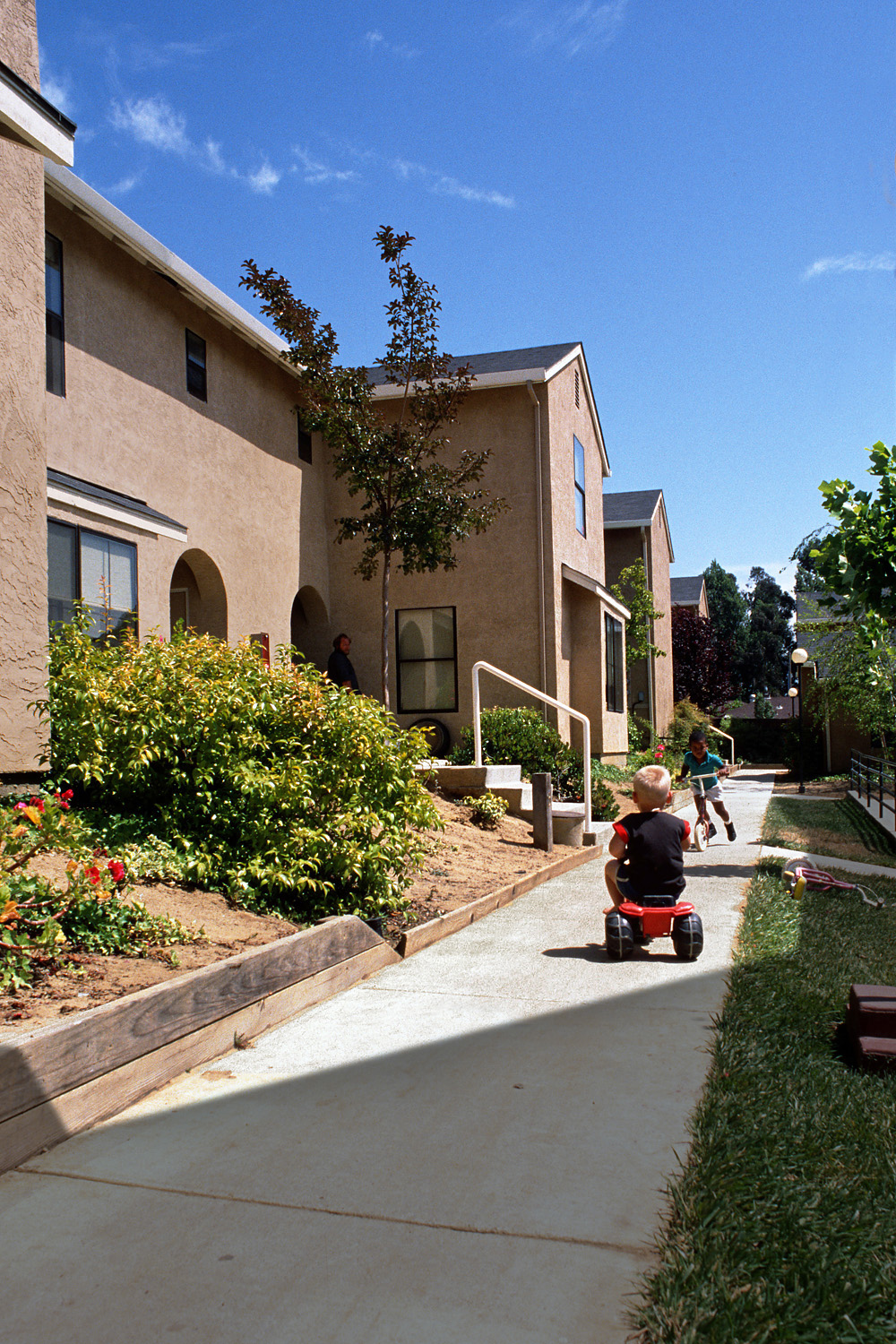
Mui Ho
B.Arch. ’66
![Outdoor facade of community housing]()
-
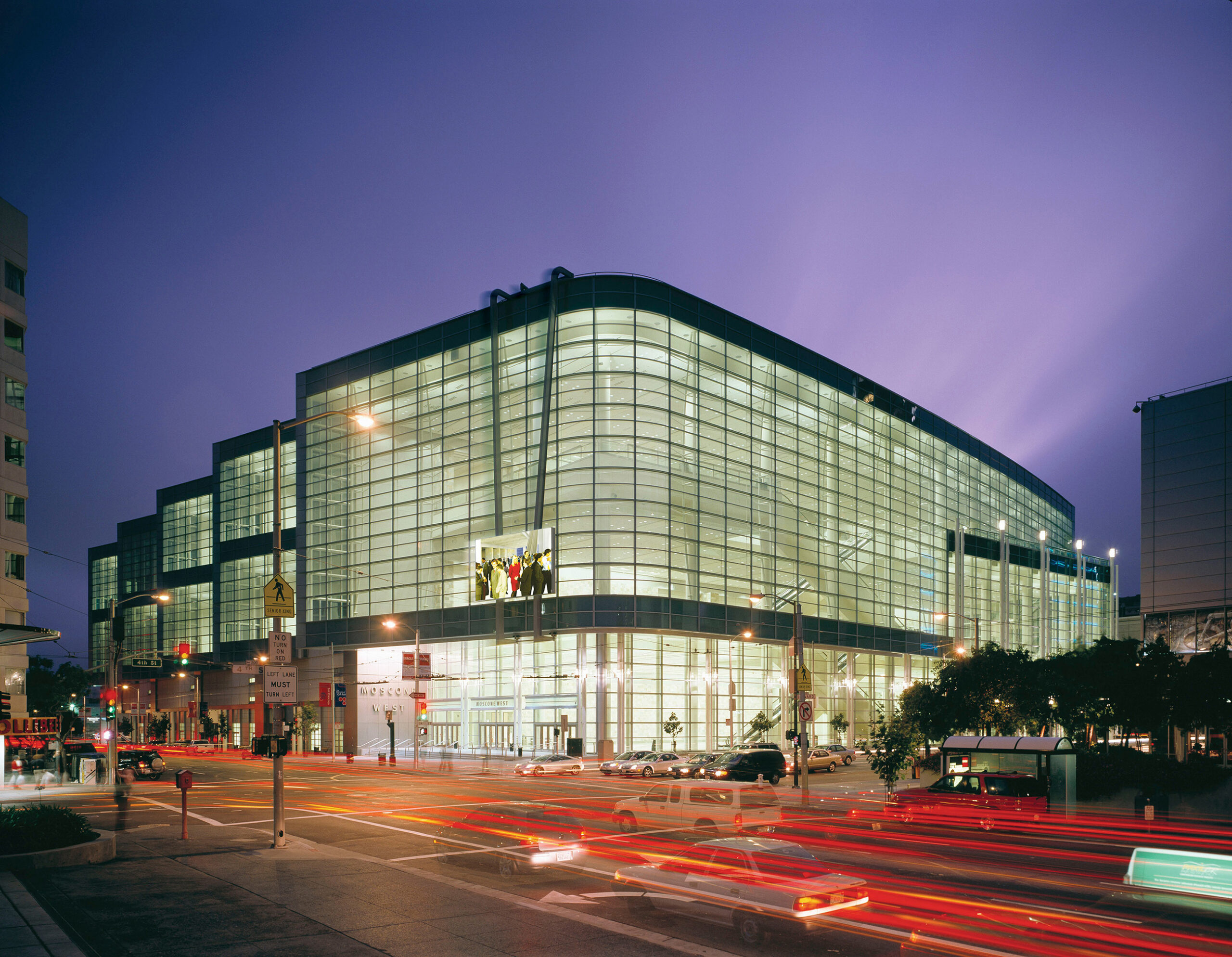
M. Arthur Gensler Jr.
B.Arch. ’58
![A well-lit, multifloor glass building stands out against a purple night sky. The building's interior lights highlight the curved edges of the main building's facade.]()