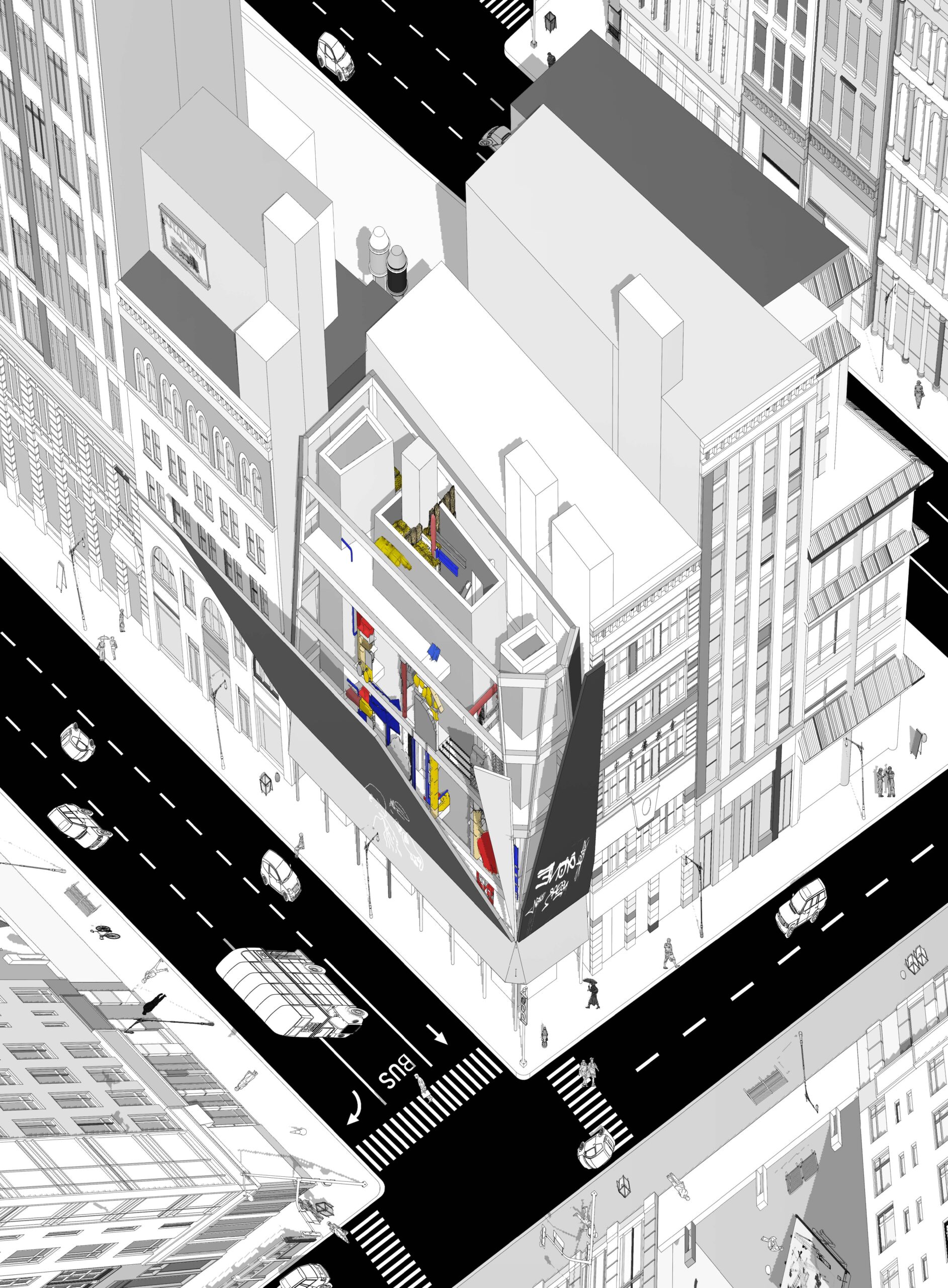
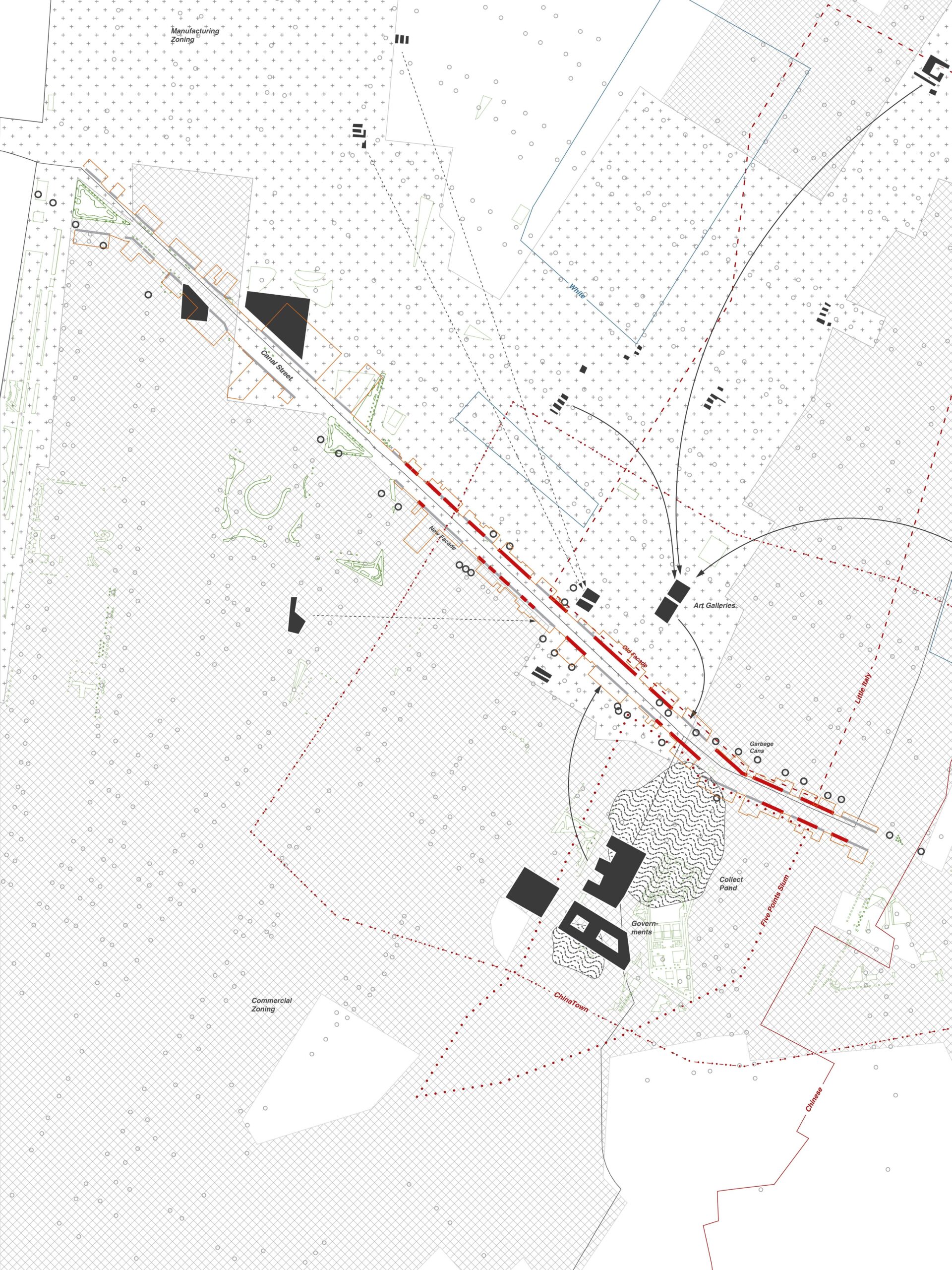
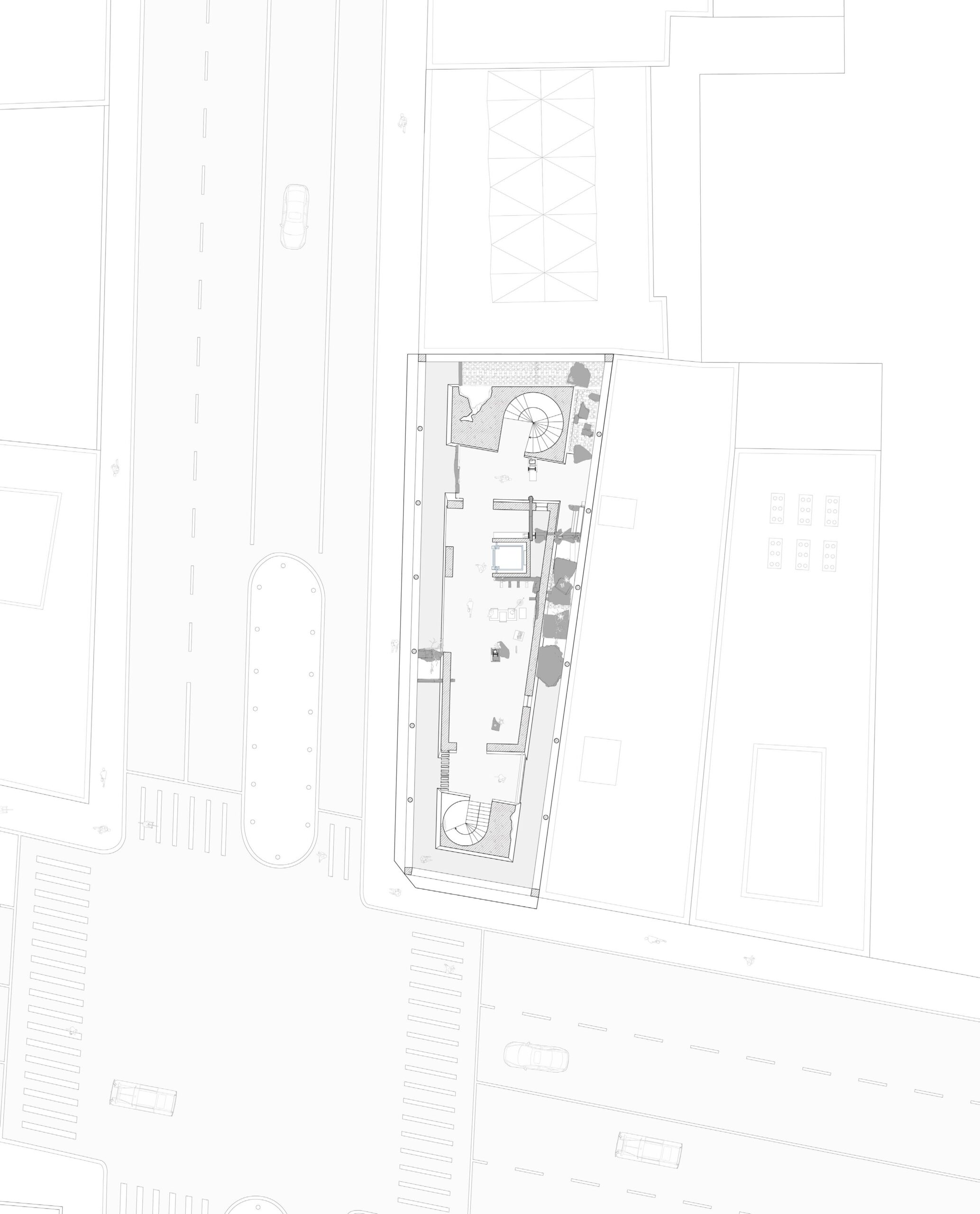
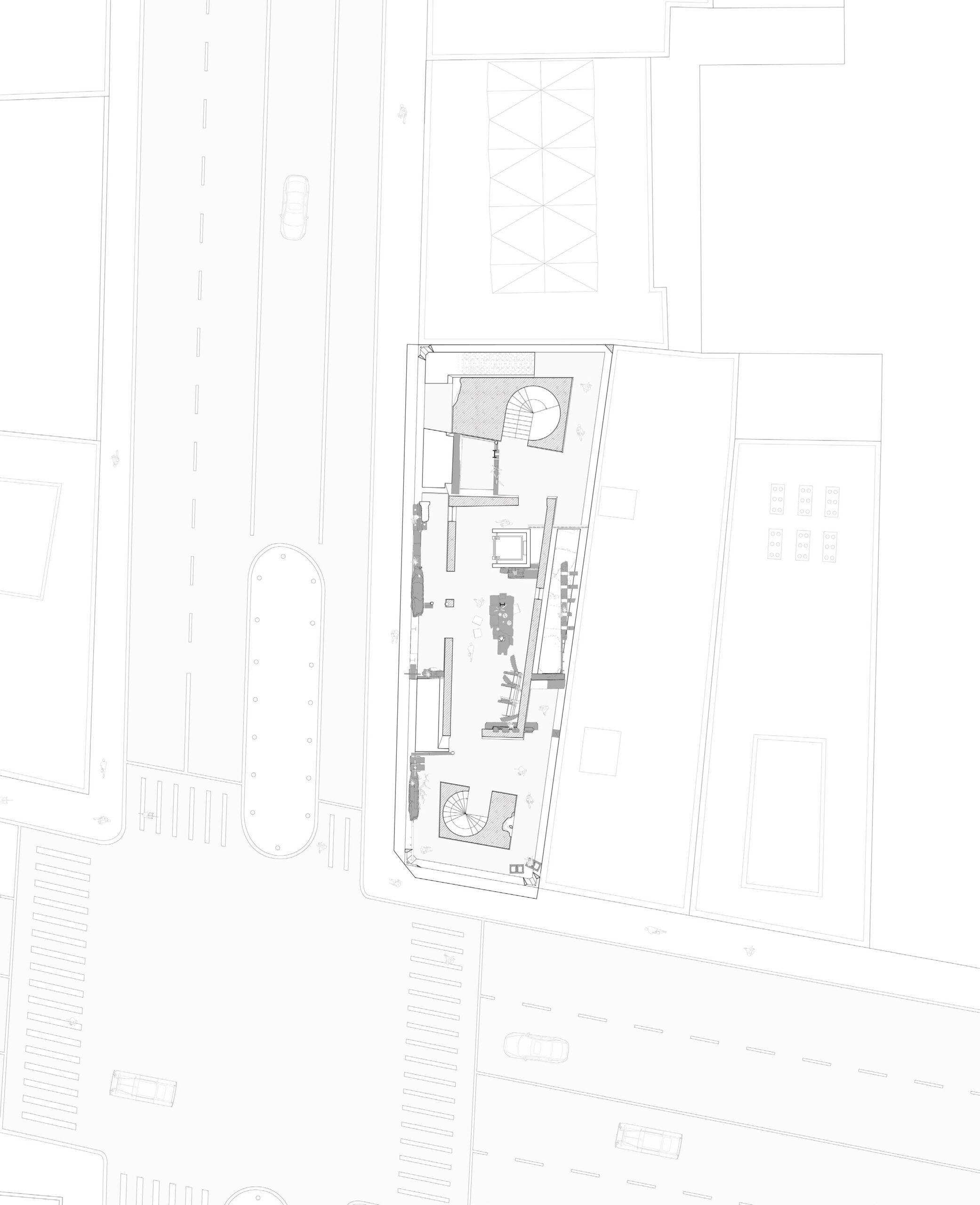
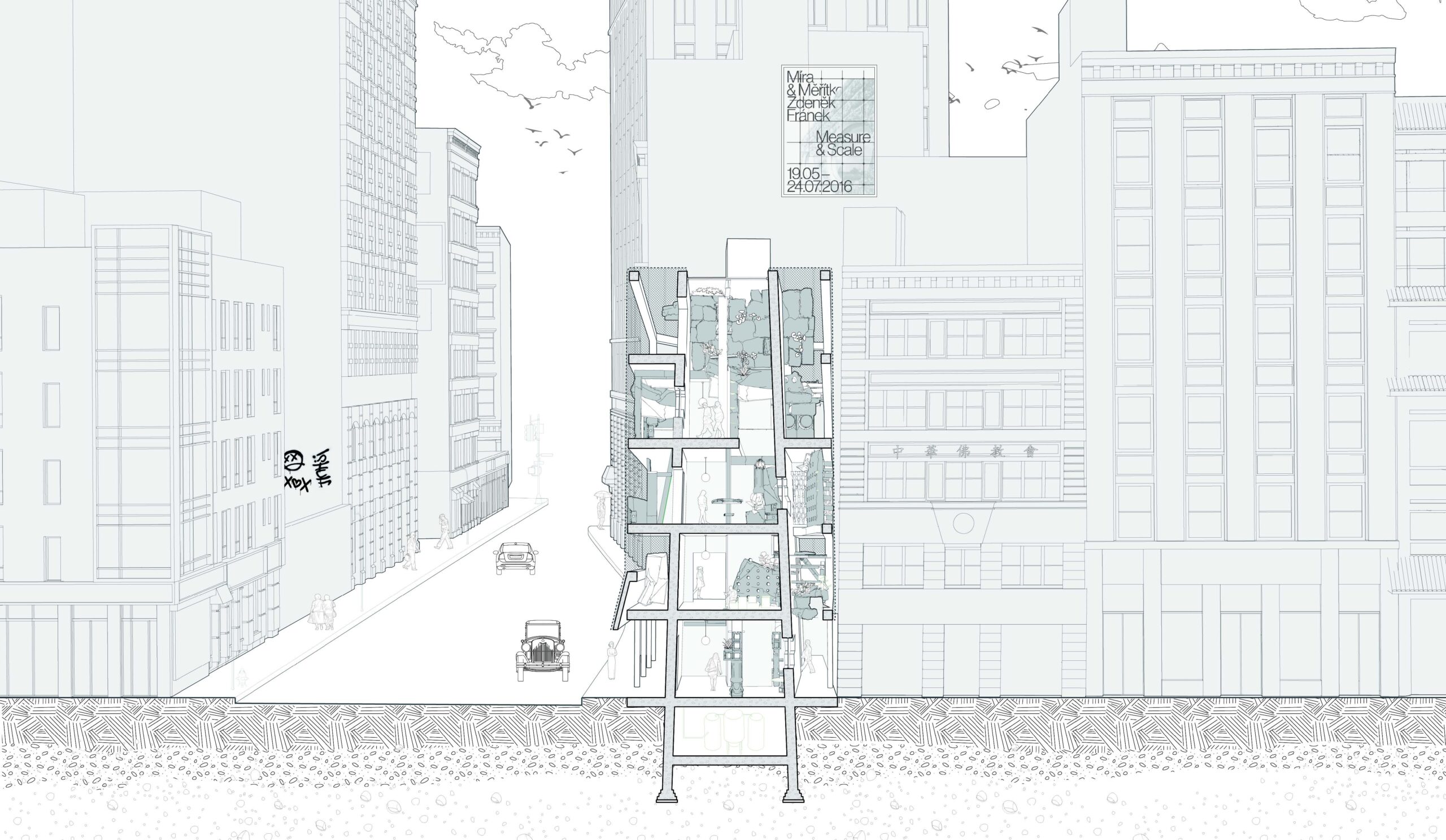
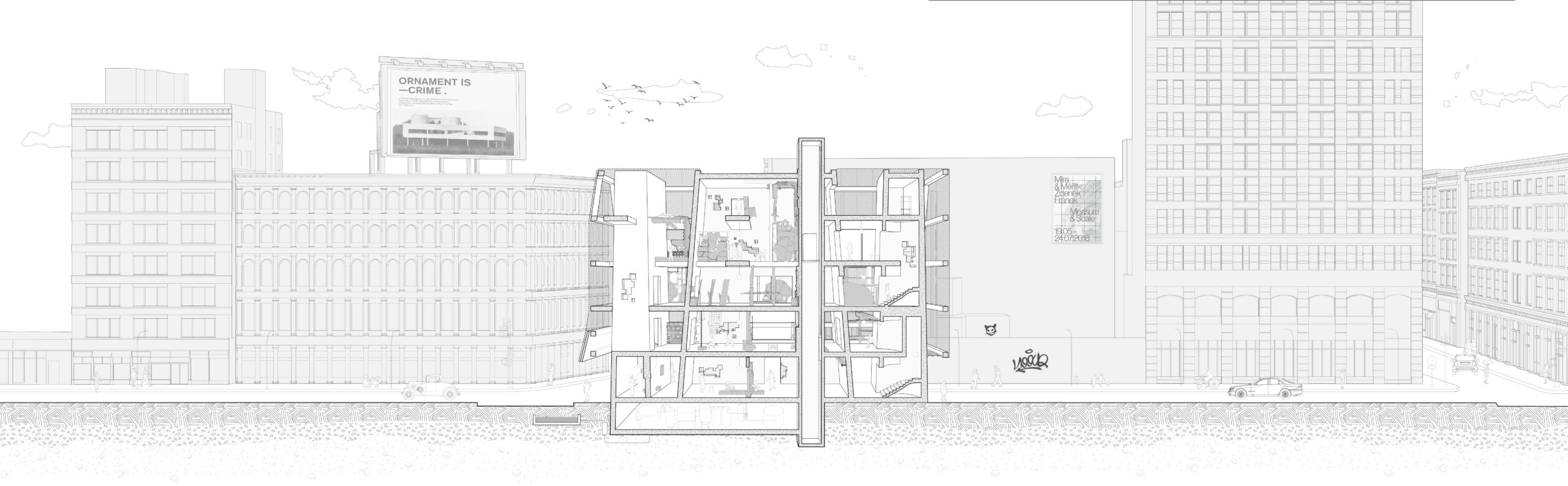
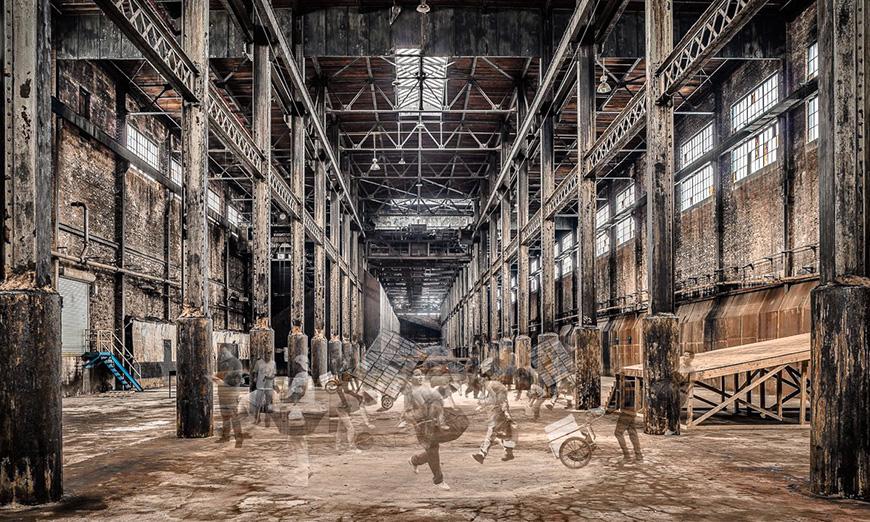
Today, a silent fight persists. The “others” settled in the “othered” land, and gentrified properties rise among infrastructural neglect South of Canal, sleek façades and privatized spaces replace old structures, as capital reshapes the urban fabric. To the north, old homes hide behind fire escapes, their surfaces layered with graffiti. The old immigrant enclaves erode, facing decay and displacement.
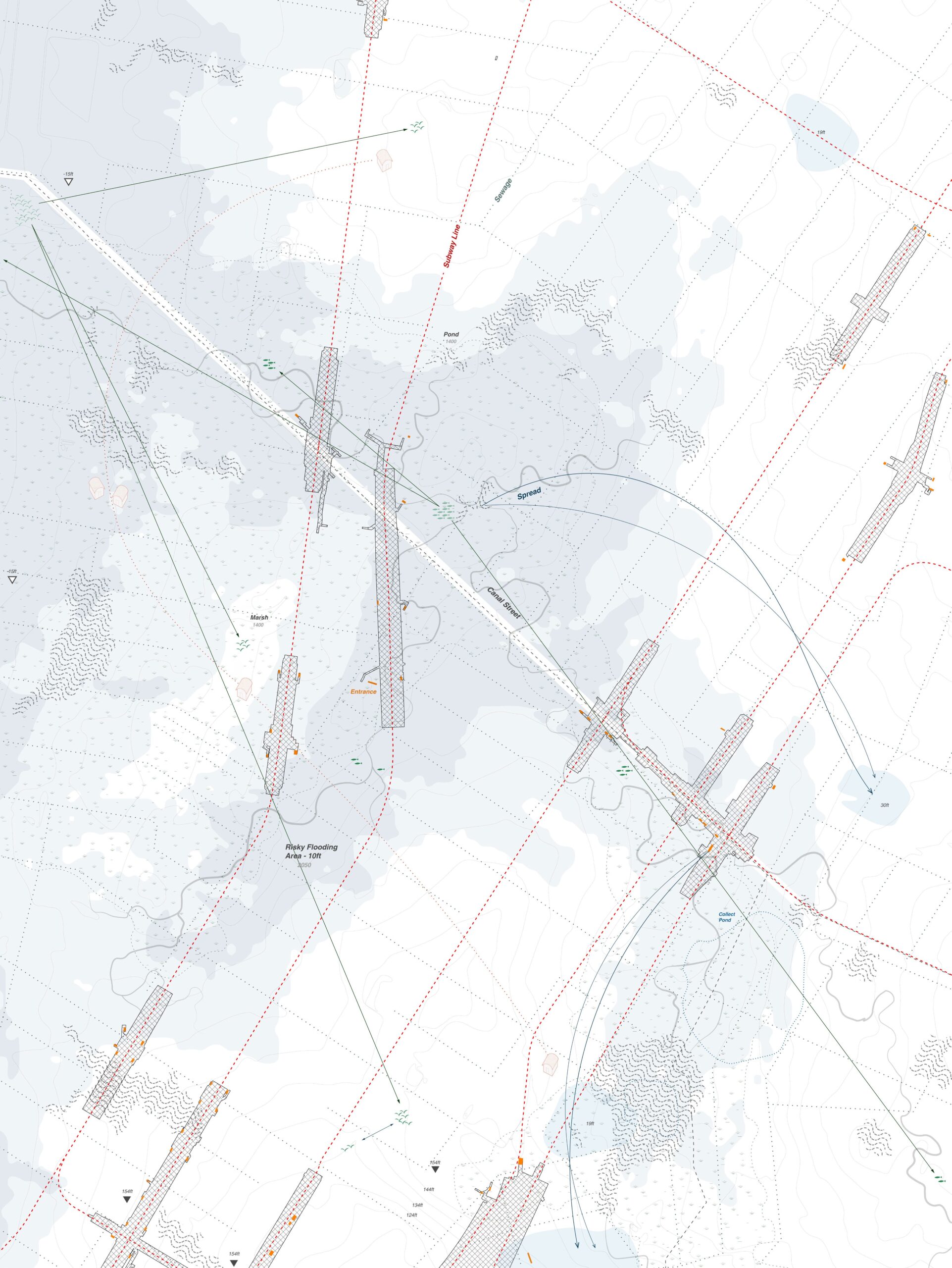
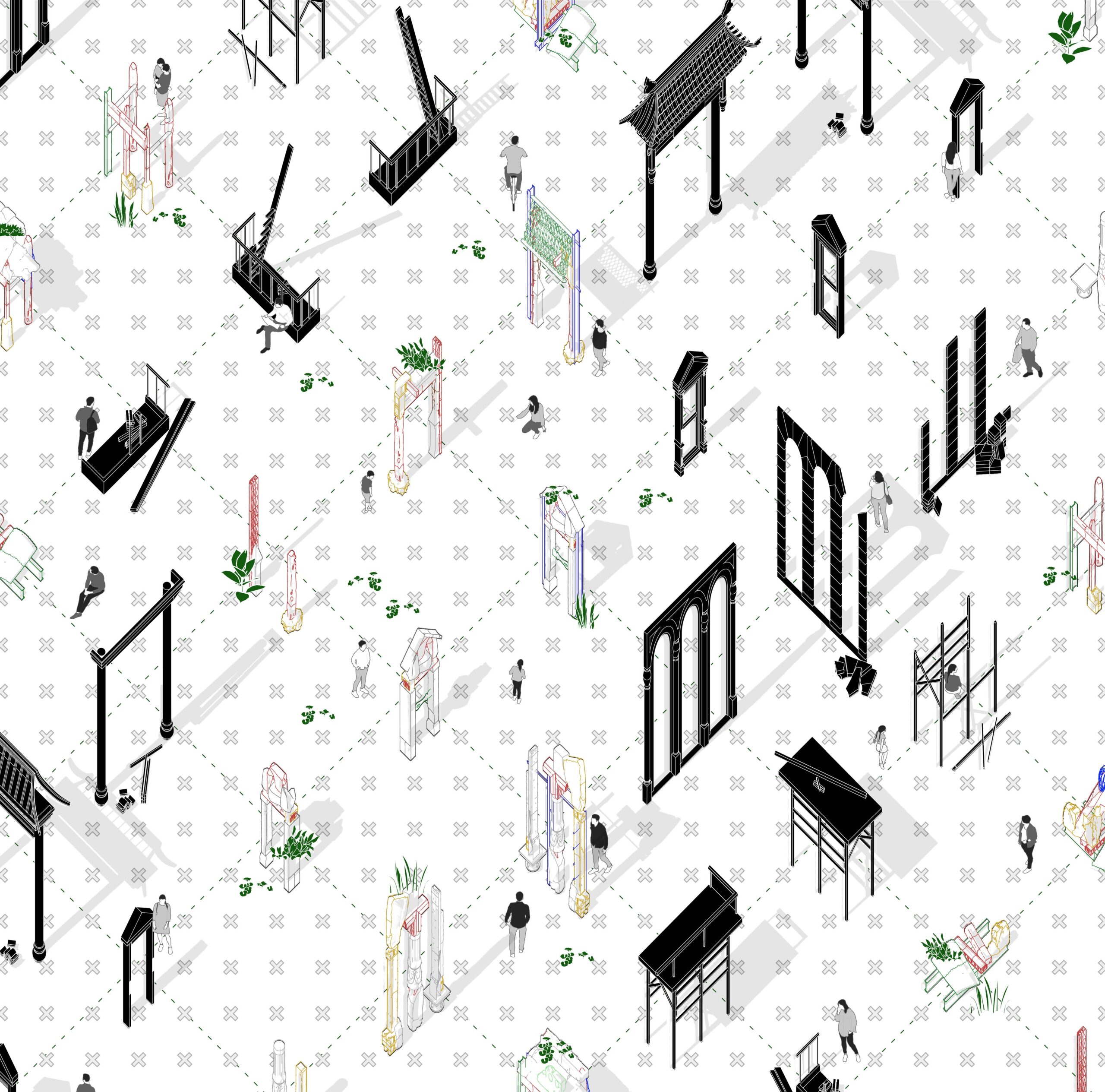
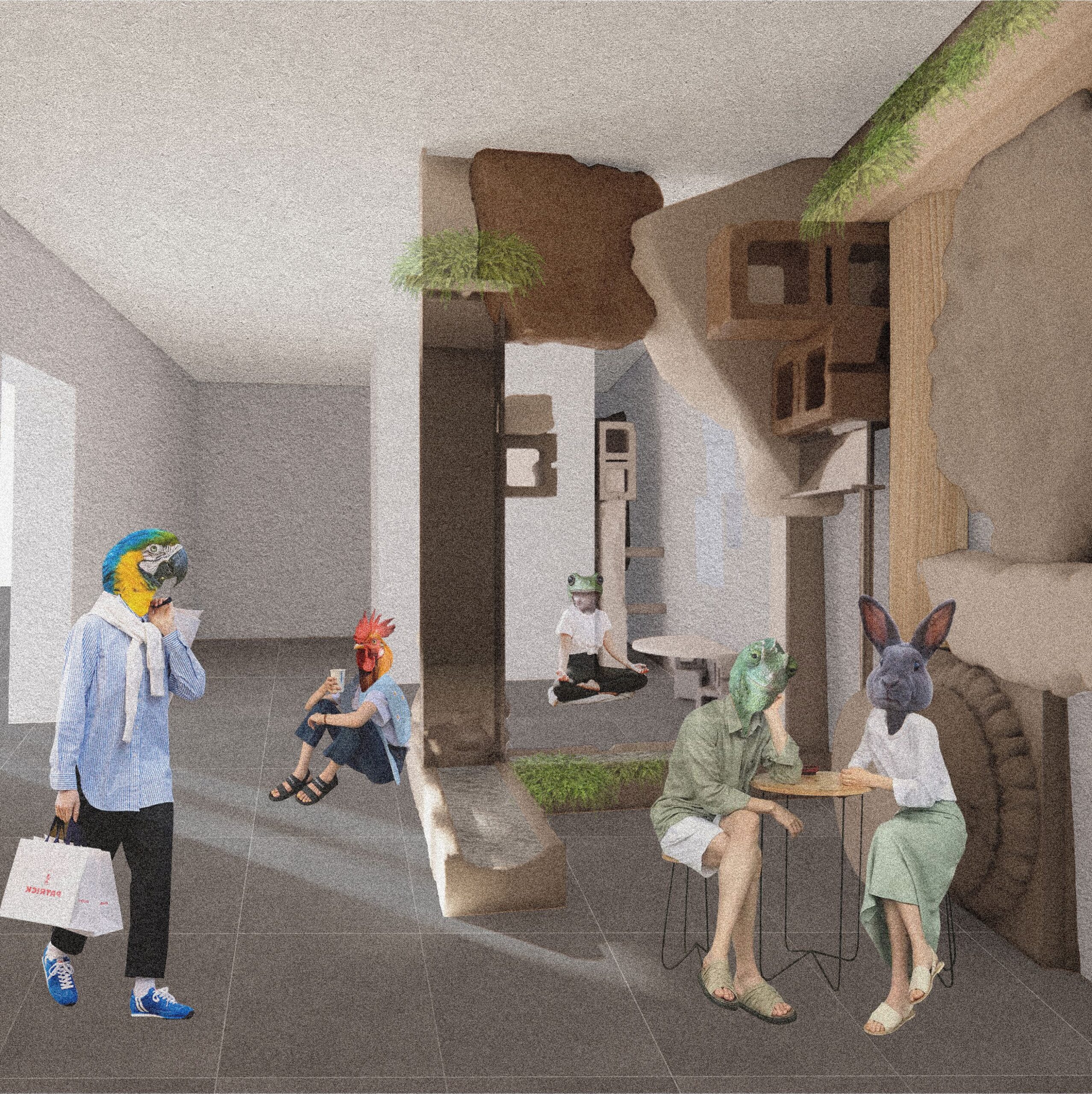
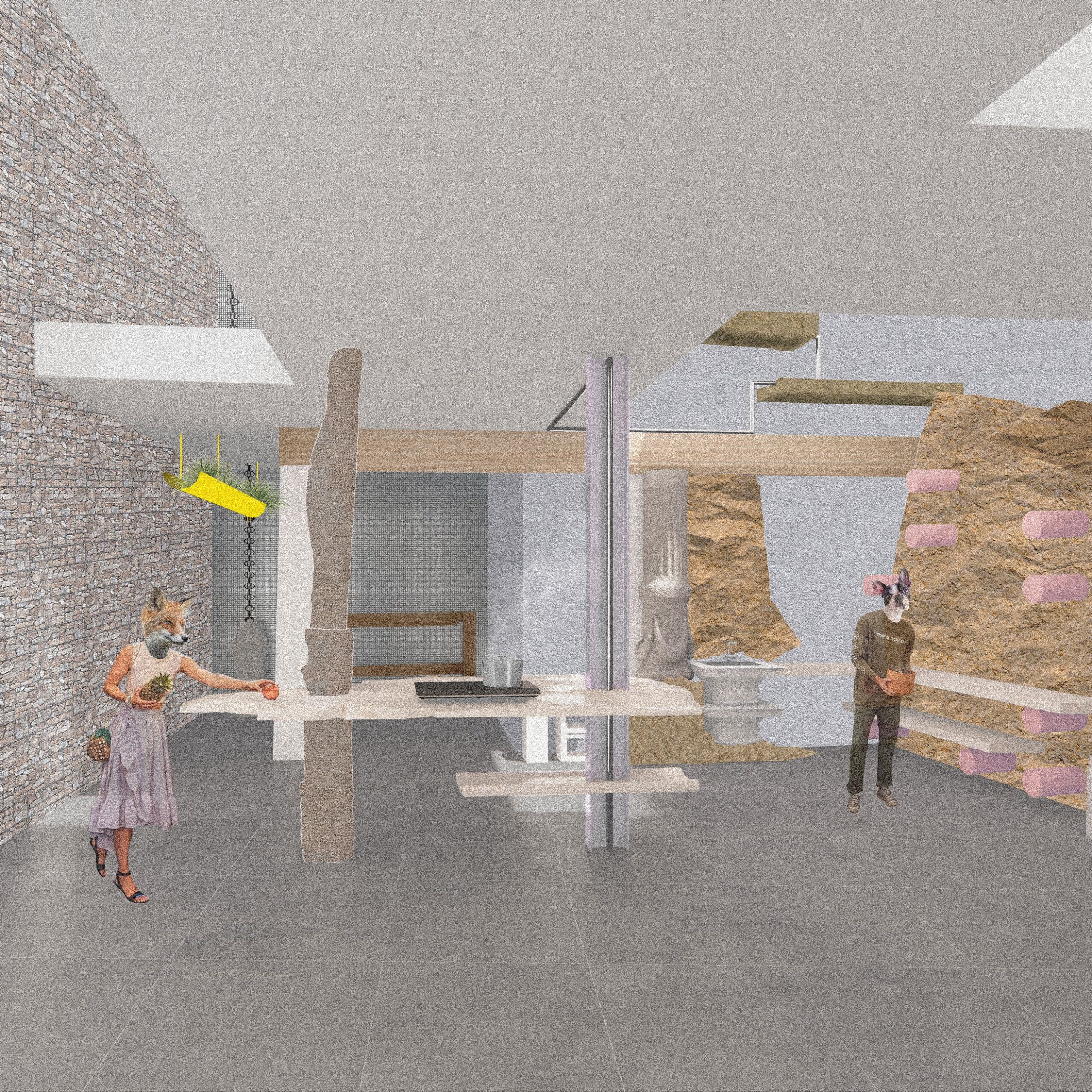
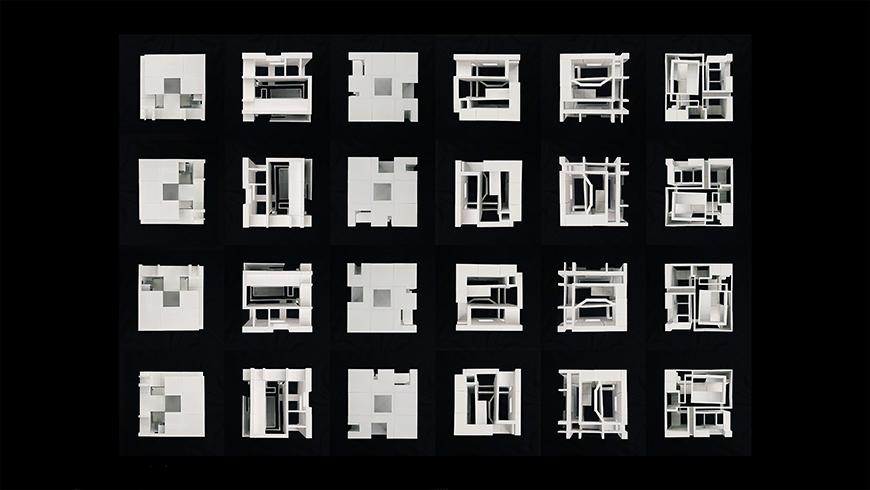
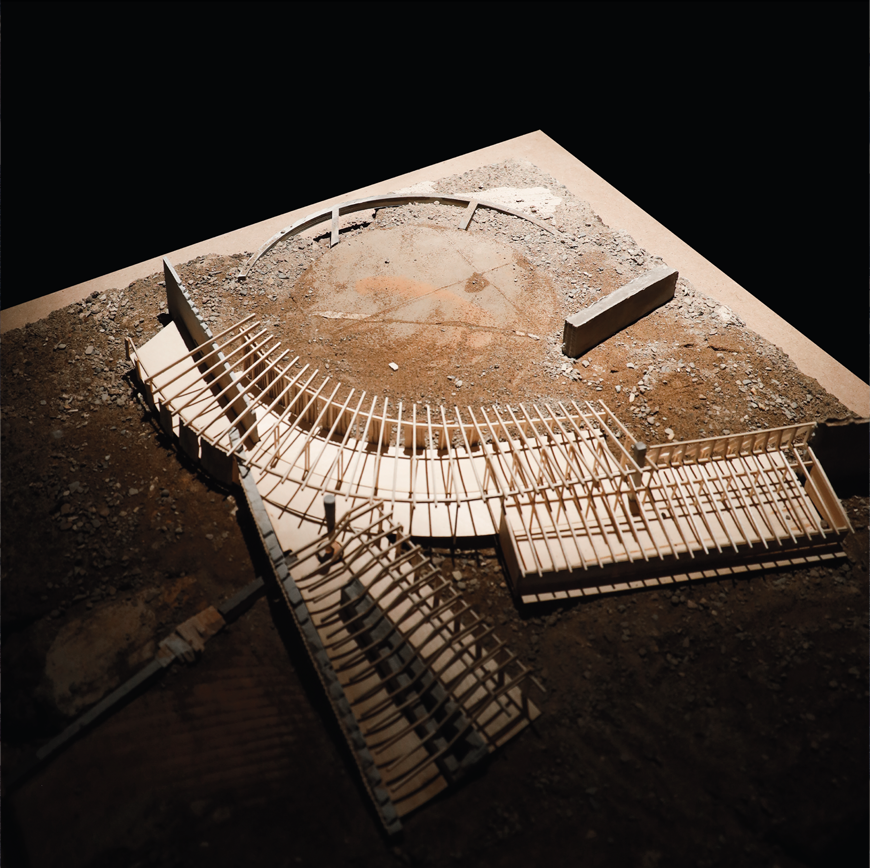
In the process, water has witnessed all the changes — the demand for water from nature for the construction of the city, and the decay of the city in the competition for the allocation of water. By using aged facade as a material for running water and natural biological erosion, buried rivers can be resurfaced through pressure and piping. Picked, broken, patched, and remodeled, these worn and polished facades bring symbiotic meaning back to this parched landscape as the water wears them down. Flowing through sand, silt, and reed — skin and frame — it becomes filtrate for the people, dissolving into tea, food, and stories once more.