Skip to content

Adirondack Moose Refuge

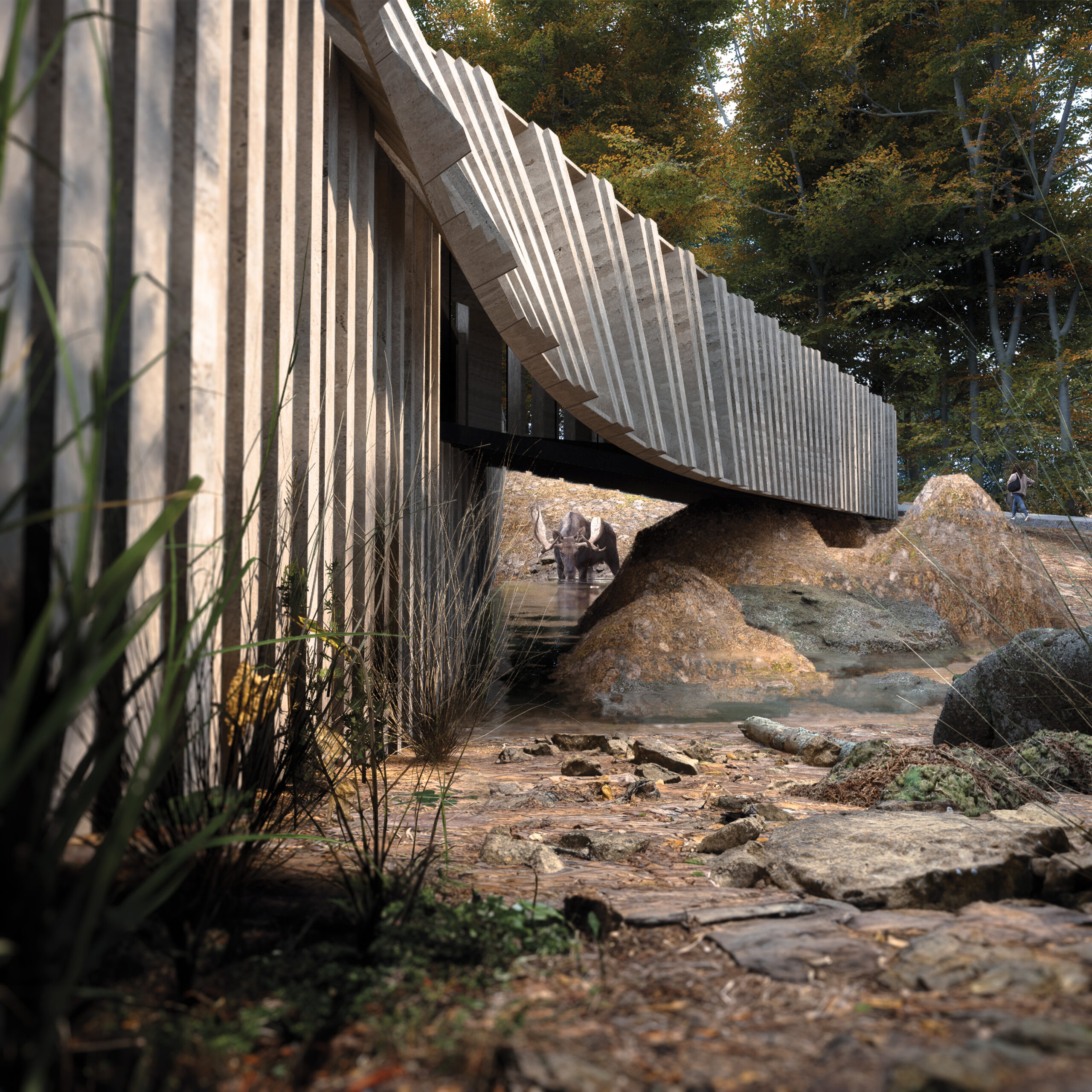
an architectural structure built upon stones along a trail

Contributors

  • Jaewon Choi (M.Arch. '26)
  • David Perovsek (M.Arch. '26)
  • Bhavindu Adhihetty (M.Arch. '26)

Class

ARCH 5111 Core Design Studio I: Fundamentals

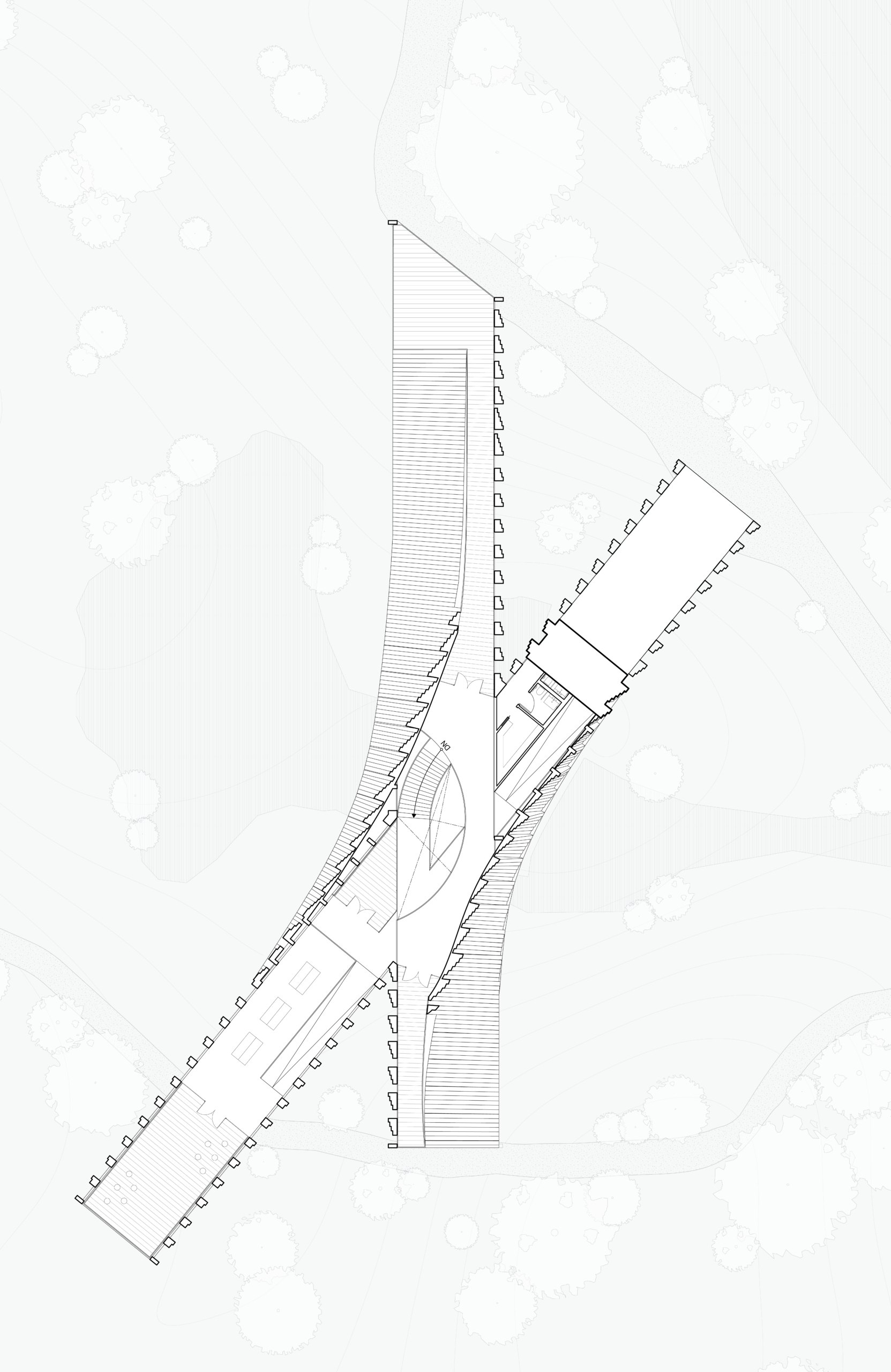
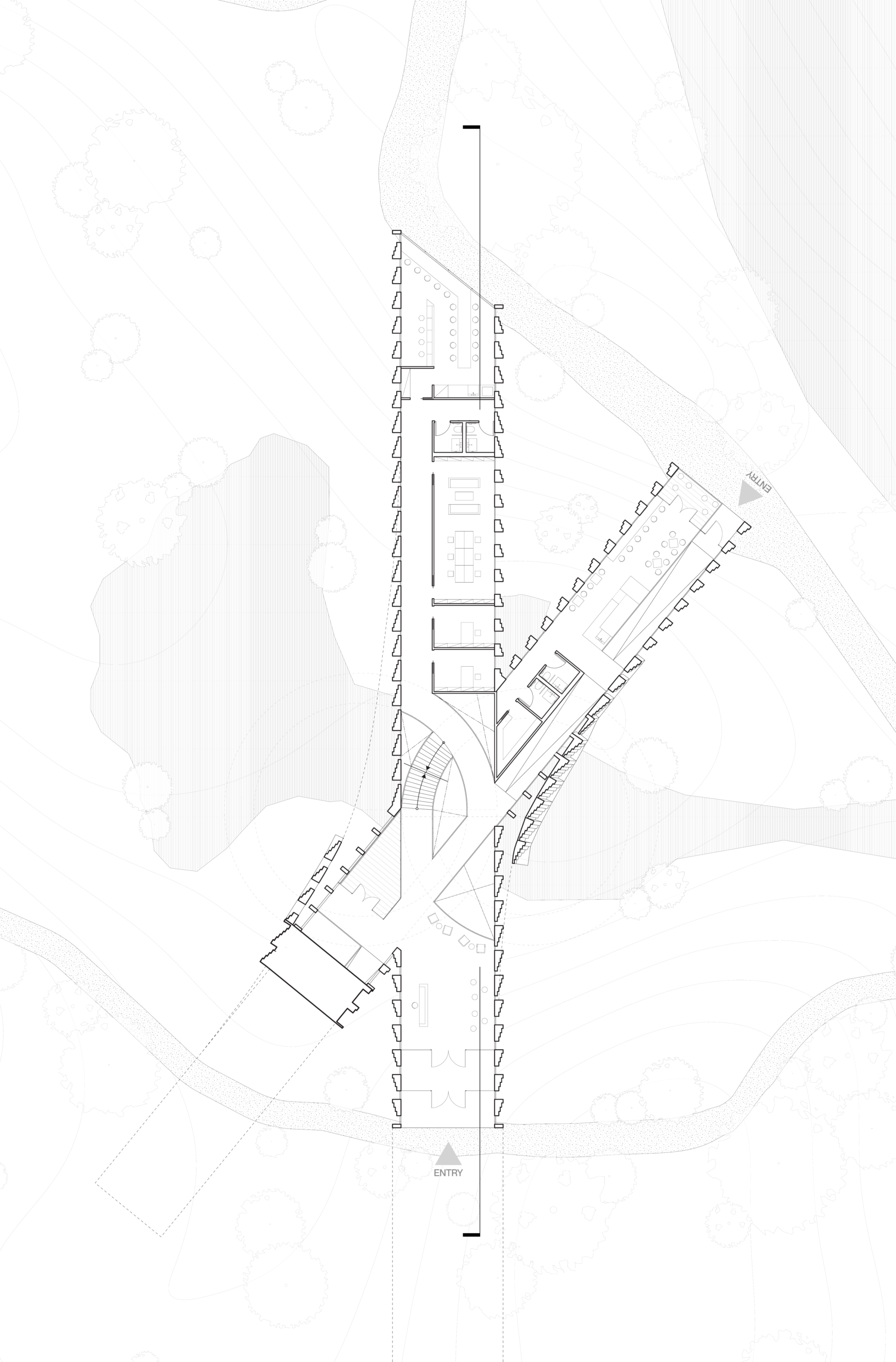
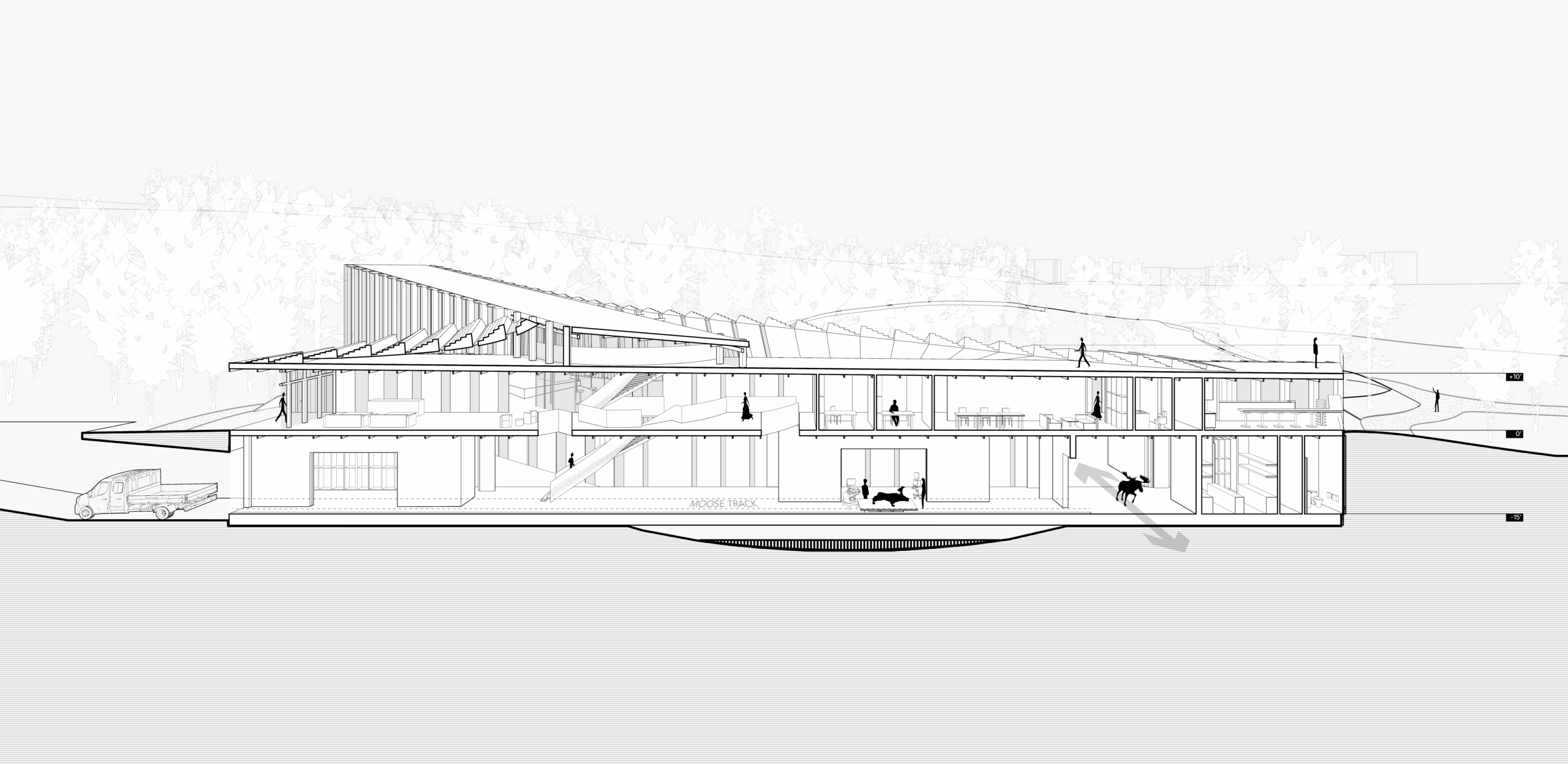
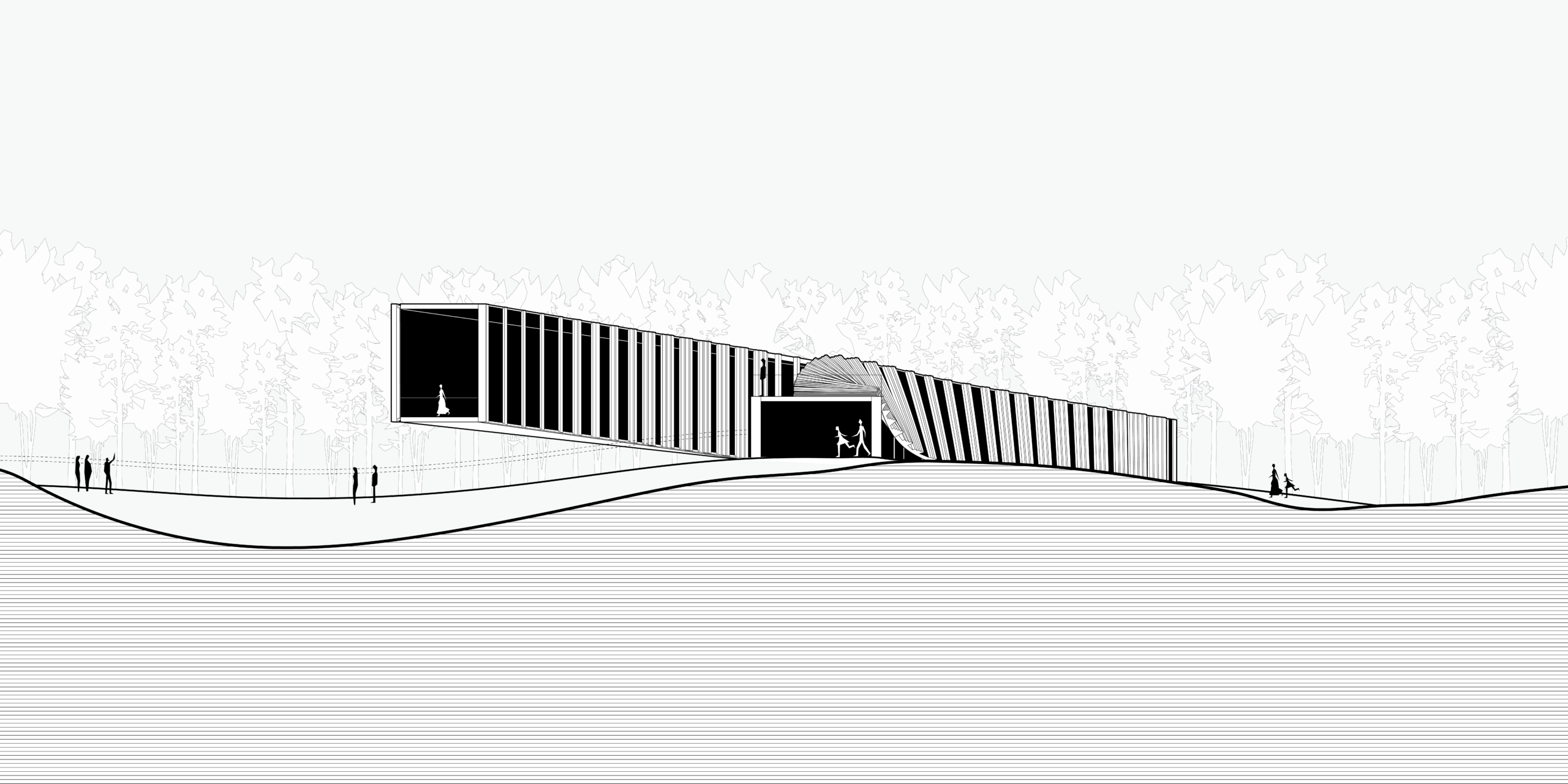
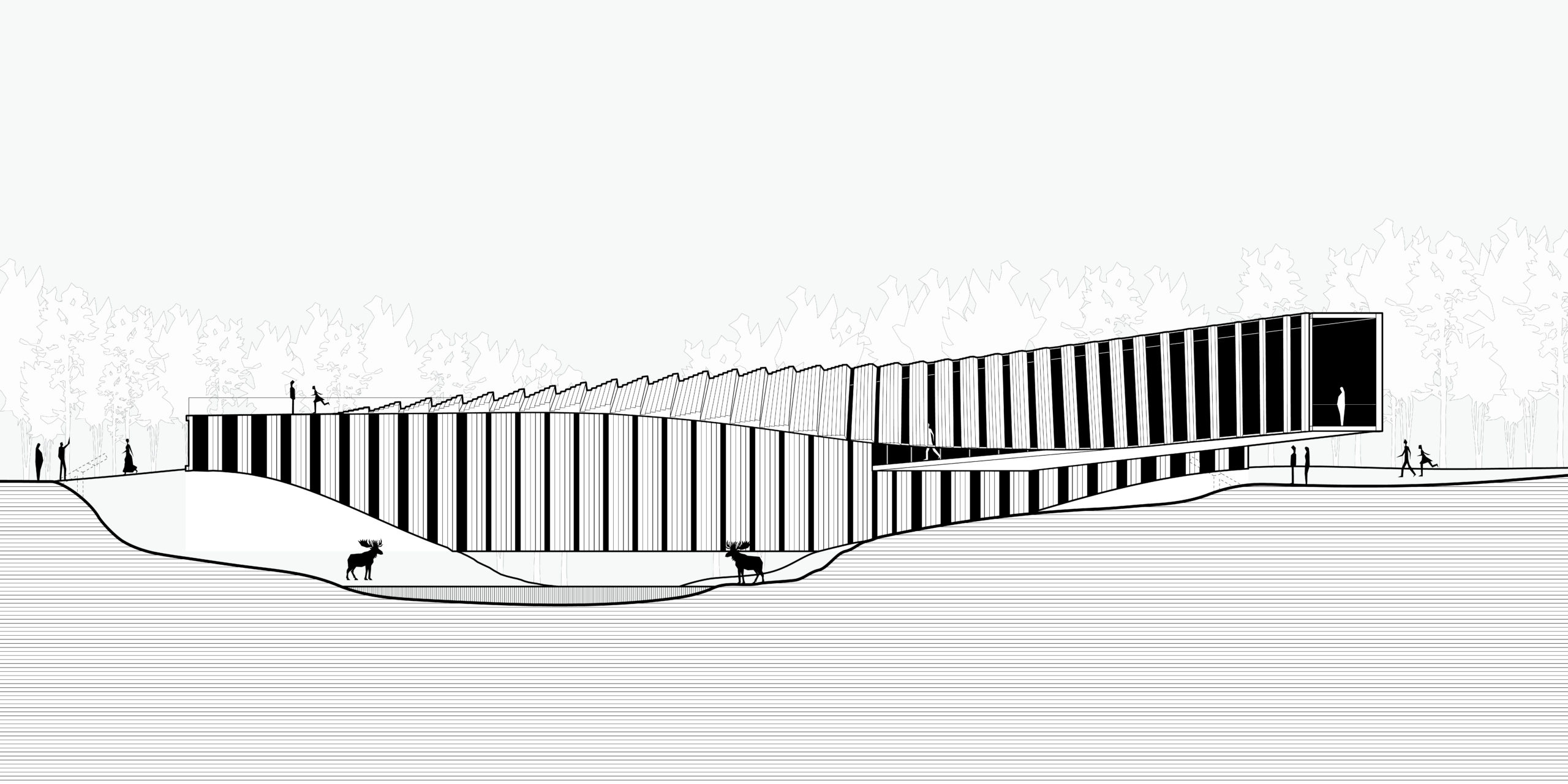
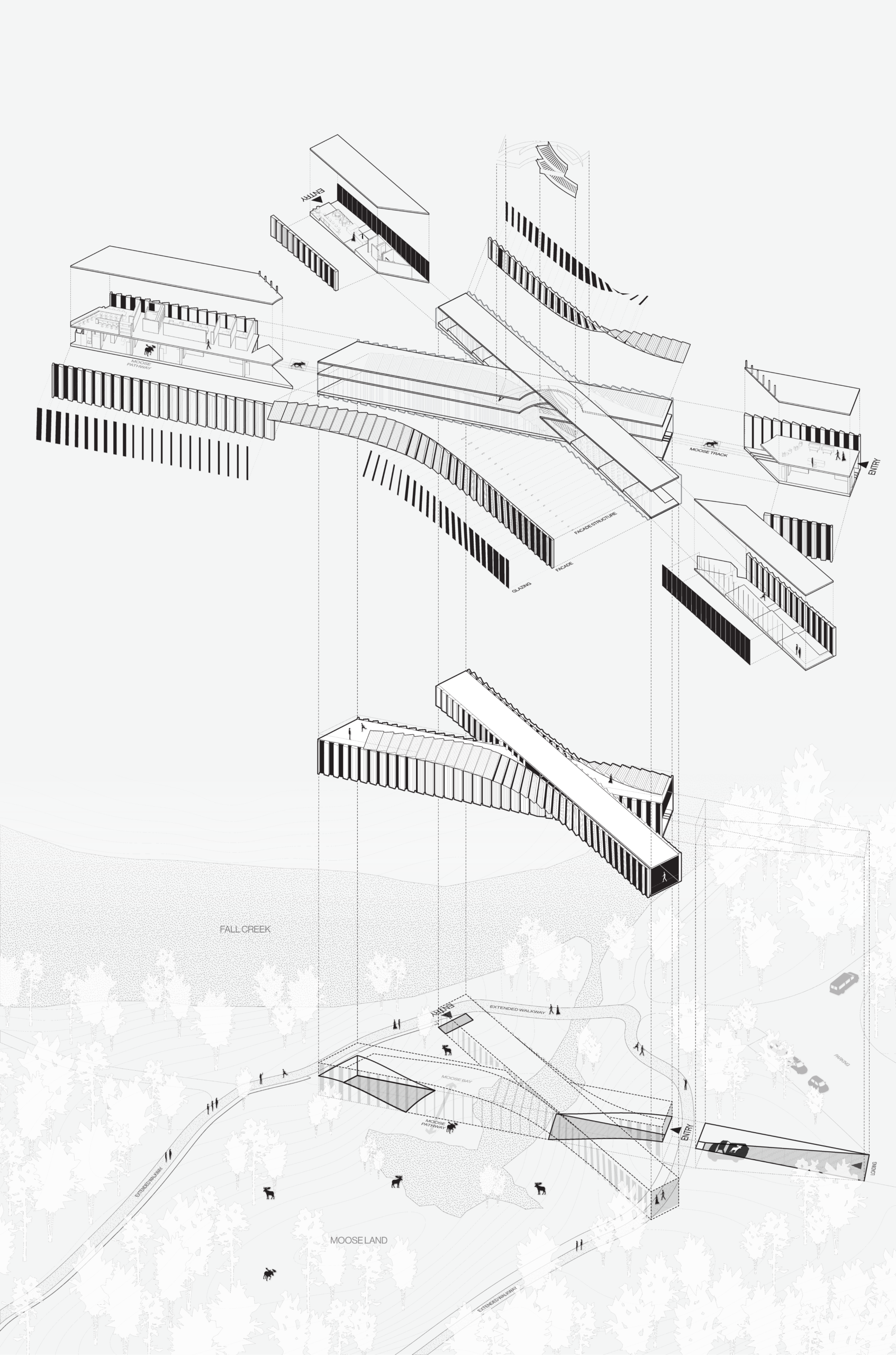
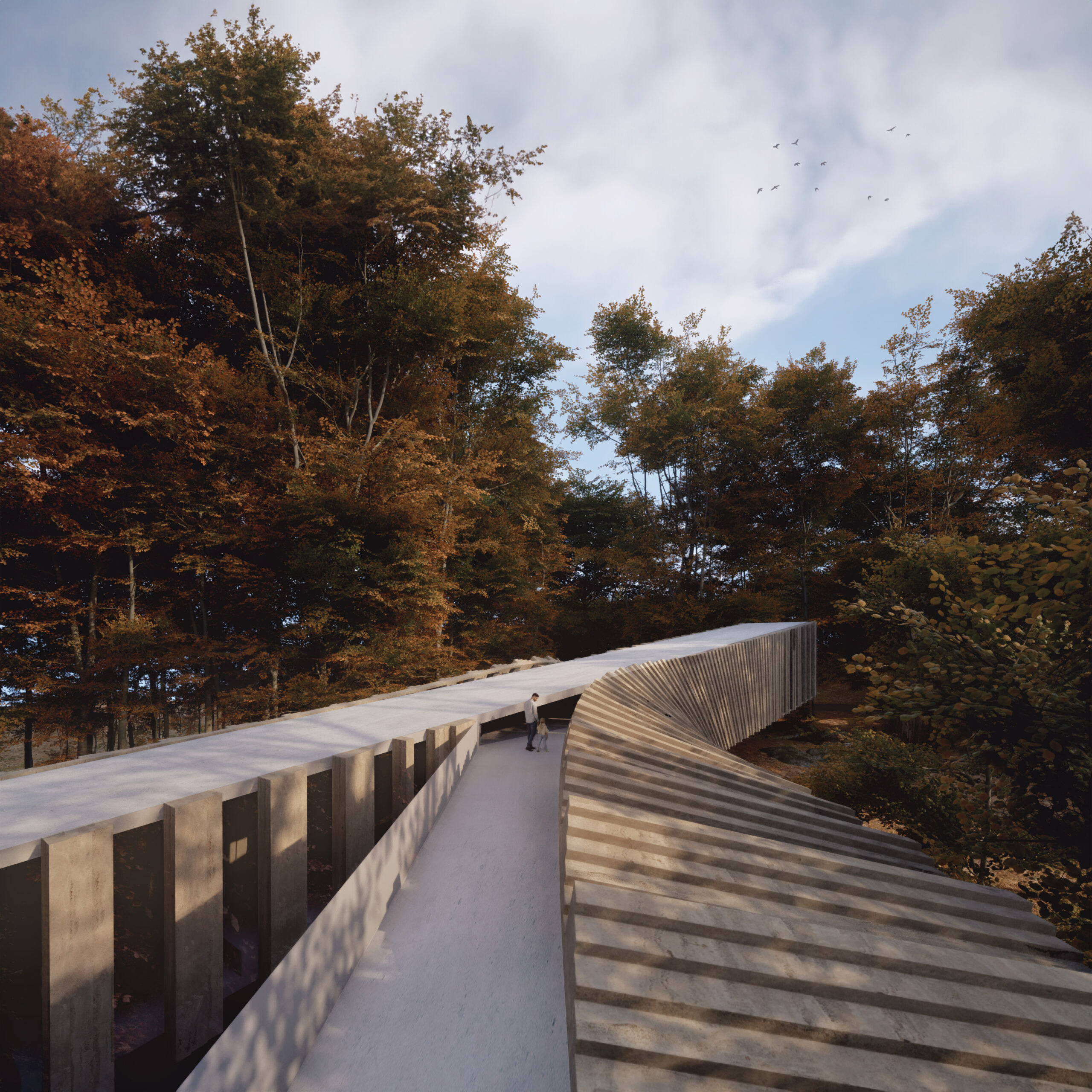
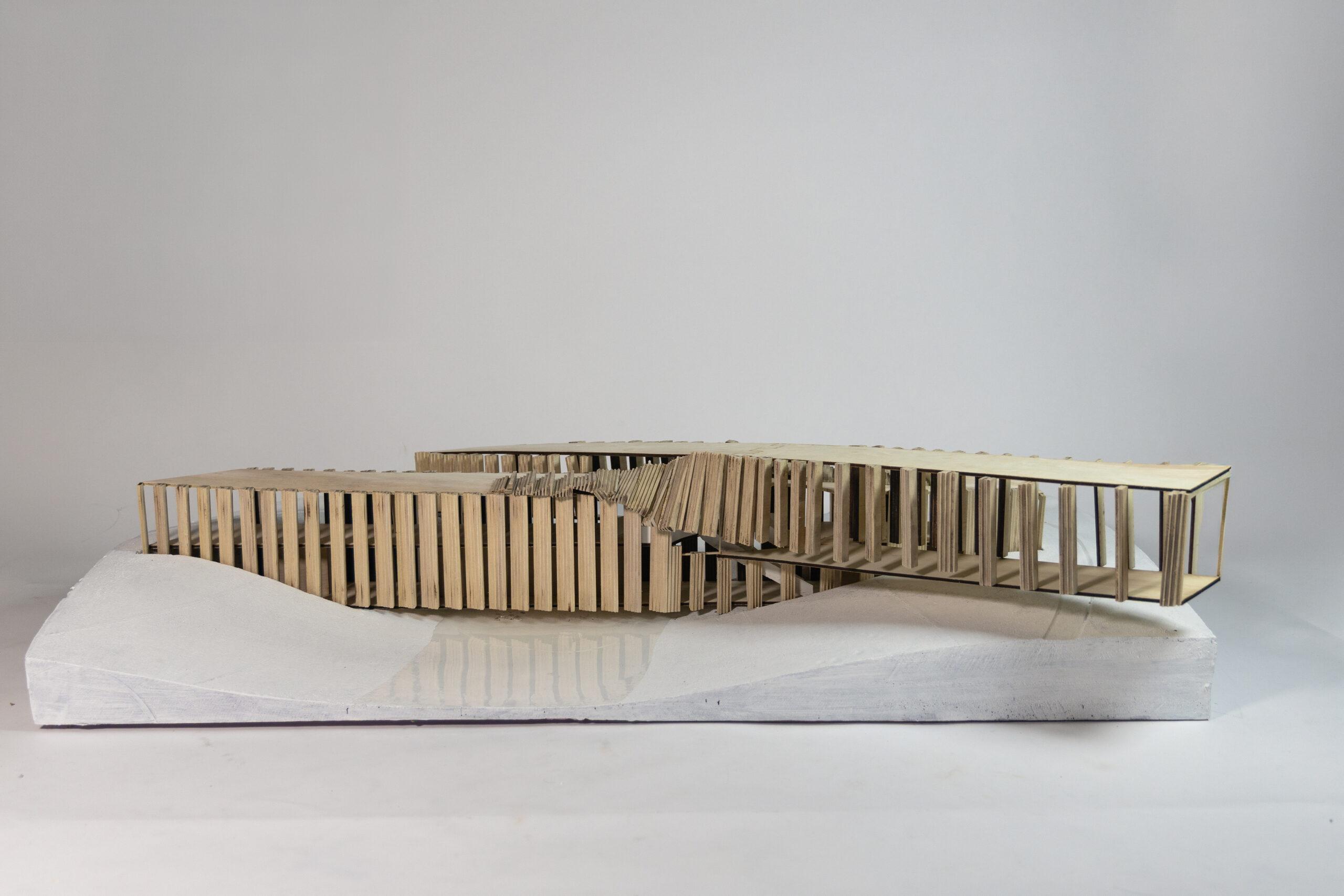
The Adirondack Moose Refuge is a conceptual design for a rehabilitation center for the New York State native moose. Located near campus in the Mundy Wildflower Garden, a preserved addition to the Cornell Botanic Gardens, this project seeks to provide full treatment to sick and injured moose while also improving public access to these native gardens. Through organizing the necessary programs into medical and public linear wings, this concept features an overlapping oblique gesture that frames an outdoor moose environment while integrating the existing public pathway system.
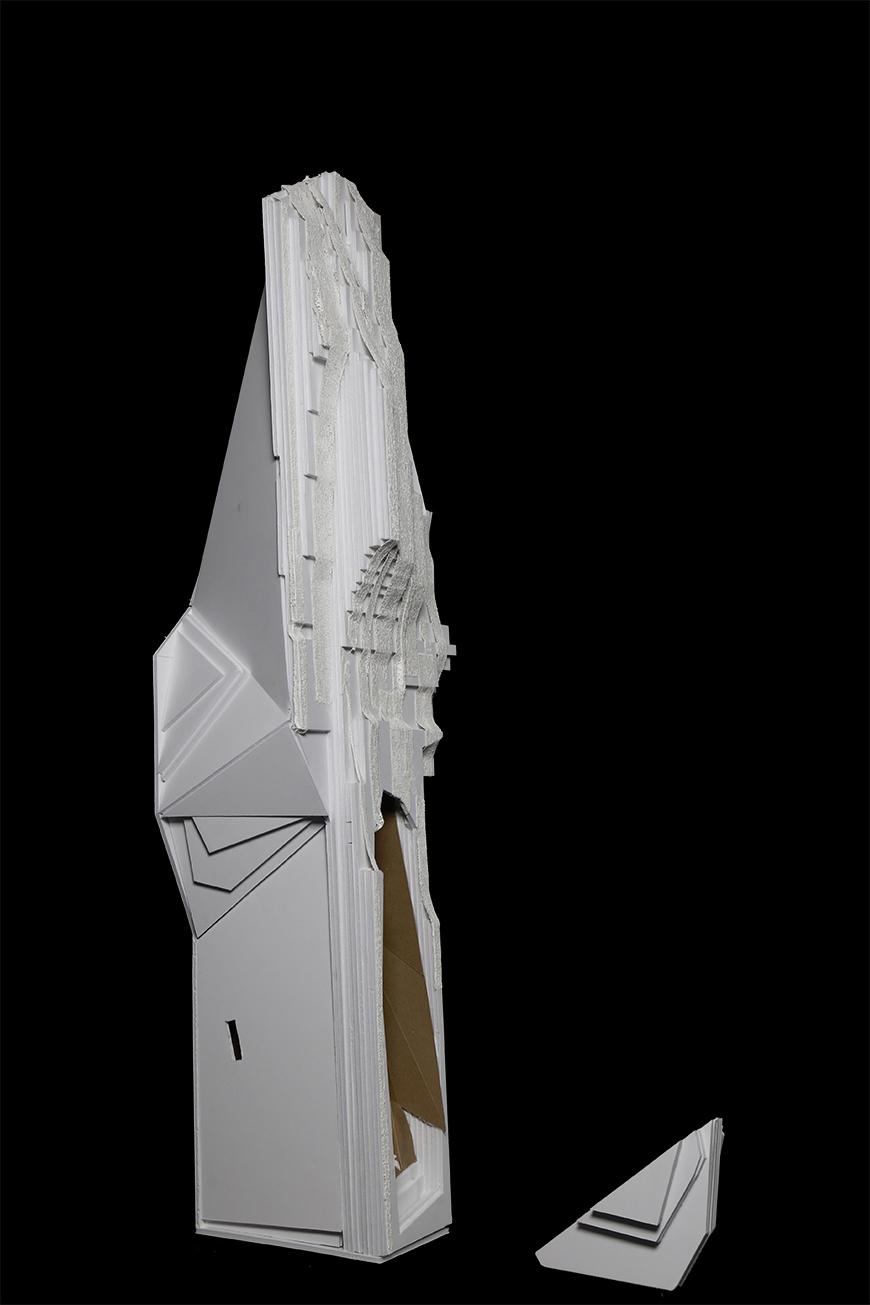
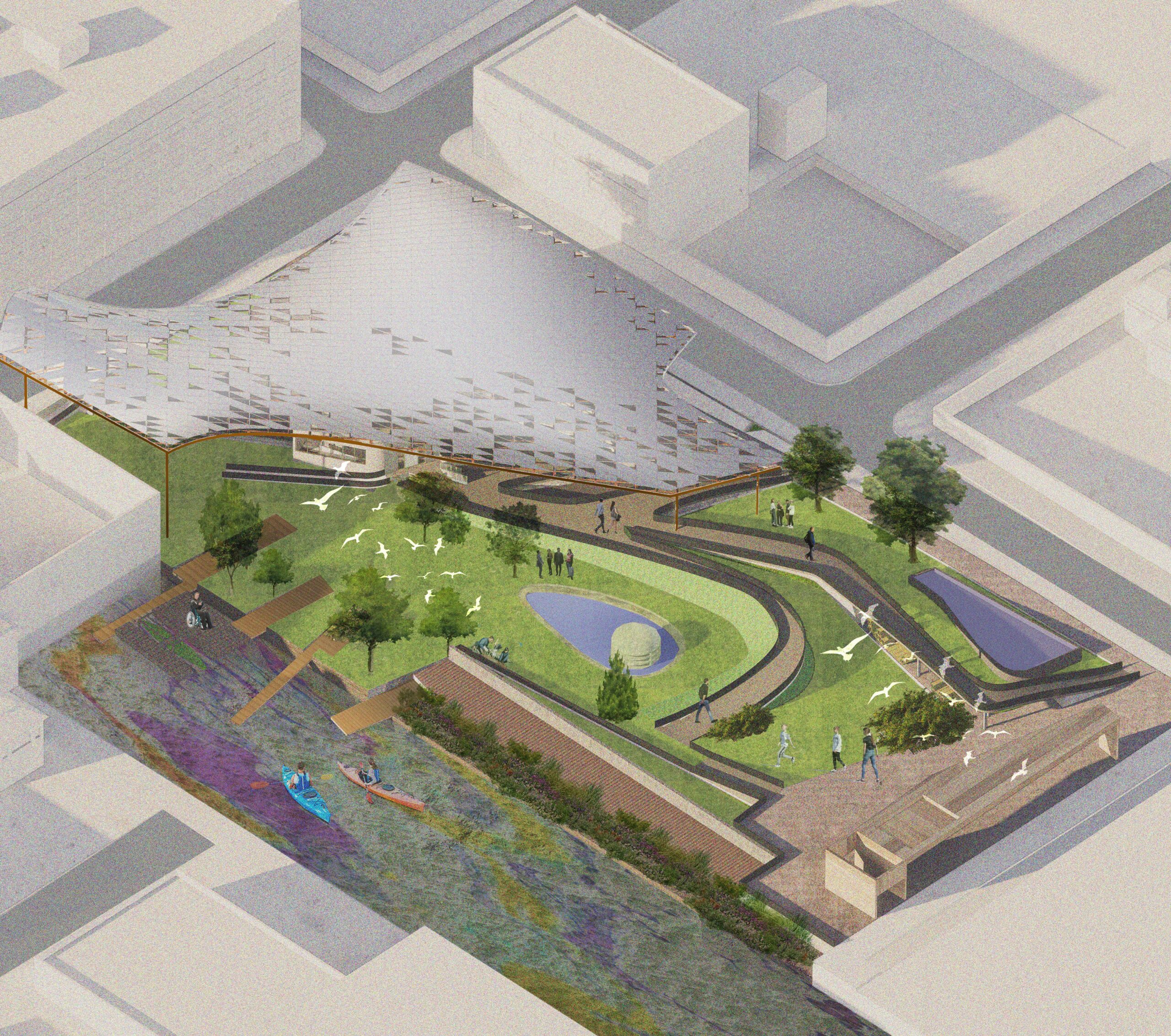
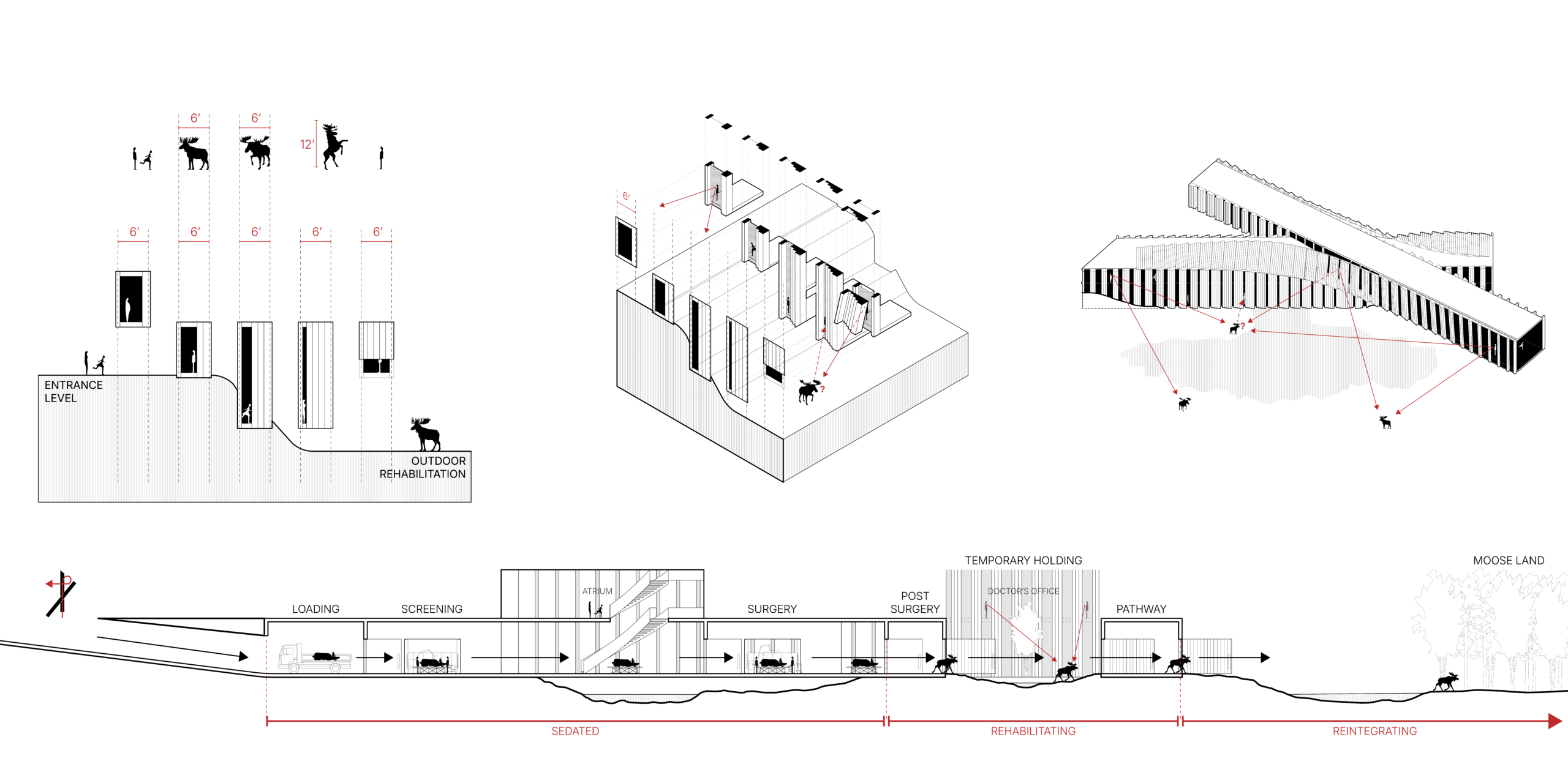
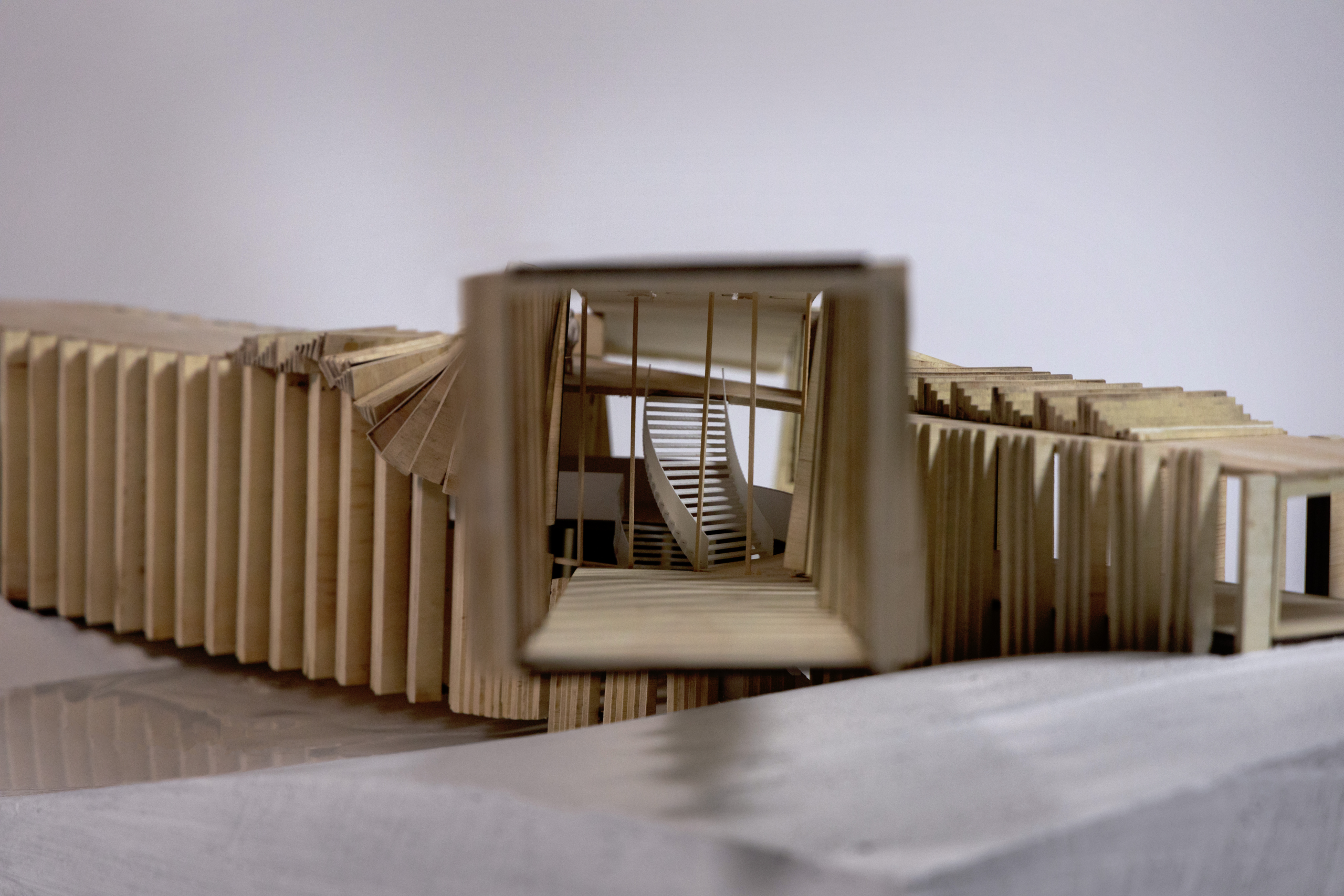
One of the main concepts of the Adirondack Moose Refuge is the notion of concealment. Since moose are particularly large, aggressive, and territorial, visual and physical separation becomes a prevalent design feature for the safety of the moose and staff. To satisfy this requirement, the entire public wing is lifted off the ground with moments of intense cantilevering. Additionally, the visual concealment between the rehabilitating moose and people indoors is achieved through the modular façade system, derived from moose-to-human scale comparison, which controls the size of the window based on its distance from moose on the ground. With other features such as a mechanical moose transportation platform and fully accessible public programs despite its gravity-defying form, the Adirondack Moose Refuge concept ambitiously creates a new public amenity while aiding injured moose find their homes back in the wilderness.