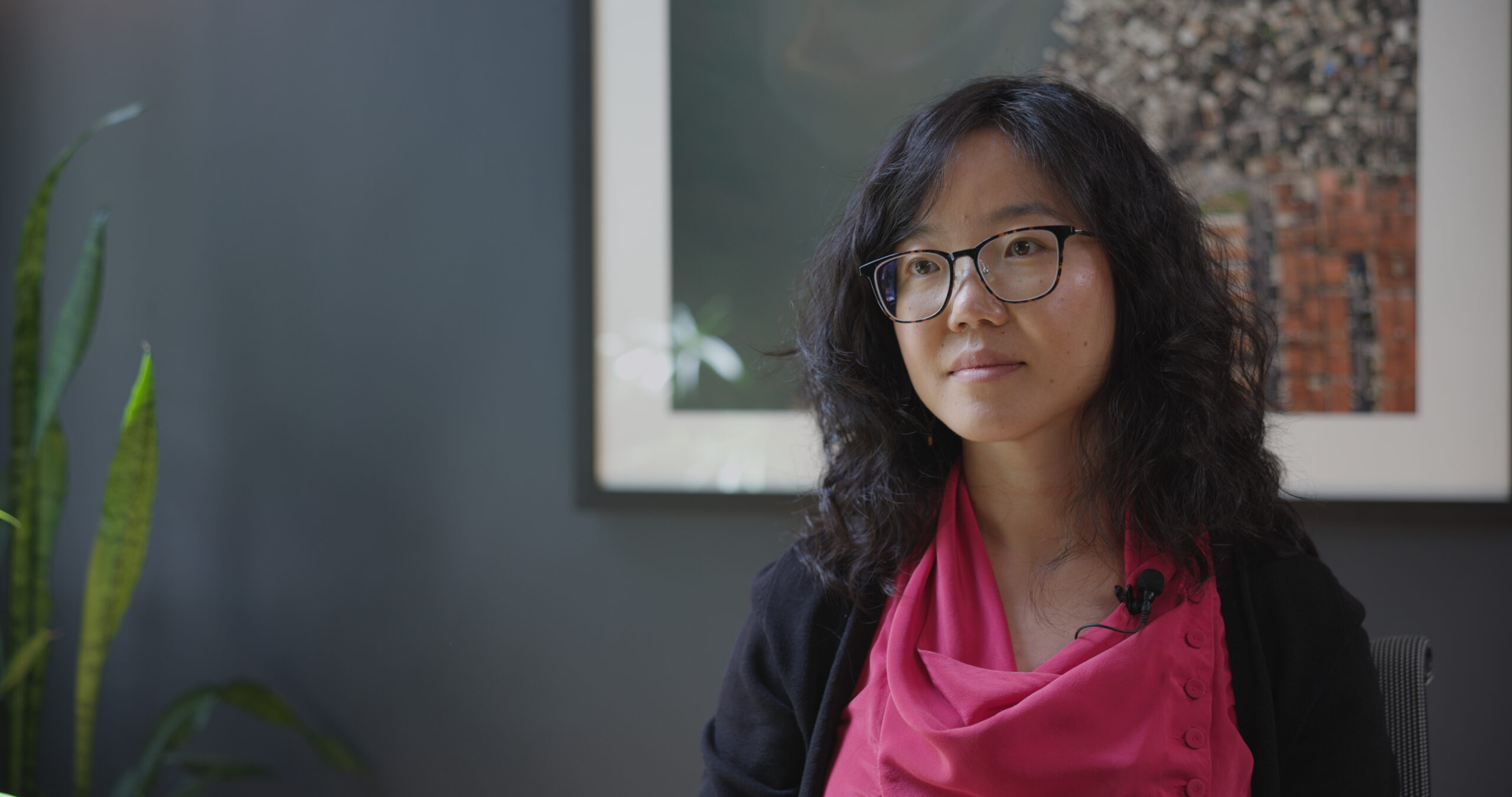
An associate professor and director of the Master of Regional Planning program in the Department of City and Regional Planning (CRP) at Cornell AAP, Linda Shi focuses on how climate change affects cities and exacerbates social inequities. In particular, her research examines land governance institutions, including how they influence property rights, land taxation, and municipal administration rules that cause approaches to be more fragmented and therefore more spatially unequal. An educator dedicated to research with impact, Shi shared insights into the discipline today, the culture of the department, and the myriad opportunities that prepare CRP students to enter the field with critical skills and applicable knowledge.
Molly Sheridan
Why become an urban planner today?
Linda Shi
Planning is very interdisciplinary and boundary-spanning. It is a discipline that can stitch together many different sectors and specialities. So when we’re looking at issues like affordable housing, congestion, sustainability, climate change, social justice, conflict and resolution, and managing social divisions — so many of them cannot be solved by any particular discipline, or by any one jurisdiction, level of government, or sector of society. These issues require deep levels of coordination and collaboration. The skills that planning students learn allow them to integrate and intersect with a number of disciplines to solve increasingly complex problems. There are many different paths they can take.
The most unifying characteristic of all our students is their passion for making cities more sustainable, equitable, and vibrant. They’re really motivated by this kind of public service mentality and commitment to the world. So if people are curious, interested in making the world a better place, and want to work with lots of different people from diverse perspectives and fields, then planning has a space for them.
The skills planning students learn allow them to integrate and intersect with a number of disciplines to solve increasingly complex problems. There are many different paths they can take.
Molly Sheridan
Can you say more about the specific benefits of studying planning at Cornell?
Linda Shi
Cornell is unique among its peers because it has strong connections to rural and agricultural environments, regional and natural resources, and to urban technology and the things that make cities work. By studying city planning outside of a big metropolis, you realize just how many resources and people it takes to make cities as amazing, dense, and vibrant as they are. We plan for a range of communities, spanning shrinking rural towns in Upstate NY, revitalizing Rustbelt cities like Cleveland, large older cities like New York, and rapidly growing cities with high levels of informality like Nairobi.
Here in Ithaca, we have incredible programs like Design Connect, where students work closely with local communities that would not otherwise have access to many of these resources. In addition, we are a very global university with hubs around the world. That allows us to have these conversations about unifying theories of planning and what we can learn from different places as we continually change and transform our cities.
Molly Sheridan
How does the mix of students at AAP and on campus overall impact the educational experience of a planner?
Linda Shi
Cornell’s an amazing place to study planning because students can deeply explore any subarea of planning across the university. For example, if you’re interested in food systems, ecosystems, sustainability, nature-based solutions, natural resources, or plant sciences, you can take classes in the College of Agriculture and Life Sciences. If you’re interested in development, real estate, or conservation finance, you can find classes and networks at the SC Johnson School of Business or the Dyson School of Applied Economics and Management. And, if you’re interested in infrastructure, there are people doing large-scale transit and megaproject planning, project management, and infrastructure certificates at the Brooks School of Public Policy. Whatever topic you’re interested in, if you were to search Cornell planning plus that topic, you would find such a rich array of resources to draw on here.
Within CRP, we have a very diverse set of students from all over the world and all over the country. The rich array of place-based knowledge and lived experiences they bring shapes the questions asked in class and the expectations about what is considered “standard practice.” Not only are our domestic students and international students teaching each other about planning, politics, and urban form in their own countries, they’re also practicing dialogue and teamwork across substantial social and cultural differences just by learning together.
Molly Sheridan
Obviously, climate is a complex and serious issue. How do you prepare a student to take that on once they graduate and enter the field?
Linda Shi
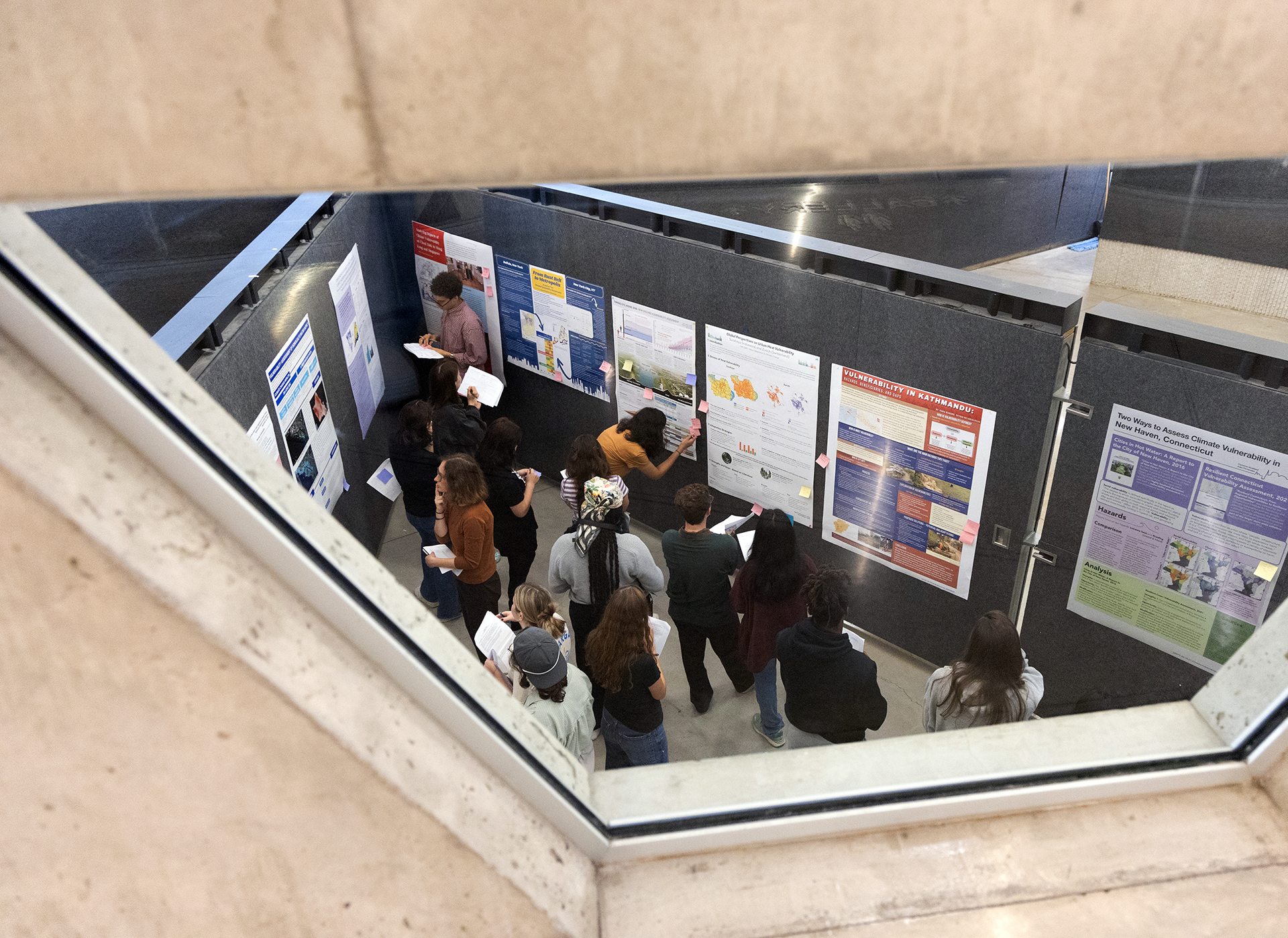
In our students’ lifetimes, climate change will pose a major challenge to people’s personal lives and professional work. It’s not something that anybody doing any kind of planning work is going to be able to escape. So my class on Urban Adaptation to Climate Change, for instance, provides substantive expertise in understanding vulnerability, adaptation strategies, financing and insurance, and other techniques. We talk a lot about injustices, how to prioritize different groups or resources, and who you should be planning for. We might all agree we want to be more resilient, equitable, and sustainable, but specific planning choices like where to invest in infrastructure, who to relocate, who can afford adapted housing, and who should pay often raise long-standing conflicts and inequities.
Climate change is one of many planning topics where solutions are in flux, and they’re always very specific to the application in a particular place. What New Orleans chooses may differ from what Miami, Mumbai, and Lagos choose. Rather than having a specific set of knowledges or even specific skill sets, planning is a way of thinking and of relating to the world, of understanding what you’re trying to do and how to be strategic in thinking about how you work with people, how you frame the problem and the teams and the work so that you can move towards a kind of shared problem-solving exercise.
Molly Sheridan
As you look down the road, as much as anyone can predict, where do you see the field headed as you’re shepherding your students toward the future?
Linda Shi
I think planning and cities will really change in the next 50 years or so. Climate change, water scarcity, digitization and AI transformation, inequality and social conflict, immigration, and aging are some of the big factors that our cities are going to be seeing, and the things that our students need to be prepared to address.
We cannot fully train our students to be 100% ready for what they will encounter in the workplace and all the richness that experience can bring, but we do try to provide experiences that give them a taste of what real-world practice will be like. Students have to take a workshop class. And then, of course, for our master’s students, there is an exit project where they have to identify: What is a small enough question that I can study? How should I address this issue? With what methods? If I need funding to travel, how do I get that funding? How do I write and communicate my results to an audience? If a student can do all of that around a particular project of their choosing, they will be able to thrive and do well as they encounter real-world projects in the future.
Programs
City and Regional Planning
Built on thoughtfully designed core curricula, our programs are designed to be flexible to make the most of the breadth and depth of disciplines across Cornell, a leading research university.