Jeanne Gang is recognized for an inventive, research-driven practice that positions architecture as an agent of civic and environmental change. Spanning cultural, educational, and public projects around the world, her body of work engages questions of material performance, ecological systems, social connectivity, and the evolving relationship between buildings and their broader contexts.
A MacArthur Fellow and one of TIME magazine’s 100 most influential people, Gang has received many of the discipline’s highest distinctions. Ahead of her October 14 engagement at Cornell as this semester’s Rubacha Featured Speaker, she discussed the ideas and methods shaping her practice, revealing how architecture’s transformative potential moves from philosophical conviction to tangible, far-reaching impact.
event
Oct 14
Rubacha Featured Speaker: Jeanne Gang — Coordinated Actions
Join us for a talk and Q&A with this fall’s Rubacha Featured Speaker, Jeanne Gang, on how her award-winning practice brings together design, research, and ecological awareness to explore how architecture can strengthen communities and transform cities.
Molly Sheridan
At Cornell, we emphasize architecture’s power to create meaningful change. Your concept of “actionable idealism” puts that belief into practice. How does it shape the work and priorities of Studio Gang?
Jeanne Gang
It’s really important to remember the goal of what you’re doing. What can we do within this one step, this project, that will improve things for tomorrow? Maybe it’s something programmatic that you adopt, or maybe it’s something that’s more formal or experimental that will have that effect. This mantra we have is not about style, but that doesn’t mean form and beauty aren’t part of it. When people talk about making the world a better place and there’s nothing attached to it, it can sound hollow, but it’s really about taking this long view with your project. How can it fit into a greater view of what you want to happen? And then you have to make the project at hand amazing as well, so that it can stand on its own.
Molly Sheridan
Your work is praised from many different angles — from materials to environmental impact to function and human interaction. When approaching a new project, where do you begin, and how do you prioritize when worthwhile goals compete?
Jeanne Gang
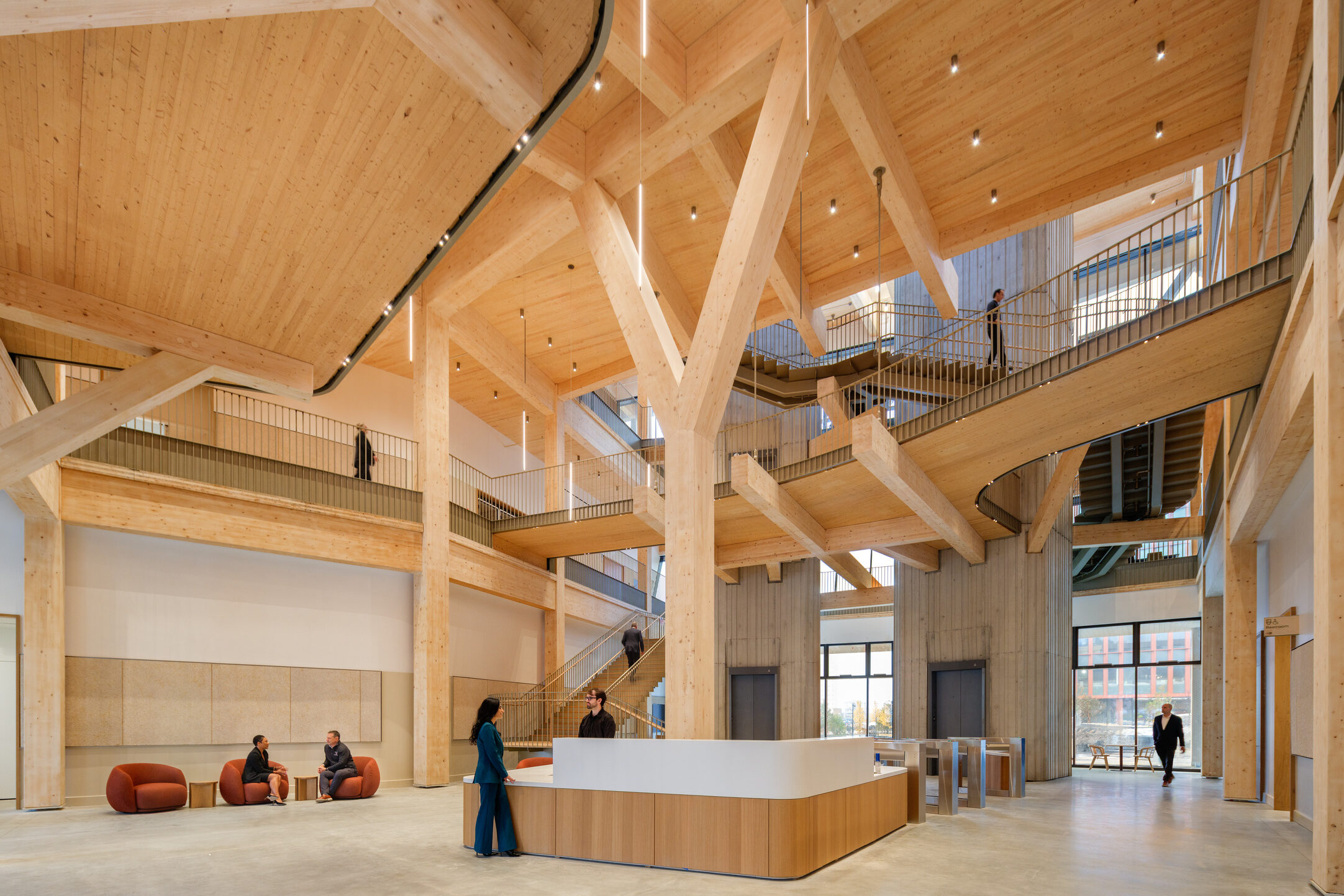
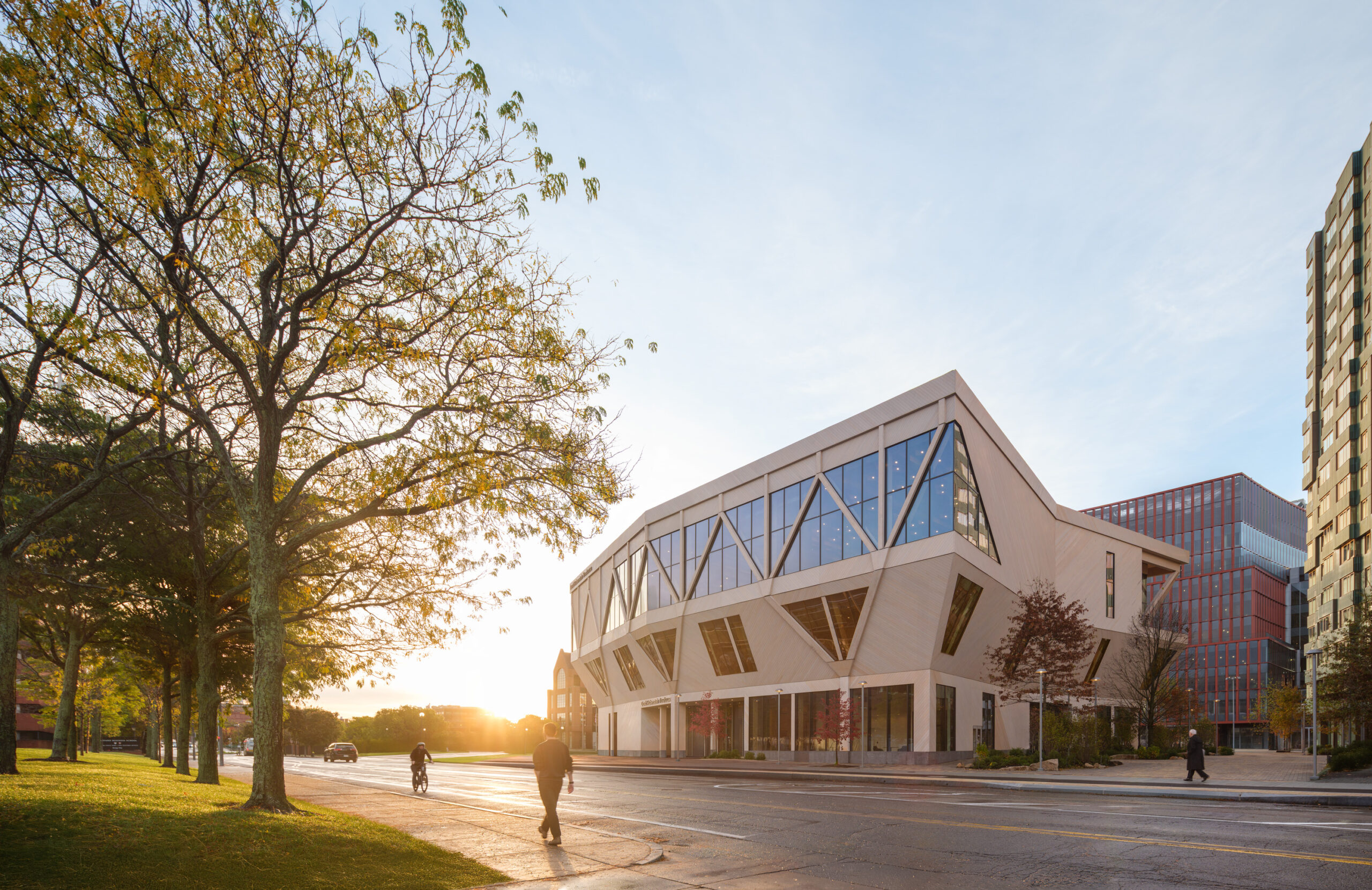
Usually, you start with research. Gaining knowledge about all the different actors, both human and non-human, the context, and the relationship between all these things, that helps you figure out what has the most potential or the hierarchy of importance. But having said that, sometimes something comes along during the process, and it becomes the most important thing. I always try not to pin down the project too early, so these things can bubble up. When you know more, you’re more able to see what the project should be about. It’s still going to be about all these other things, too, but maybe the material aspect has the most potential to change. The David Rubenstein Treehouse at Harvard University, being the first mass timber project for Harvard, really is kind of the main thing there. We got to show how to do this, even though there are many other ideas, of course, in this project. So the answer is, “It depends.”
Molly Sheridan
You said you don’t want to pin down a project too soon. Would you share an example where you had to pivot?
Jeanne Gang
Take the Arcus Center for Social Justice. It started out with social justice: How do you get people into a space that gives them equal footing and makes things happen? That is still there. But then it became the material of this project. The cordwood masonry embodies that idea of community in a way, because everyone can contribute and each piece of wood is like its own individual self, but it works together. So it was reinforcing the concept, but we didn’t have that on day one.
Molly Sheridan
Many of your projects reflect a close observation of natural systems. You have described certain high-rise exteriors, for example, as designed to “confuse the wind,” a phrase that is both poetic and technically true. Is that connection rooted in any particular place or experience?
Jeanne Gang
My childhood experience, my interest in natural systems and how everything about nature works together, that really gives me this endless supply of ideas and methods for realizing them. I grew up in the Midwest, and I was always full of wonder looking at the things around me. Those things interest me so much that I just extend the way I look at that world into the way I look at making architecture and the way that I experience a new place, looking for similarities, differences, all these things that make a place unique. So, it came from years of observing nature and letting it work through me and, by extension, our team. The process is not “first you do this, and then you do this.” It’s gaining a lot of material to have ideas about, and then starting to make the connections between those materials. So it’s a little bit organic, but it can be a methodology.
Molly Sheridan
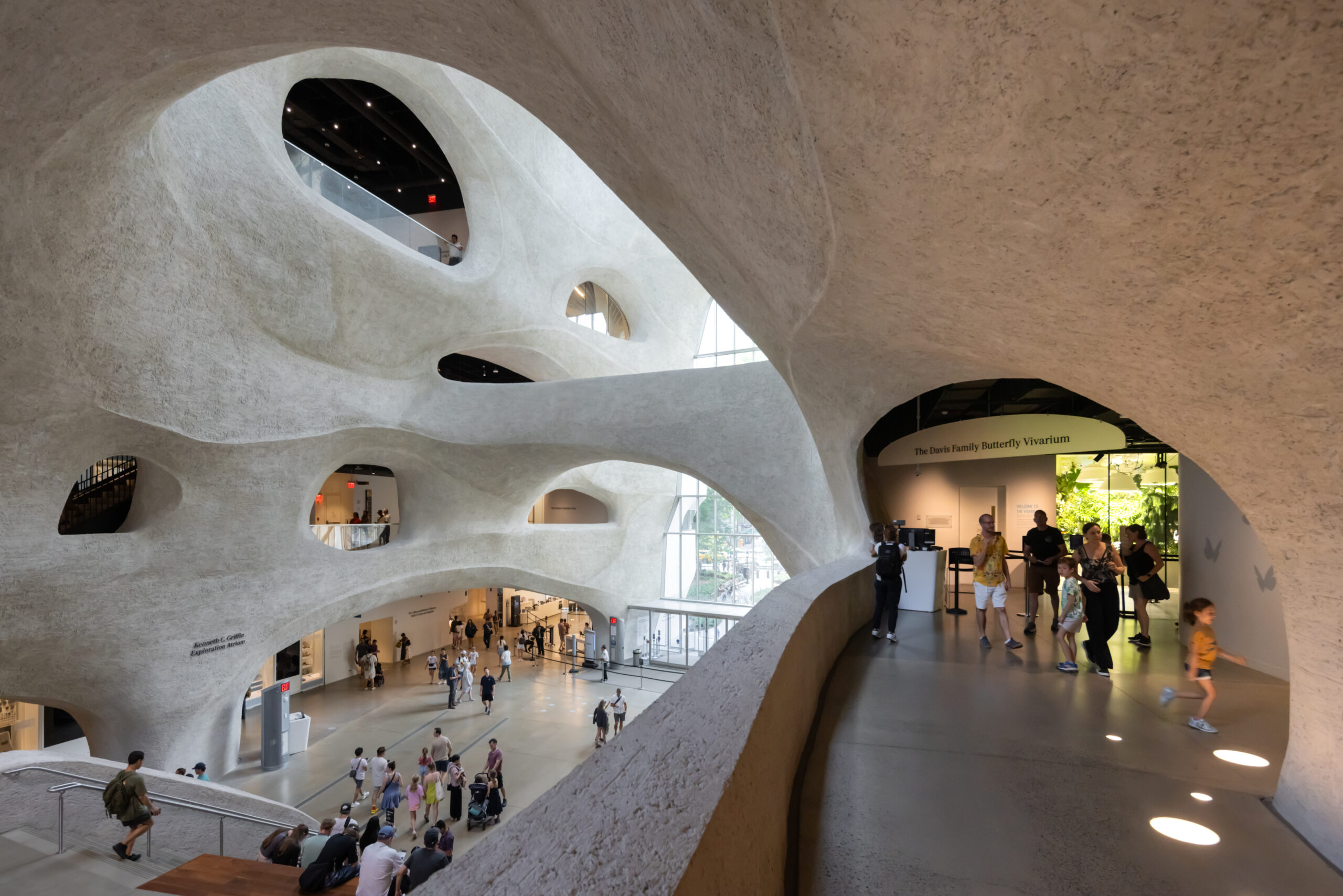
That reminds me of the idea of “grafting” in your work, especially as a way to think about an addition to an existing building, such as the American Museum of Natural History in New York.
Jeanne Gang
I love it as a kind of metaphor for how we can work with older buildings, because humans have worked with plants for a long time in this very intensive way. It’s not like everything that nature does is great. It’s the human interaction with it that gives us tastier fruit or more beautiful flowers. So there’s intentionality there, but it’s also working with it very closely. Not every graft is going to work; it has to have certain qualities to make it perform and work well in horticulture. I am proposing that it also has to be like that with architecture.
Molly Sheridan
For me, architecture can resemble musical composition: the architect creates the work, a musician or often a team of musicians realizes it, and people take it in and make it their own. Does that comparison resonate with you? How do collaboration and eventual use influence your design decisions?
Jeanne Gang
I think of a composer as working in isolation. Maybe a filmmaker is closer. I’m leading it, but the end result wouldn’t be the same if different team members or participants were involved. And I put the community in there as participants, because especially for public space, their voice should be there. Collaboration is really an art of coaxing things from people. There is a concept that you’re trying to work with them on and they might come back with something and surprise you and you should be open to looking at that, but also be able to reject or change that contribution. The design would never be the same if it had a different team, so I always try to acknowledge that.
Molly Sheridan
Is there any contribution from a team member or maybe how the building ended up being used in the end that was particularly surprising?
Jeanne Gang
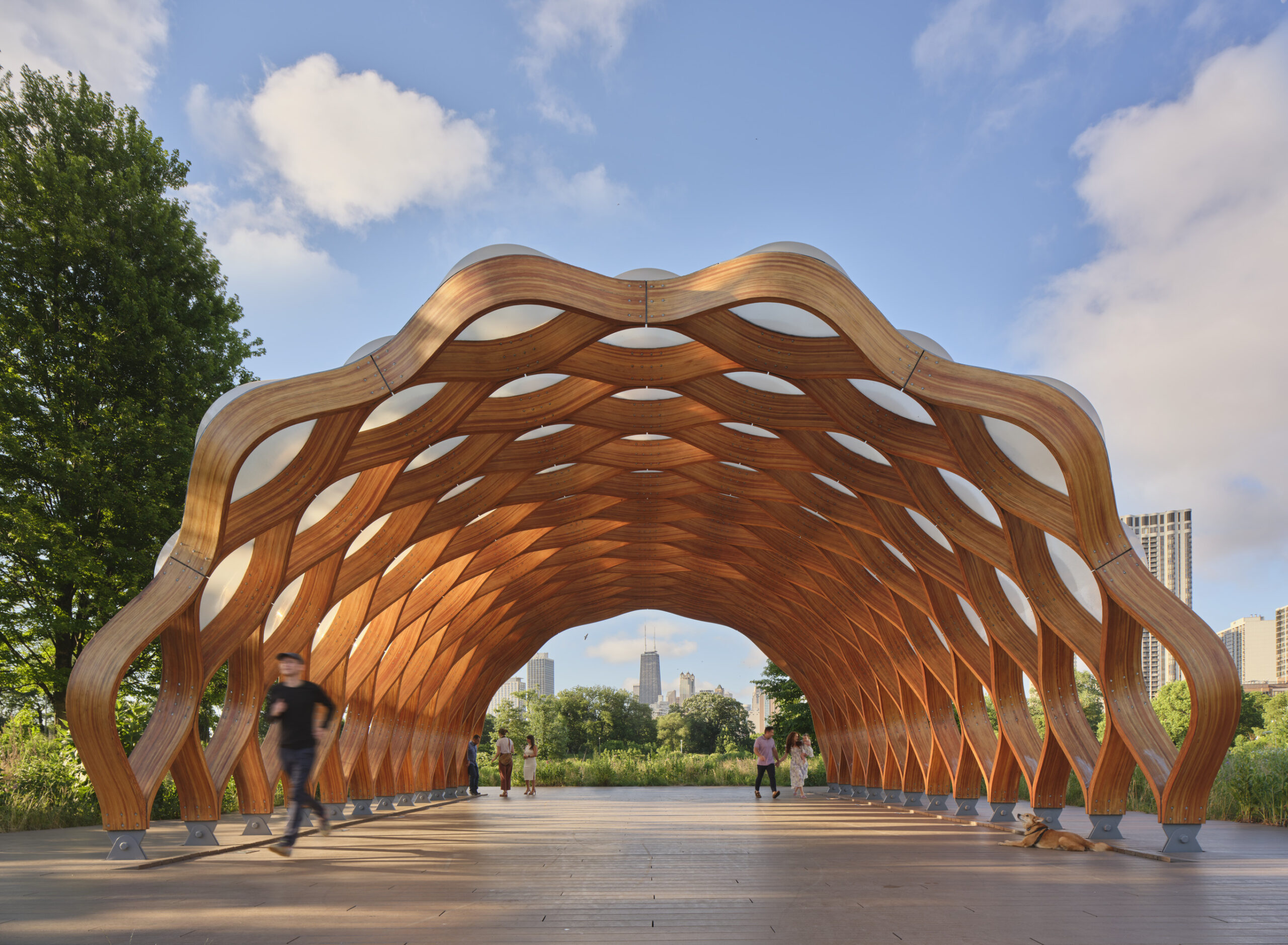
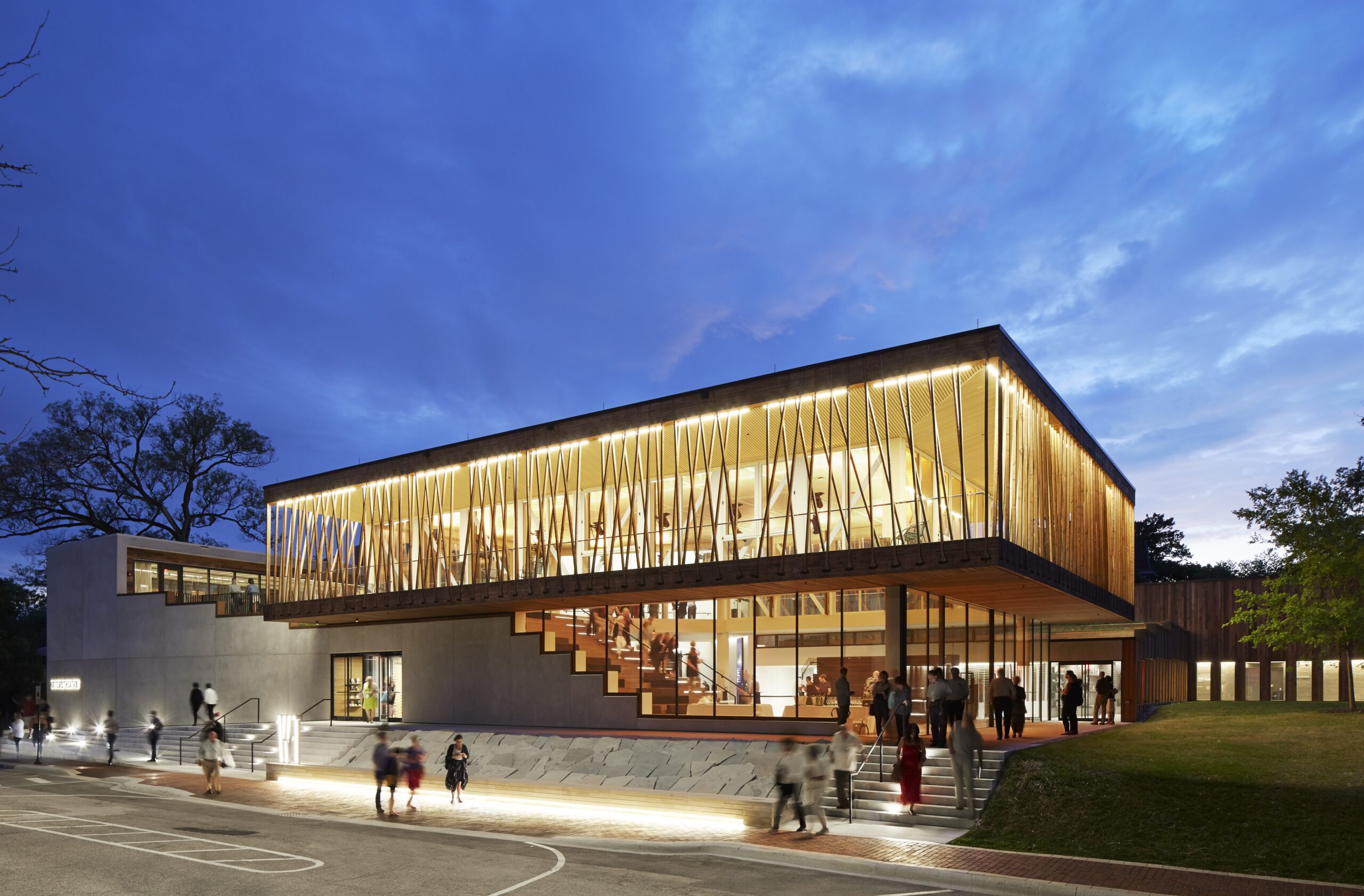
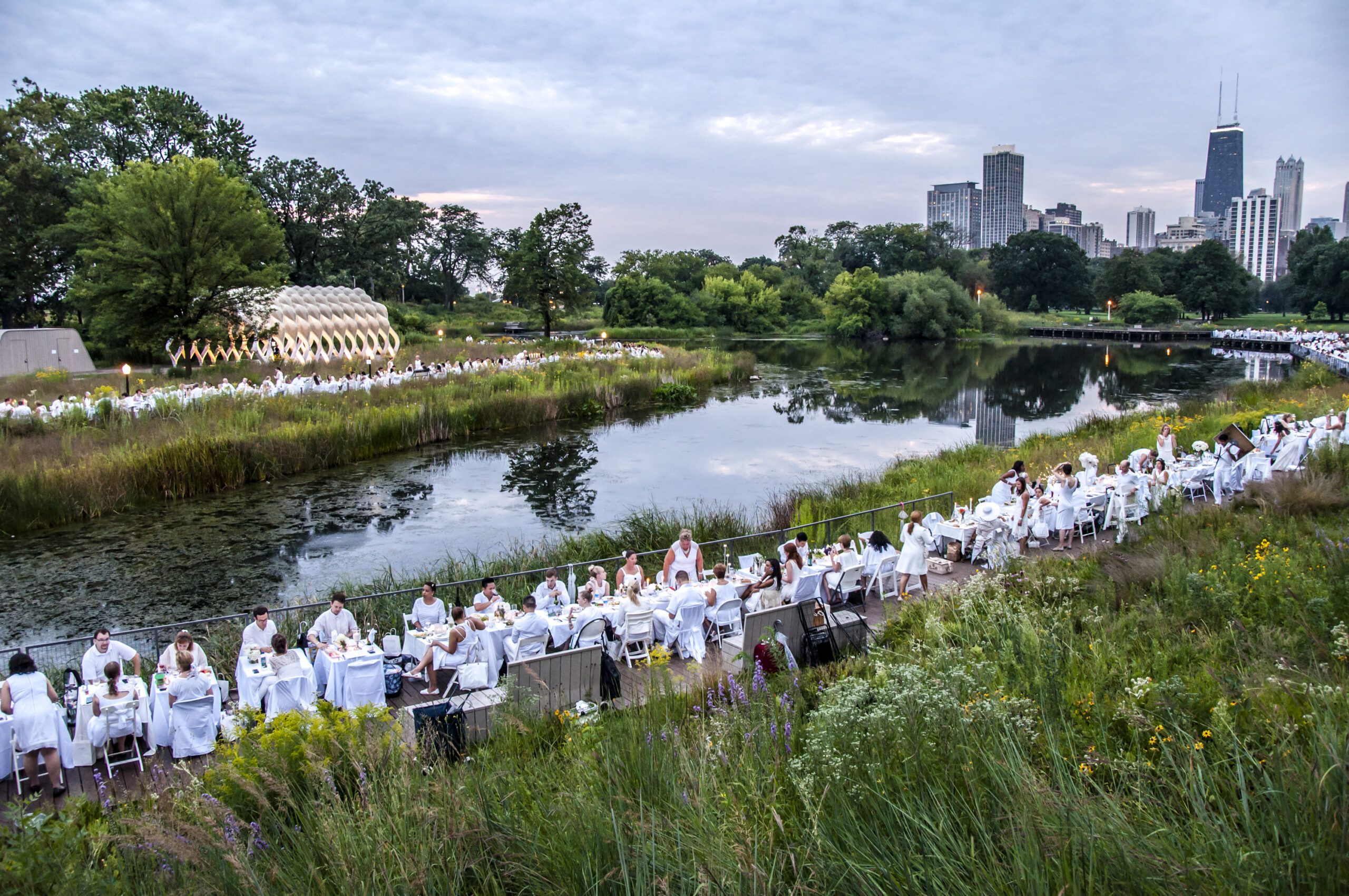
I love finding out how people use buildings afterward and being surprised by new uses, like Writers Theatre being used as an after-school place for students to hang out and study, or the Nature Boardwalk at Lincoln Park Zoo being used for different kinds of events. I never thought that it would be used like that, but I love that. The important thing for public spaces is to make them a little flexible, while also keeping in mind that to make a place, it has to be memorable, too. Then people will adopt it and use it in different ways.
Molly Sheridan
Let’s end with a little professional advice: From your vantage point, how can today’s architecture students best prepare for the profession they are entering? What questions should they explore, and what experiences should they seek out?
Jeanne Gang
Things that we do in architecture are becoming automated, but what isn’t automated is the thing to focus on. Who do you agree with in terms of philosophy, and how do you channel that into your practice? And then working with our own hands. Our bodies are so much more than typing on the computer or looking at a screen. Explore that, get into that, and see what is fulfilling. Building a skill in software, you might have to do that, but that’s not the point. The point, I think, is to be a maker, be a creator, be a thinker who is coming up with ways to be in the world that are not just confined to digital processes. We’re going to have that anyway. So make things, see things, and be in the world in your own amazing body. That can help you learn in different ways.