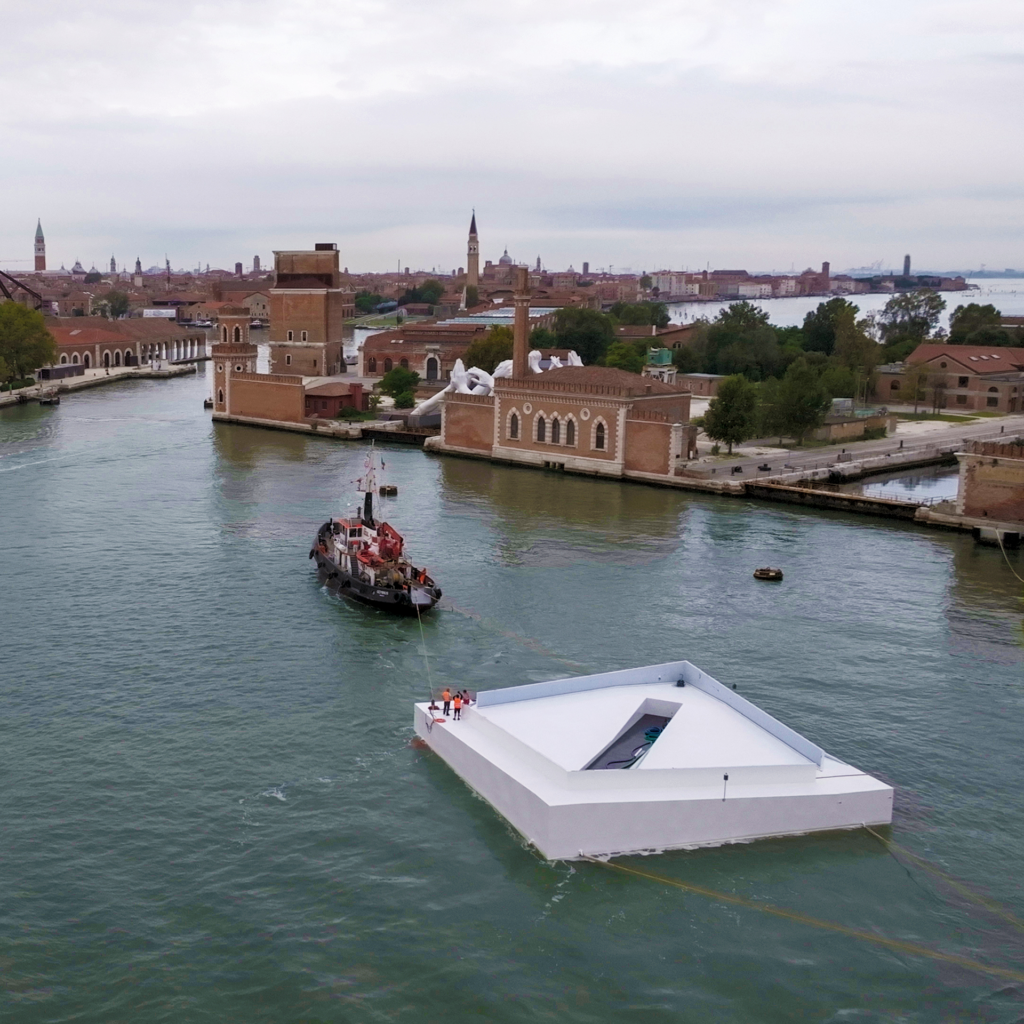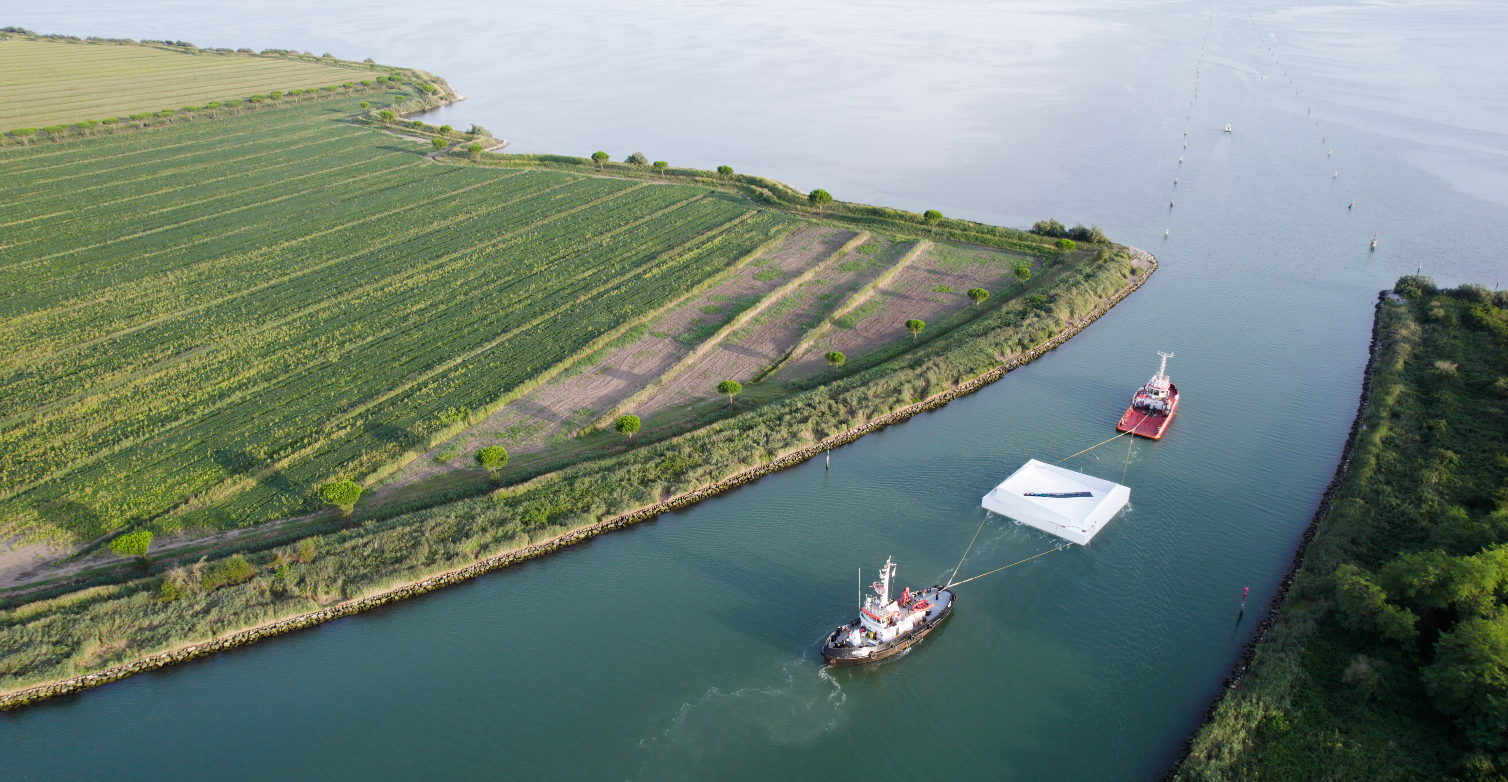
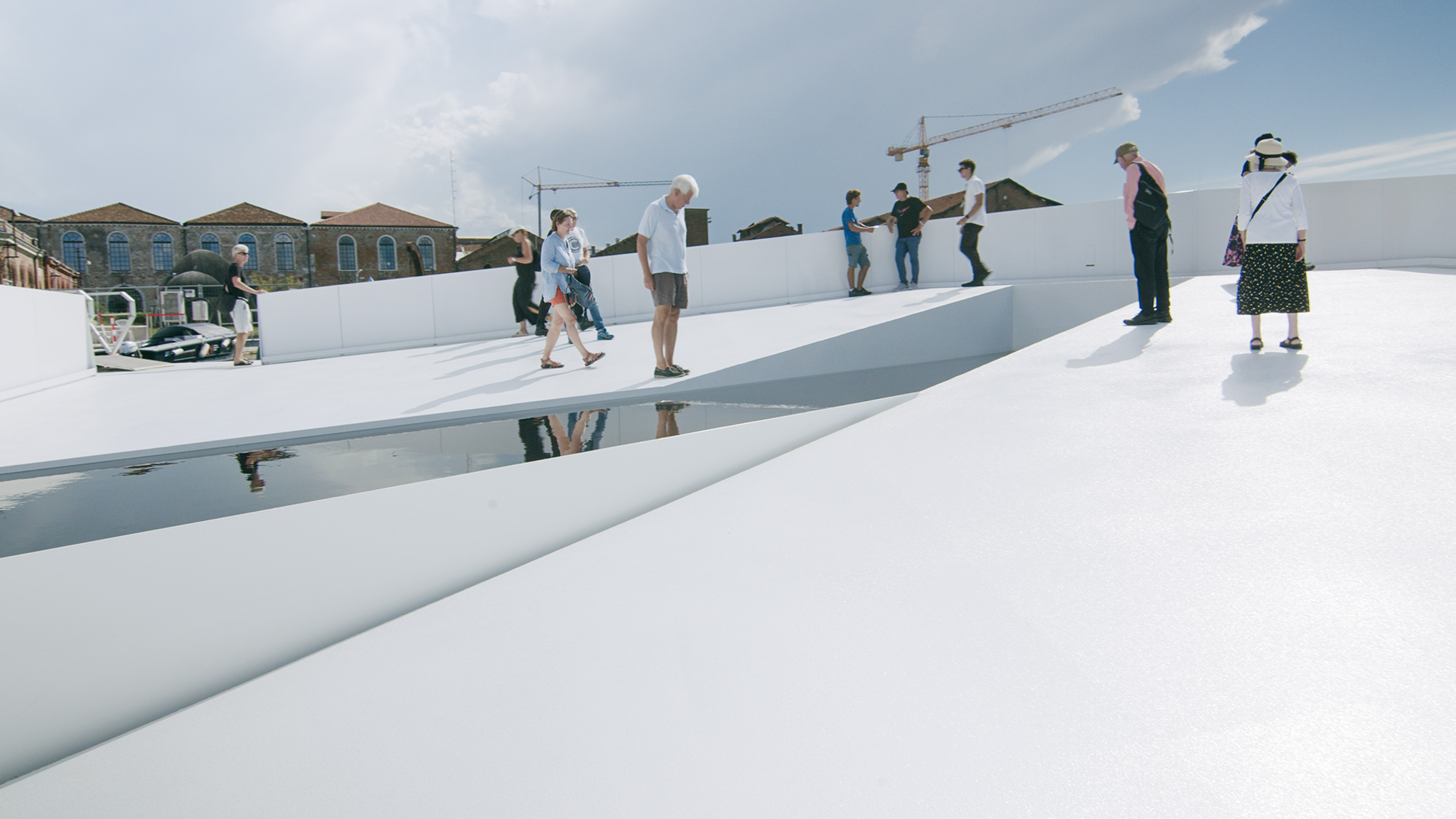
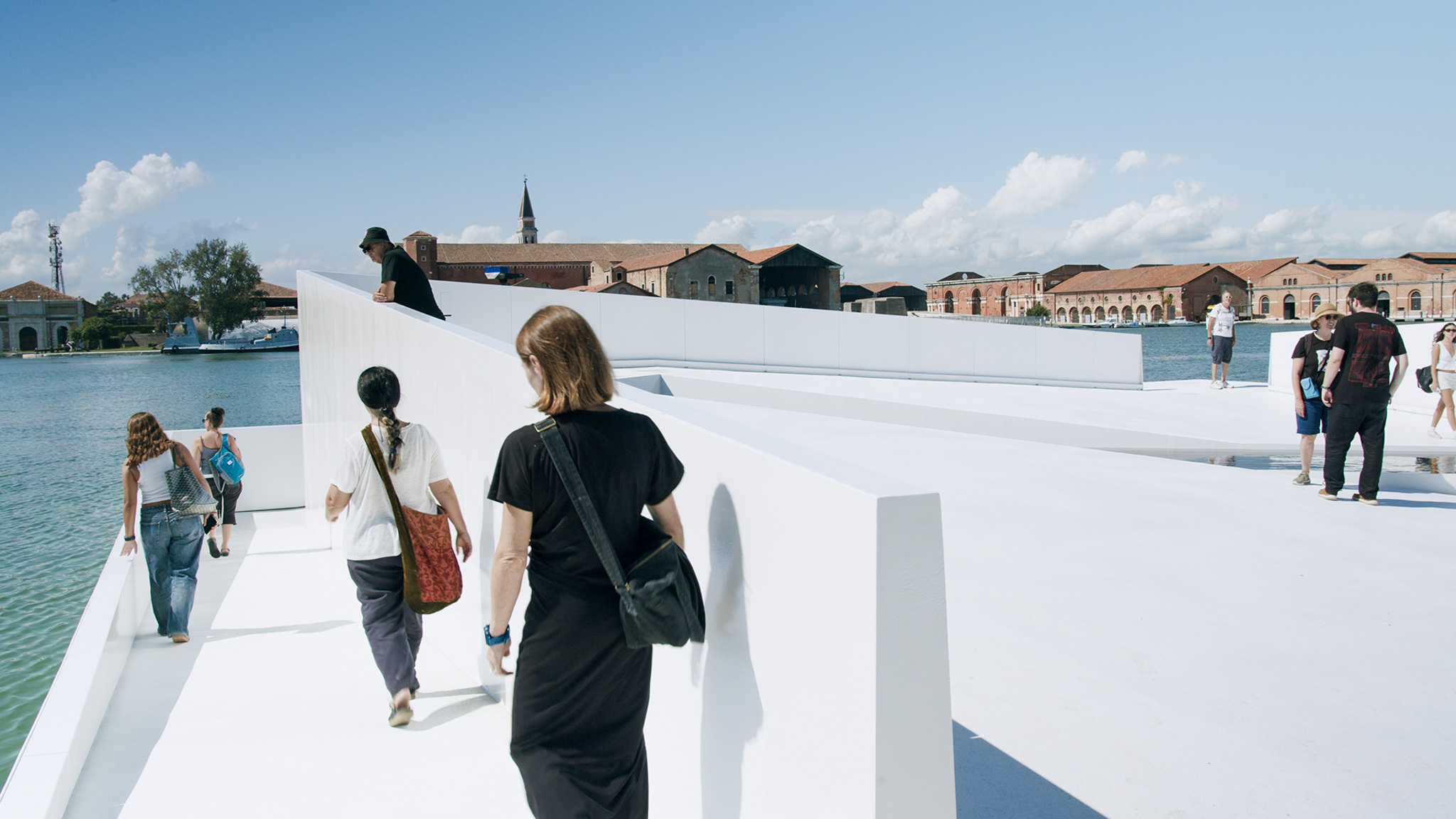
AquaPraça (“water square” in Portuguese), a floating public plaza that brings visitors eye-to-eye with the surrounding sea to reframe relationships between built and natural environments, officially opened to the public this week in Venice. Designed by AAP’s Gale and Ira Drukier Dean J. Meejin Yoon (B.Arch. ’95) and alumnus Eric Höweler (B.Arch. ’94, M.Arch. ’96), cofounders of Höweler + Yoon, in collaboration with CRA–Carlo Ratti Associati (CRA), the project forms part of the Italian Pavilion at both the 19th International Architecture Exhibition of La Biennale di Venezia and the 2025 United Nations Climate Change Conference (COP30). Debuted as a scale model during the biennale’s opening in May, AquaPraça has now arrived at full scale for its inaugural mooring in Venice’s Arsenale.
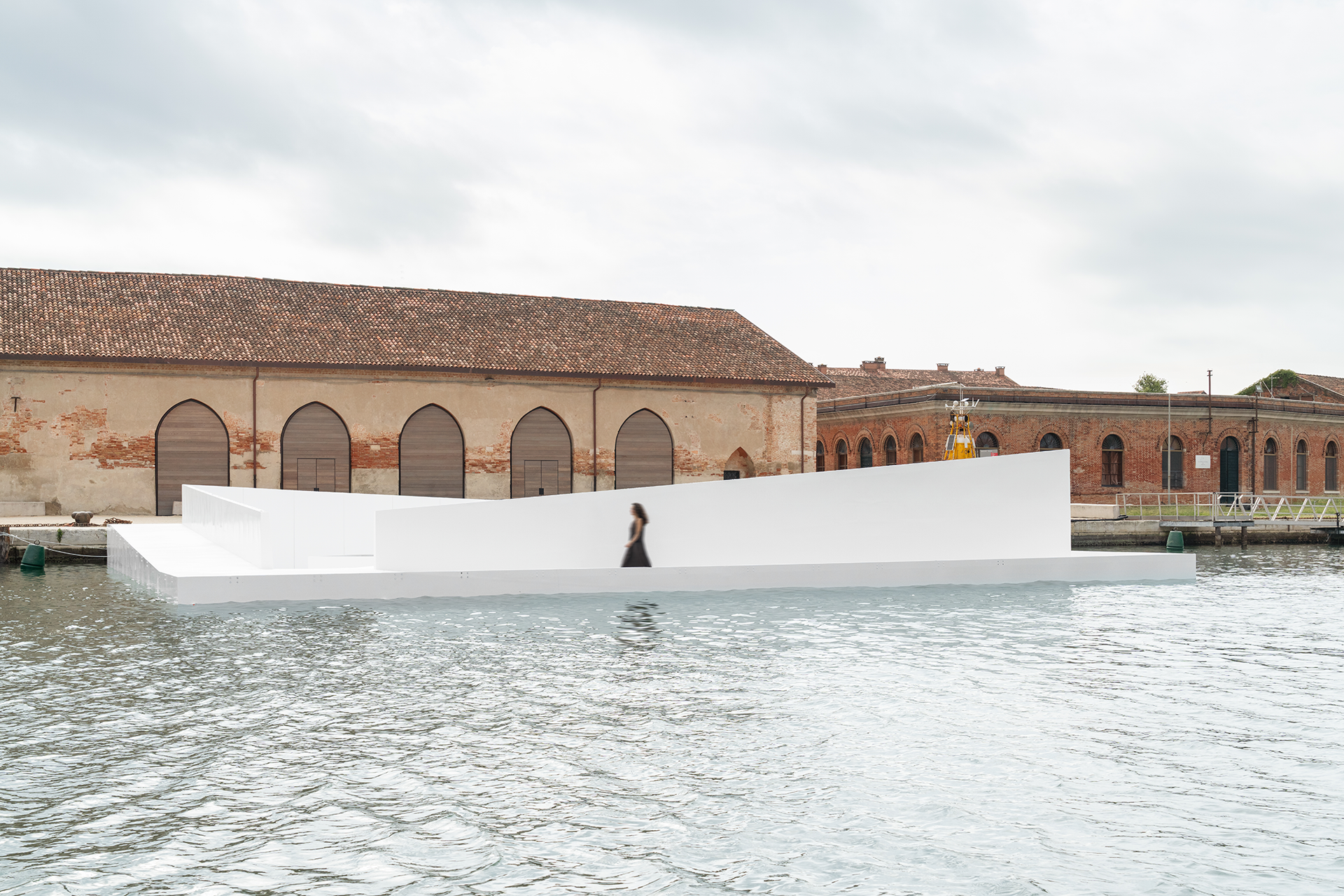
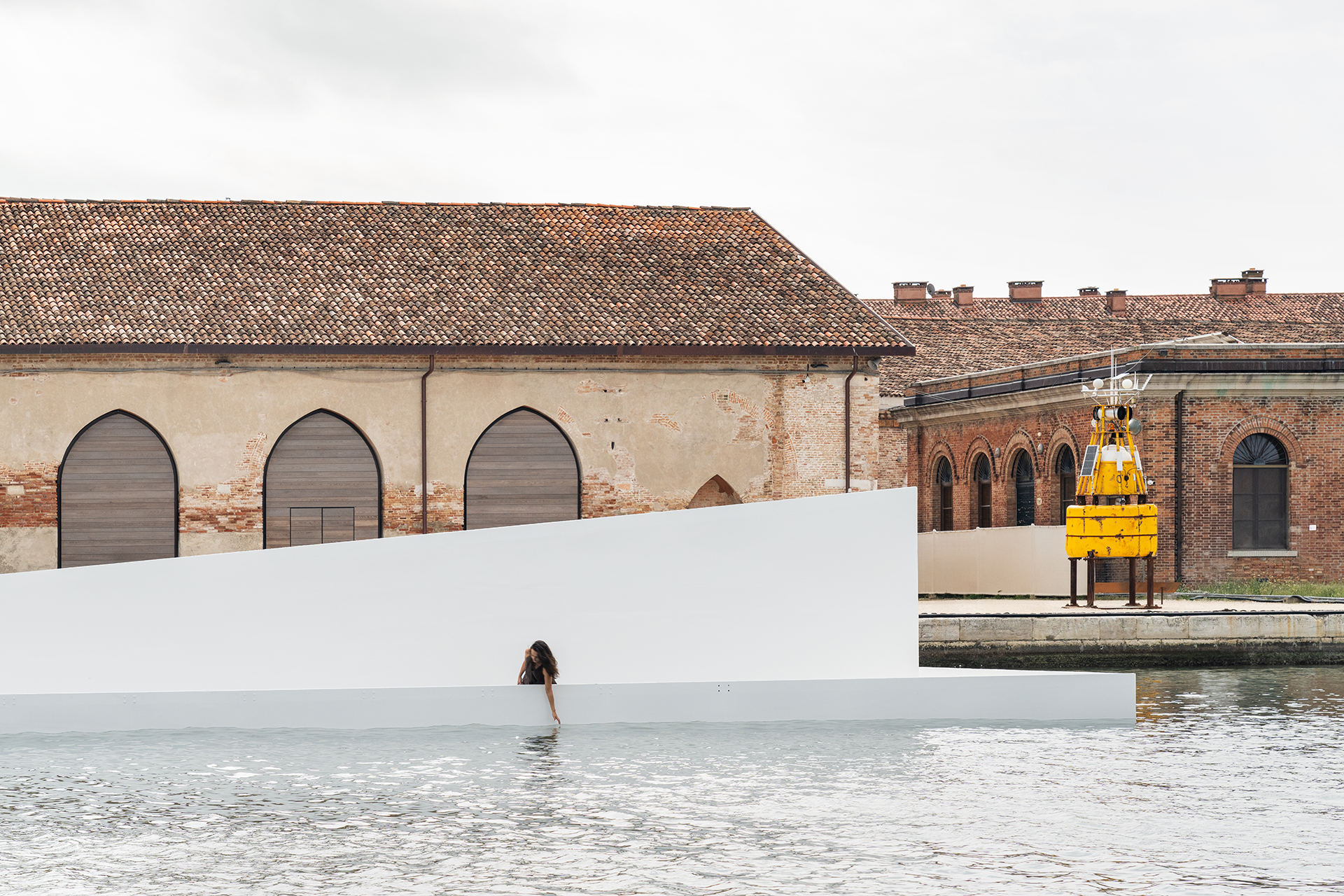
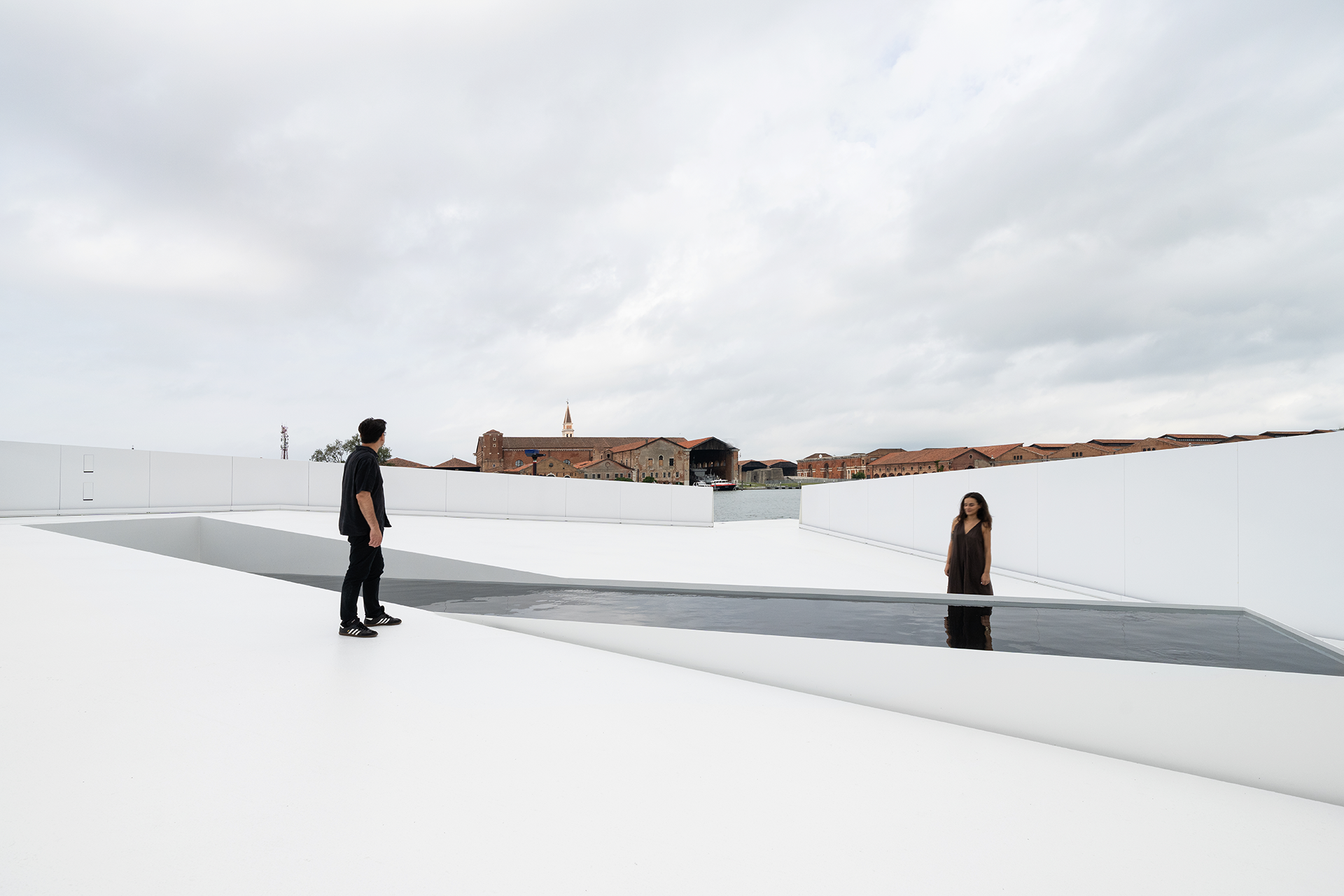
“AquaPraça is designed as a platform, both literal and figurative, for deepening our collective understanding and experience of sea level rise and the impacts of climate change on global cities and communities,” says Yoon. “It is an immersive civic space for advancing public discourse, fostering international cooperation, and seeking collective solutions.”
La Biennale di Venezia, curated by Carlo Ratti (CRA), hosted the presentation of AquaPraça on September 5, bringing together institutions, architects, scientists, and policymakers to explore new responses to rising seas and extreme weather. Soon after, the structure will embark on a transatlantic journey by barge to Belém, Brazil, where it will serve as a civic forum during COP30 (November 10–21) — the world’s largest international climate conference — before becoming a permanent part of the city’s cultural infrastructure.
“Carefully calibrated to its environmental context, AquaPraça adjusts to water levels and occupancy in real time, allowing visitors to meet the sea at eye level,” adds Höweler. “Its sloping surfaces and shifting levels embody a delicate equilibrium.”
Constructed in northeastern Italy by advanced infrastructure and specialty structures fabricator CIMOLAI, AquaPraça spans over 400 square meters and can hold up to 150 people for exhibitions, workshops, symposia, and cultural events. Constantly retaining and releasing water, the submersible structure uses principles of displacement and buoyancy to maintain a minimal freeboard that rises and falls in response to both occupancy and ecological changes.
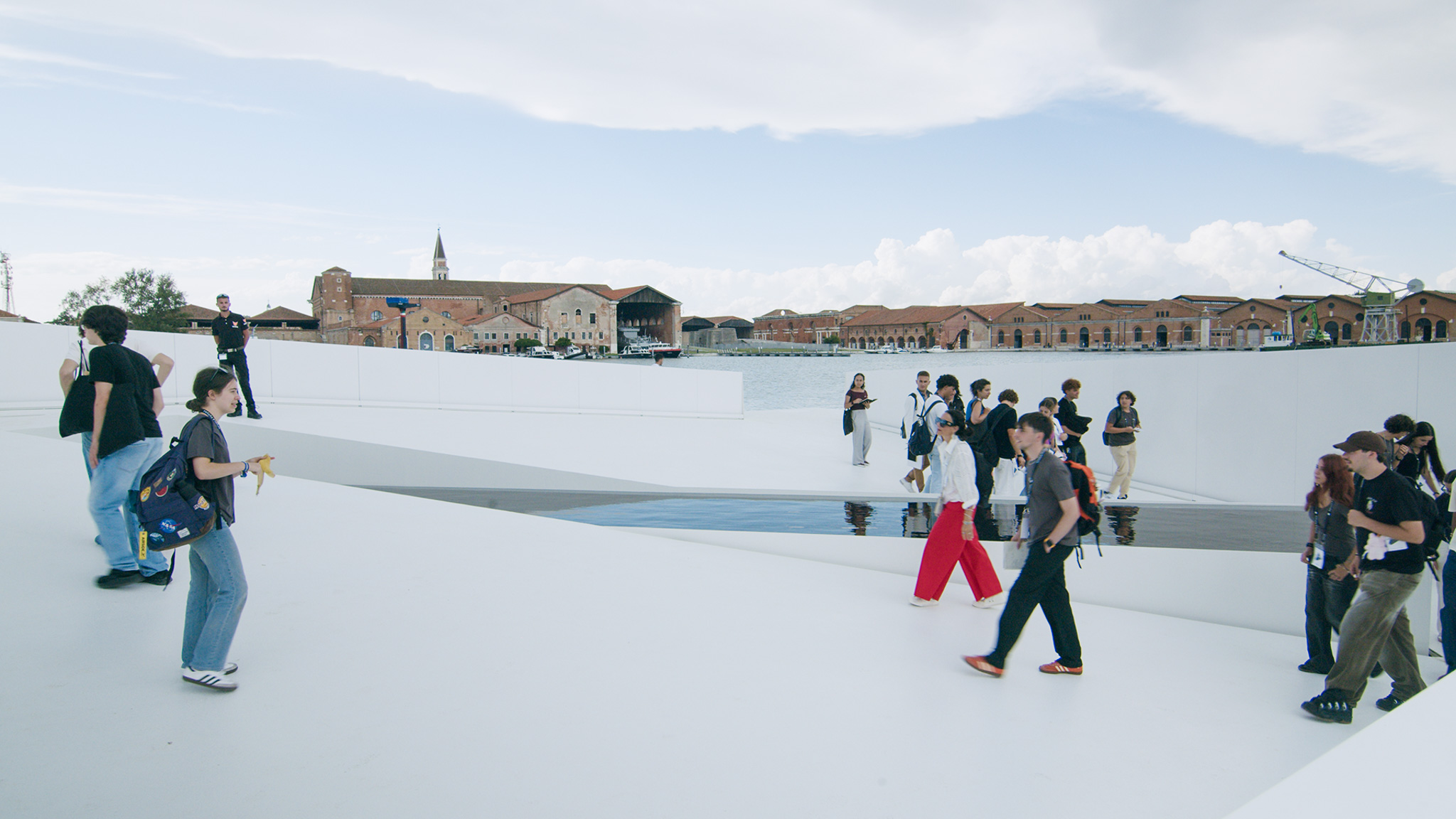
“In 1979, Aldo Rossi launched the Teatro del Mondo at the first Biennale Architettura, positing that architecture could engage with the past. Today, AquaPraça shows how architecture can engage with the future — by responding to climate and engaging with nature rather than resisting it,” explains Ratti.
AquaPraça is made possible through a unique international coalition. The project was developed in partnership with Italy’s Ministry of Foreign Affairs and International Cooperation, Italy’s Ministry of Environment and Energy Security, and the COP30 Presidency. Additional partners include CIHEAM Bari and the World Bank Group’s Connect4Climate program, and with the support of BF International–Member of BF S.p.A. Group (as AquaPraça COP30 Naming Partner), Bloomberg Philanthropies, ENEL, and Ferrovie dello Stato Italiane.