Symposium
Location
Sibley Hall
Room 140
Contact the Organizers
Piergianna Mazzocca
pm598@cornell.edu
Ehssan Hanif
eh637@cornell.edu
Overview
Recent scholarship in the environmental and energy humanities has called attention to regimes of energy transition. The discussion on futures “after oil” marks a shift from earlier studies of oil assemblages, which evolved from analyses of coal-based fossil capitalism. The spaces shaped by these transitions have attracted scholarly interest, especially in the context of studies on the architecture of company towns, petroleumscapes, and oil heritage sites. Central to these investigations is a consistent focus on the logic of extraction itself. Energy sources such as coal and oil do not perform merely as extracted commodities; they serve as the energetic infrastructure that facilitates further extraction of timber, gold, copper, lead, uranium, and many other materials. In this sense, the very logic of energy consumption is fundamentally shaped by and inseparable from extractivism’s broader logics.
Extractivism, as a practice, relies on an expansive spatial infrastructure — from pipelines to refineries, mining camps to oil enclaves, storage facilities to ports — leaving a lasting architectural imprint across the world. Histories of architectural and spatial techniques can illuminate the ideologies and systems — such as property, land tenure, labor, gender, and racial regimes — that underpin the governance modes of extractivism. By analyzing extractivism itself, rather than just the “extractive economy,” historians can shift their focus from specific resources to the spatial processes that rendered the Earth extractable. This approach highlights the spatial technologies and spatial management that allow us to understand how the politics and beliefs surrounding extractivism appear in the act of “resource-making.”
The doctoral students of Cornell University’s History of Architecture and Urbanism Society (HAUS) invite scholars engaged with the spatial and infrastructural aspects of extractivism from various fields, including environmental humanities, Science and Technology Studies (STS), labor history, political economy, and decolonial and postcolonial studies, to contribute to a global understanding of the connections between extractivism and the management of life for their spring 2026 symposium. We also encourage architectural historians and graduate students to explore the broader context of extraction, including studies that examine the spatial and architectural histories linked to extractivism. This inquiry should extend beyond the framework of fossil capitalism to consider the gendered, racial, class-based, and religious dimensions of extractivism.
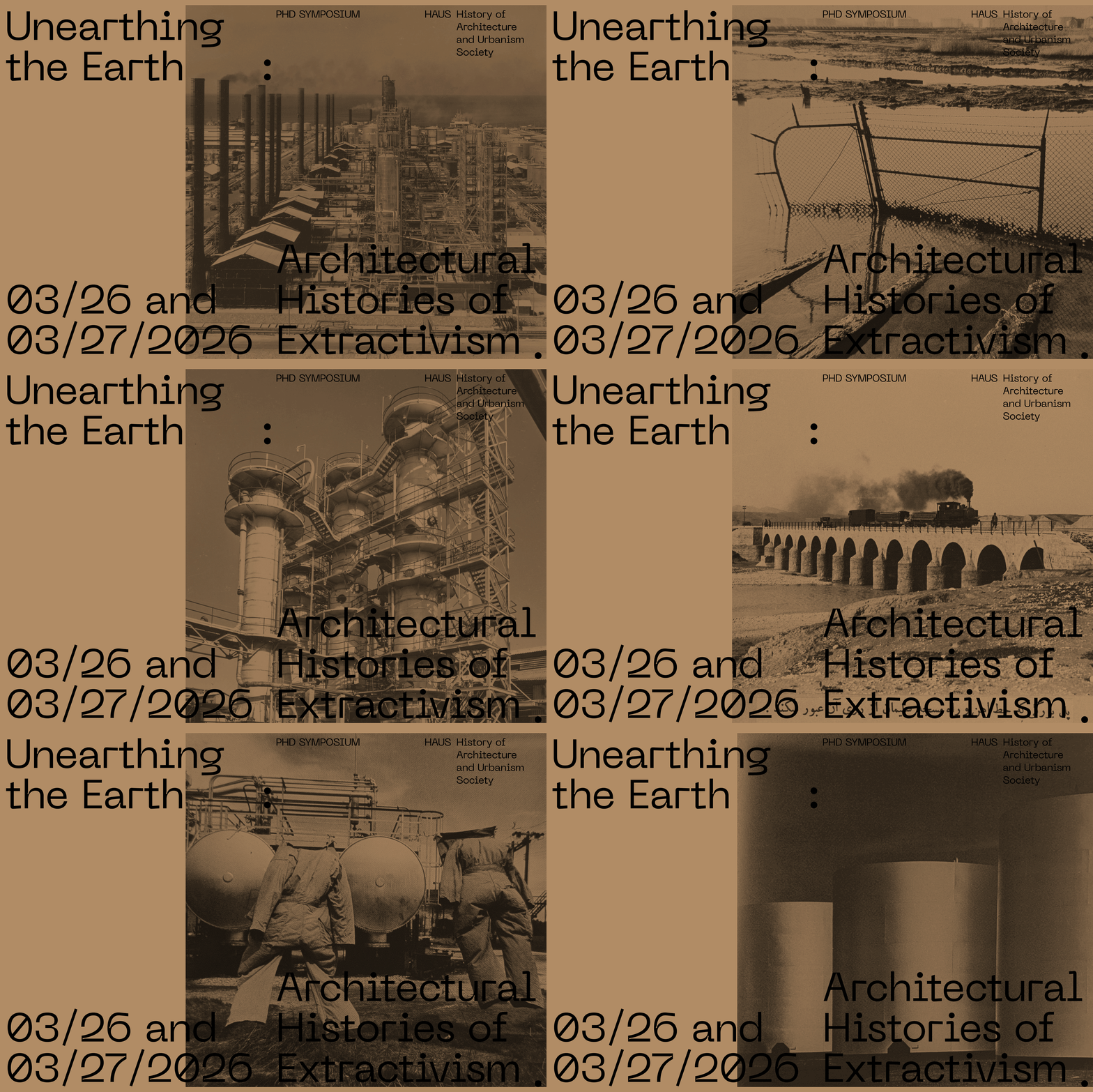
Titled “Unearthing the Earth: Architectural Histories of extractivism,” the symposium poses several key questions:
How can we understand the historical development of extractivism from the perspective of architectural history?
What narratives emerge when we trace the origins of extractivism beyond its traditional links to fossil fuels and fossil capitalism?
In what ways has architecture mediated, facilitated, or resisted extractive regimes, and how has extraction influenced urban development, housing, lived experiences, labor conditions, and the liminality of soil and subsoil ecologies?
The symposium aims to uncover alternative histories of extraction by incorporating indigenous, decolonial, and non-Western perspectives. It also seeks to explore what architectural archives and visual materials can reveal about these dynamics.
500-word abstracts are due on October 15.
This will be an in-person symposium.
Schedule
Thursday, March 26
5:30 p.m. — Milstein Auditorium, Cornell University
Keynote Lecture by Gökçe Günel
Friday, March 27
Sibley Hall, Room 140, Cornell University
9–9:10 a.m.
Opening Remarks
Session One
9:10–9:30 a.m. — Giovanna Bassi Cendra, Scholar-in-Residence at the University of Houston
“The Universidad Técnica Del Estado Across Chile: Building a Systemic Mineralscape, 1947–1968”
9:30–9:50 a.m. — Pritam Dey, Ph.D. Candidate at UCLA
“The Littoral as an Extractive Laboratory: Making Frontiers of Risk in the Coastal Bengal Delta, 1960s–1990s”
9:50–10:10 a.m. — Başak Tükenmez, Phd Candidate at Middle East Technical University (Metu)
“Uranium Dreams: Architecture and the Technopolitics of Nuclear Power in Turkey”
10:10–10:25 a.m. — Response by Caitlin Blanchfield, Cornell University
10:25–10:40 a.m. — Q&A by HAUD Students and Audience
Break
Session Two
11–11:20 a.m. — Lisa Beyeler-Yvarra, Ph.D. Candidate at Yale University
“Extractive Piety: Religious Tourism and the Siphoning of Petro-wealth in Timor-leste”
11:20–11:40 a.m. — Giulio Gonella, Ph.D. Candidate at DASP at the Politecnico Di Torino
“Murky Grounds. Soils, Extraction, and the Architecture of Colonial Agro-ecologies in Northeast Sumatra”
11:40 a.m.–12 p.m. — Gabrielle Printz, Ph.D. Candidate at Yale University
“Human Resources in Oil’s Kingdom”
12–12:15 p.m. — Response by María González Pendás, Cornell University
12:15–12:30 p.m. — Q&A by HAUD Students and Audience
Session Three
2–2:20 p.m. — Reza Alirezaieyan, Private Researcher
“They Built a City in Exchange for Our Waste: The 1965 Soviet–Iranian Steel Mill Barter Agreement and the Architecture of Aryashahr”
2:20–2:40 p.m. — Clarisse Figueiredo De Queiroz, Phd Student at the University of Pennsylvania
“‘A City is Coming Up the River!’: Architectures of Dispossession and the Jari Project in the Brazilian Amazon”
2:40–3 p.m. — Maryia Rusak, Research Fellow at Karlsruhe Institute of Technology (Kit) and Eth Postdoctoral Research Fellow Scaling Oil Ecologies
3–3:15 p.m. — Response by Gökçe Günel, Rice University
3:15–3:30 p.m. — Q&A by HAUD Students and Audience
3:30–3:45 p.m.
Closing Remarks & Collective Discussion
Keynote Speaker
Gökçe Günel
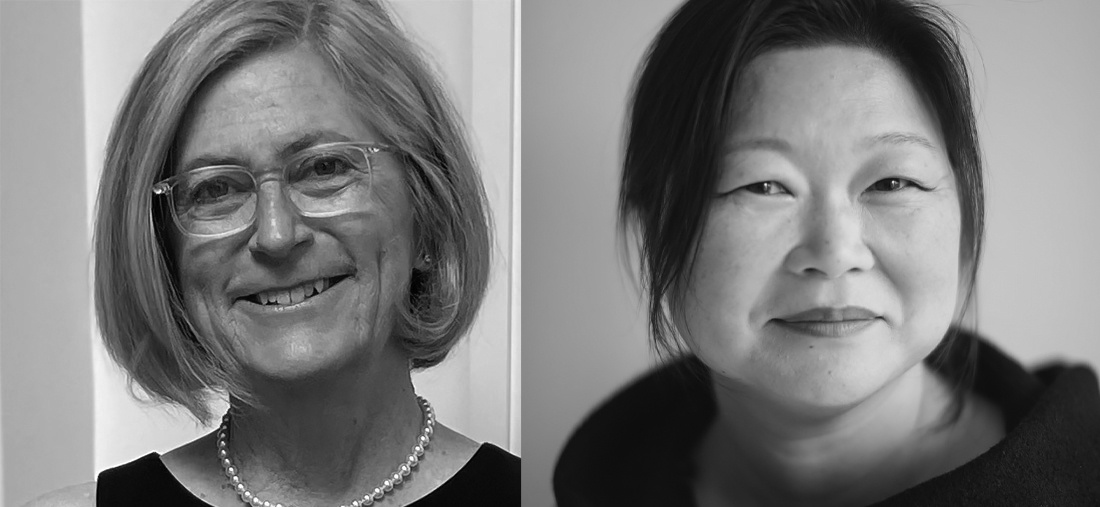
Gökçe Günel is an Associate Professor in Anthropology at Rice University. Her research investigates how infrastructure transforms amid energy and climate change-related challenges. Her first book, Spaceship in the Desert: Energy, Climate Change and Urban Design in Abu Dhabi (Duke University Press, 2019), focuses on the construction of renewable energy and clean technology infrastructures in the United Arab Emirates, with a specific emphasis on the Masdar City project. Her second book, Floating Power: Energy, Infrastructure, and South-South Relations (Duke University Press, 2026), examines the emergence of a Turkish-built floating power plant in Ghana, analyzing how such inventive infrastructure shapes South-South relations and embodies broader imaginations of energy futures.
Günel finished her Ph.D. in Anthropology at Cornell and has served as Cultures of Energy Mellon-Sawyer Postdoctoral Fellow at Rice University (2012–13), ACLS New Faculty Fellow and Lecturer at Columbia University (2013–16), and Assistant Professor in Middle East and North African Studies at the University of Arizona (2016–19). Her articles have been published in Limn, Ephemera, Engineering Studies, Public Culture, Anthropological Quarterly, The Yearbook of Comparative Literature, The ARPA Journal, Avery Review, PoLAR, Log, e-flux, Perspecta, South Atlantic Quarterly, and Environment and Planning D: Society and Space. She has contributed to edited volumes, such as Climates: Architecture and the Planetary Imaginary (Lars Müller, 2016), Anthropocene Unseen: A Lexicon (Punctum Press, 2019), The New Arab Urban: Gulf Cities of Wealth, Ambition, and Distress (NYU Press, 2019), Frontier Assemblages (Wiley, 2019), and Extinct: A Compendium of Obsolete Objects (Reaktion Books, 2021).
Günel is one of the editors of Limn and has most recently coedited Limn 11, “The Obsolescence Issue.”
Günel coauthored “A Manifesto for Patchwork Ethnography” (2020) and coleads Patchwork Ethnography. The book Patchwork Ethnography is forthcoming with the University of Chicago Press in 2026.
Günel’s keynote lecture will take place in Milstein Hall Auditorium on Thursday, March 26, at 5:30 p.m.
Organizers
HAUS Spring 2026 Ph.D. Symposium Organizers
Piergianna Mazzocca / pm598@cornell.edu
Ehssan Hanif / eh637@cornell.edu
HAUS 2025–26 Student Representatives
Sara Ather / sa2396@cornell.edu
Yakin Kinger / yak8@cornell.edu
Members of the History of Architecture and Urbanism Society (HAUS), Cornell University Graduate Student Group.
Submissions
Submissions are due by October 15, 2025. Please submit one PDF containing a 500-word abstract, a short 200-word bio, and a 2-page CV to this Cornell Box folder.