Symposium
Location
April 16–23 Exhibition: The Nave, 3rd Floor, East Sibley Hall
April 17: Margaret and Frank Robinson Lecture Hall, Herbert F. Johnson Museum of Art
Contact
Department of Architecture
Overview
As the discipline of architecture continues to expand horizontally, tackling a wide range of issues across the built environment, knowledge of building construction — often marginalized in academia — is displaced to practice. Such a displacement reinforces a value system that privileges the thinker over the builder and further separates the mind from the hand, a condition that has historically situated architectural knowledge elsewhere, not on the construction site.
Recognizing how this scenario plays out in architecture schools in the United States, the symposium “Building Research” seeks to reignite the curiosity buildings inspire by asking: How can we center buildings and the knowledge that emerges from their construction within broader conversations about research in academia? How do we narrow the gap between academia and practice? How do we enable research to inform architectural practice?
Thus, the “Building Research” symposium seeks to examine the dual aspects of architectural inquiry: the meticulous study of the built environment and the creative act of building knowledge through construction. To do so, the speakers invited to the symposium are contemporary architects whose work sits at the intersection of practice and academia, demonstrating that buildings and their making are central to their research agendas.
At the core of these presentations is a vital examination of three urgent topics central to disciplinary conversations: affordability, performance, and carbon. Speakers are prompted to address these issues by describing the tough trade-offs and friction points that naturally arise when these three factors interact. The symposium aims to show how high-performance goals interact with economic realities in construction and the urgent need for carbon reduction. This approach links analysis with design practice, shifting the view of buildings from static objects to dynamic sites of innovation and knowledge creation.
In a time when architectural discourse is often ruled by the immediacy of “image-based dissemination,” the symposium aims to reclaim a more direct relationship to building construction. Each participating architect will focus on a single building and explore it in great detail. Instead of a broad survey of their portfolio, this in-depth examination explores how design intent is translated into physical form, demonstrating how construction practices and material choices actively influence and reshape architectural theory.
Finally, the “Building Research” symposium seeks to fold the horizontal breadth of architectural research around a shared set of interests that re-centers buildings in research. Whether through archival documentation of historical precedents or innovative robotics research, the goal is to demonstrate how rigorous academic research centered on building(s) can help address affordability, performance, and carbon reduction at a time when these issues demand a reconsideration of disciplinary modes of thinking and making. The curiosity underlying this variety of work is a shared desire to question, challenge, reinvent, analyze, and advance the discipline — not just to create ‘good buildings’. This collective effort aims to influence professional practice and architectural education, shaping how we teach and prepare future generations of architects.
The Preston H. Thomas Lecture Series is funded through a gift to Cornell’s College of Architecture, Art, and Planning from Ruth and Leonard B. Thomas of Auburn, New York, in memory of their son, Preston. Events are free and open to the public.
Schedule: April 16
5–6 p.m. | Exhibition Opening
Curious Construction
The Nave, 3rd Floor, East Sibley Hall
Schedule: April 17
Margaret and Frank Robinson Lecture Hall, Herbert F. Johnson Museum of Art
9:30–10 a.m. | Introduction and Overview
Session 1
10:05–10:35 a.m. | Andrew Holder
The LADG (Los Angeles Design Group) / Pratt University
10:40–11:10 a.m. | Dan Spiegel and Megumi Aihara
SAW // Spiegel Aihara Workshop, Inc. / University of California, Berkeley
11:15–11:45 a.m. | Jenny French and Anda French
French 2D / Harvard University, Graduate School of Design
11:45 a.m.–12 p.m. | Conversation Moderated by Cornell AAP faculty
12–1 p.m. | Lunch Break
Rebecca Q. and James C. Morgan Garden
Session 2
1:05–1:35 p.m. | Michelle Chang
JaJa Co / University of Southern California
1:40 – 2:10 p.m. | Sungwoo Jang
commonmatters / Syracuse University
2:15–2:45 p.m. | J. Roc Jih
Studio J. Jih / MIT
2:45 – 3:00 p.m. | Conversation Moderated by Cornell AAP faculty
Session 3
3:05–3:35 p.m. | Leslie Lok and Sasa Zivkovic
HANNAH / Cornell University
3:40–4:10 p.m. | Kyle Barker
Primary Projects / Harvard University, Graduate School of Design
4:15 – 4:45 p.m. | Andrew Colopy and Robert Booth
Cobalt Office / Rice University
4:45–5 p.m. | Conversation Moderated by Cornell AAP faculty
5–5:30 p.m. | Closing Conversation
Speakers
David Costanza, Assistant Professor of Architecture
David Costanza is an Assistant Professor of Architecture and the director of the Building Construction Lab (BCL) at Cornell University, as well as the principal of David Costanza Studio (DCS), a design-build practice based in Ithaca, New York. His work foregrounds Construction Methods, Material Culture, and Labor Practices through the lens of decarbonization. Across practice, research, and teaching, Costanza investigates the nonlinearity of design processes, opening new terrains for architectural intervention while cultivating an expanded dialogue among representation, computational design, digital fabrication, building science, materials, construction, labor, and the environment.
Costanza was awarded the 2025 League Prize, the 2024–25 Rome Prize in Architecture from the American Academy in Rome, the 2023 Emerging Faculty Award from the Building Technology Educators’ Society (BTES), and the 2020 Rotch Fellowship. Costanza is the author of Curious Constructions: Around Materials, Labor, and the Environment (Routledge, 2026).
Kyle Barker, Primary Projects / Harvard University, Graduate School of Design
Kyle Barker is the founder of Primary Projects, an architecture firm dedicated to more sustainable, affordable, and communal design. He’s interested in diversifying housing models, reducing embodied carbon, and communicating clearly.
Barker is the author of Communal Housing Design Guidelines, a book collecting his Rotch Scholar research, during which he traveled across Europe, Australia, and Japan to study collective housing models. He’s taught housing studios, seminars, and workshops at Harvard, RISD, Northeastern, and MIT. In 2023, he received the Boston Society for Architecture’s (BSA) Earl R. Flansburgh Young Designers Award. He holds an M.Arch. from MIT, a BSID from the University of Cincinnati, and is licensed in Massachusetts, New York, Maine, and Michigan.
Outside of practice, he’s the Board Secretary for the BSA, a member of the Design Advisory Council for the Cohousing Association of the United States, a member of the Rotch Traveling Scholarship Committee, and a design mentor for the Greater Boston Affordable Housing Design Competition.
Andrew Colopy and Robert Booth, Cobalt Office / Rice University
Cobalt Office is led by partners Andrew Colopy and Robert Booth, and is invested in the places we live, how they get made, and what they say about us as people. The firm believes work should bring about positive change, for both those who inhabit and create it — work grounded in a disciplinary project committed to the realities of the built environment. Focused on housing and cultural projects, including spaces for art and education, the firm brings particular expertise in design and construction technologies. Based in Houston, Cobalt has received recognition for its work through numerous awards, exhibitions and publications.
Cobalt Partner Andrew Colopy is also Associate Professor and Director of Undergraduate Studies at Rice University School of Architecture, where his teaching and research focus on the role of technology in architectural practice. Partner Robert Booth brings extensive experience in the design and execution of complex projects, particularly in multifamily housing. His work emphasizes coordination, constructability, and the integration of design intent with project development and delivery. Both are graduates of Columbia University, GSAPP.
Michelle Chang, JaJa Co / University of Southern California
Michelle Chang directs JaJa Co and teaches architectural design.
She founded her independent practice in 2014 after working in offices in New York, Boston, and San Francisco. Her design work experiments with the overlaps between and among film, installation, music, teaching, and building.
Chang holds a Master of Architecture from Harvard GSD and a Bachelor of Arts in international relations from Johns Hopkins University. She is a former Rome Prize Fellow, MacDowell Colony Fellow, Wortham Fellow, and a recipient of the Architectural League Prize for Young Architects + Designers. Her work has been exhibited at the Whitney Museum of American Art and the Museum of Contemporary Art Toronto Canada, among other venues.
In her research, Chang studies the techniques and histories of architectural representation. Specifically, she investigates how optics, digital media, and modes of cultural production influence translations between design and building. Her recent writing on noise and vagueness examines these topics. Before coming to USC, she taught at Harvard, Rice, UC Berkeley, California College of the Arts, and Northeastern University.
Jenny French and Anda French, French 2D / Harvard University, Graduate School of Design
French 2D is a Boston studio founded by Jenny French and Anda French, AIA. Their work focuses on uncommon housing types, found in cohousing, compact living, and adaptive reuse projects. The practice also works on civic installations and exhibitions that call upon the domestic to bring people together for familiar rituals in unfamiliar spaces, found in furniture, textiles, and environments. French 2D has received numerous awards including the Architectural League’s Emerging Voices Award, an ARCHITECT Magazine P/A Award, and Architectural Record’s Design Vanguard. In 2024 French 2D was nominated for the Mies Crown Hall Americas Prize, and in 2023 they were a finalist for the Architectural Review’s Emerging Award. Their work has been featured in Domus, AZURE, PLOT, Metropolis, Monocle, and The Architect’s Newspaper, and exhibited at MoMA, the Venice Architecture Biennale, and in the solo show House Clothes at UMASS Amherst. Jenny French is an Assistant Professor in Practice at the Harvard GSD and Anda French is a Professor of Practice at the Princeton SoA.
Andrew Holder, The LADG (Los Angeles Design Group) / Pratt University
Andrew Holder is coprincipal of The Los Angeles Design Group (LADG) and Professor and Chair of Graduate Architecture, Landscape Architecture, and Urban Design at Pratt Institute.
Holder’s research and design focuses on the idea of “assembly”—using the way architecture is made as a prompt for how it participates in social formations. His recent work has been published by A+U, Metropolis, The Los Angeles Times, Dwell, Young Architects 16, a+t, Log, Pidgin, Project, and RM 1000. He is a frequent lecturer and guest critic at institutions across the United States and has held teaching appointments at the University of Michigan, the University of Queensland, UCLA, SCI-Arc, Otis College of Art and Design, The University of Pennsylvania, and the Harvard Graduate School of Design where he served as Program Director for the MArch I degree track.
Sungwoo Jang, commonmatters / Syracuse University
Sungwoo Jang is an Assistant Professor at the School of Architecture at Syracuse University and a principal of commonmatters based in Boston. His interdisciplinary research and teaching pedagogy uniquely merge technical culture with spatial practice, where climatic and energetic principles, combined with advanced simulation technology, emerge as innovative spatial and material design opportunities that promote a vital and less carbon-intensive living. A licensed architect with more than 13 years of professional experience, Sung has designed and managed a wide range of award-winning domestic and international projects at different scales. He also holds a LEED credential, a general contractor’s license, and has passed the HERS energy modeler test and ICA-certified home inspector training. He holds a Master of Architecture from the Massachusetts Institute of Technology and previously taught at Northeastern University and Boston Architectural College. He currently teaches the Building Systems Design course and the Integrated Design Studio at Syracuse School of Architecture.
J. Roc Jih, Studio J. Jih / MIT
J. Roc Jih (he/they) is principal of Studio J. Jih and Associate Professor of the Practice in the MIT Department of Architecture. Their pedagogy and practice center on intersectional modes of belonging in architecture, looking at frameworks by which material cultures, construction systems, tools, identities, and place, shape architectural form. Jih is corecipient of MIT’s Professor Amar G. Bose Research Grant, for their research and prototyping of mono-material basalt construction and infrastructural systems in the Icelandic landscape. Jih received their Master of Architecture from the Harvard Graduate School of Design, where they were awarded the Faculty Design Award for Design Excellence. They hold a B.A. in Architectural Studies and Sculpture from Brown University, Magna cum Laude, with Honors. Their work has been recognized by awards including a Progressive Architecture Award from Architect Magazine (2022) and a Design Vanguard award from Architectural Record (2023). Their work has been shown in the 2025 Venice Biennale, Berggruen Cultural Center, National Building Museum, CNN, and The New York Times.
Leslie Lok and Sasa Zivkovic, HANNAH / Cornell University
Leslie Lok is a coprincipal at HANNAH, an experimental design practice that focuses on architectural explorations grounded in material expression, digital fabrication, and innovative construction techniques to advance building practices. HANNAH’s recent projects include House of Cores, the first multi-story concrete 3D printed building in the US, and Monarchs, a large-scale installation at the 2024 Coachella Art and Music Festival. HANNAH has received numerous awards, including the Architectural League Prize, Archdaily’s Best New Practices, and Architect Magazine’s Next Progressives. Lok is also an associate professor in Cornell University’s Department of Architecture where she directs the Rural-Urban Building Innovation Lab. By integrating digital construction methods, her work customizes visualization, design, and fabrication workflows for non-standardized materials and local resources from timber to bamboo. Lok’s works have been exhibited and published internationally in both peer-reviewed publications, book chapters, as well as others such as A+U, Architectural Record, the Architect Magazine, and The New York Times.
Sasa Zivkovic is an associate professor and the B.Arch. program director at Cornell University AAP, where he directs the Robotic Construction Laboratory (RCL), an interdisciplinary research group that focuses on the development of sustainable robotic construction technologies, material systems, and fabrication processes. Zivkovic is also a coprincipal of HANNAH. In close collaboration with the building industry, Zivkovic’s work explores the implementation of construction techniques such as additive concrete manufacturing and robotic timber construction at full scale. His work and academic research have been widely published in book chapters, journals, exhibitions, and at peer-reviewed conferences.
Dan Spiegel and Megumi Aihara, SAW // Spiegel Aihara Workshop, Inc. / University of California, Berkeley
Dan Spiegel is an architect based in San Francisco. Together with Landscape Architect Megumi Aihara, Spiegel founded the hybrid practice SAW // Spiegel Aihara Workshop, Inc. in 2014. Their work spans scales, timelines, disciplines, and continents. SAW was the recipient of the League Prize from the Architectural League of New York in 2018, Design Vanguard from Architectural Record in 2019, New Talent from Metropolis Magazine, Next Progressives from Architect Magazine, Emerging Talent from the Monterey Design Conference, as well as several regional and national awards from the American Institute of Architects. Their work has been published and exhibited widely, including the solo show Other Objectives at the UC Berkeley College of Environmental Design, and the current installation Looking, After the Fires at the 2025 World Expo in Osaka. They are Fellows of the Japan–US Friendship Commission, awarded jointly by the National Endowment of the Arts and Garden Club of America | Prince Charitable Trusts Rome Prize Fellows in Landscape Architecture from the American Academy in Rome.
Spiegel is a Continuing Lecturer in Architecture at the UC Berkeley College of Environmental Design, where he coordinates advanced graduate studios. His’s work spans scales and timelines, intertwining the conceptual with the practical, using a background in Public Policy to deploy design as a tool for community engagement and development. He holds an M.Arch. from the Harvard University Graduate School of Design and is a licensed Architect in California and Hawaii.
Aihara has nearly twenty years of professional experience creating landscapes, big and small. Prior to joining SAW, she was a Senior Project Manager at Michael Van Valkenburgh Associates and a Landscape Architect with Andrea Cochran Landscape Architecture. Aihara received a Master of Landscape Architecture from the Harvard University Graduate School of Design and a B.A. in Visual Arts from Brown University. She is an Adjunct Professor of architecture at California College of the Arts (CCA) and a licensed Landscape Architect in the states of California and Hawaii.
Exhibition
April 16–23
The Nave, 3rd Floor, East Sibley Hall
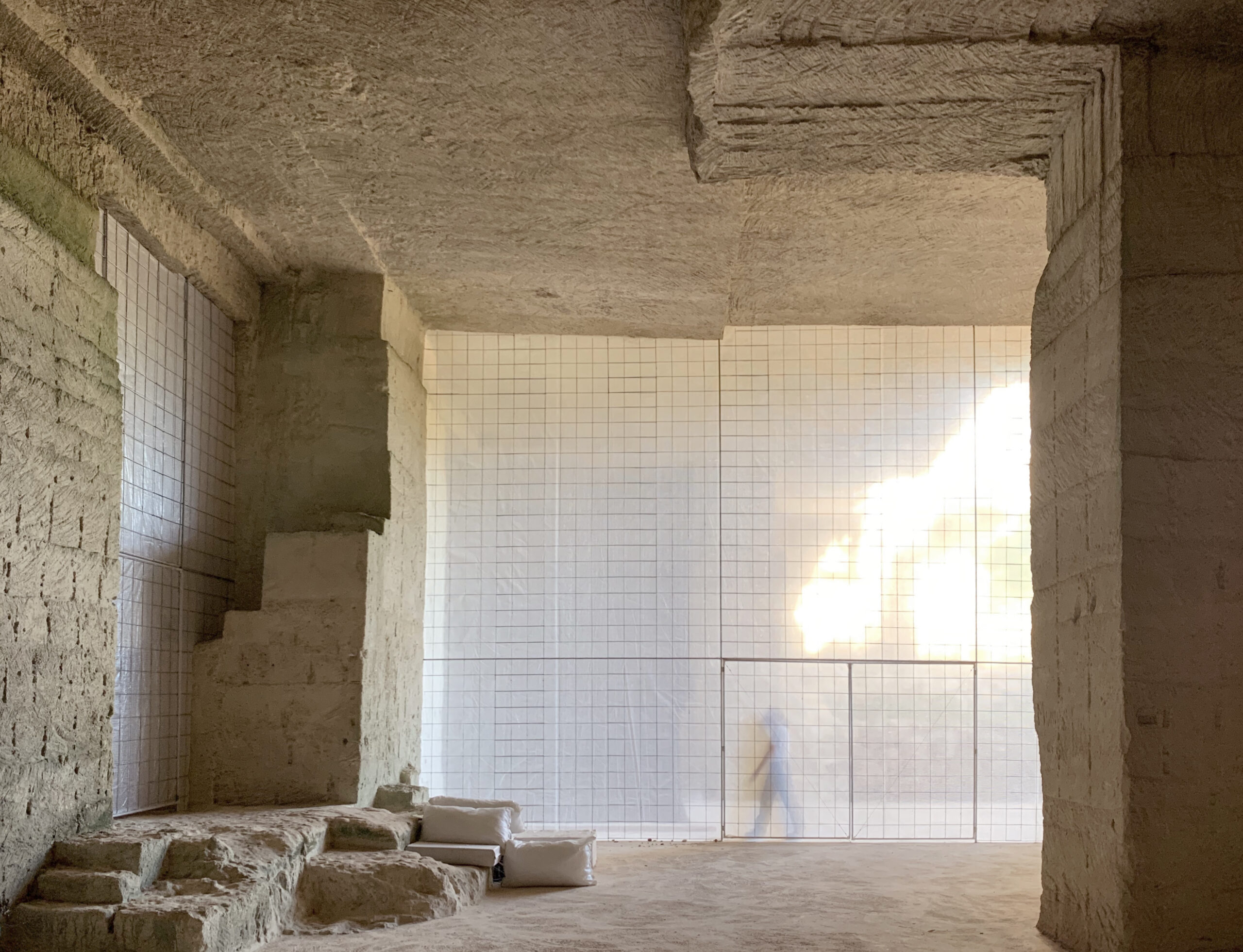
A related exhibition titled Curious Constructions, featuring work from the Building Construction Lab developed over the past few years around the same theme, will also be displayed. It will showcase six innovative construction systems that inform six different case-study houses. The exhibition aims to encourage discussions on trade-offs in the complex design and construction process, including issues of affordability, performance, and carbon impact.