Lecture
Location
Abby and Howard Milstein Auditorium
Milstein Hall
Contact
Department of Art
(607) 255-6730
Related Links
Abstract
This talk examines how sculpture can function as a way of thinking with materials across incompatible scales and disjunctive temporal registers. Catherine Telford Keogh’s practice investigates how materials are held, crushed, preserved, and dissolved within systems of extraction and circulation that structure contemporary life. These systems bind geology, infrastructure, commodity culture, and living bodies across incompatible timescales, allowing geological deep time and industrial acceleration to collide within a single material field.
Telford Keogh traces how extracted matter is folded into systems that promise stability while enabling profound transformation — and how materials resist and rewrite the orders imposed upon them. Indigestion becomes a central figure: not failure but productive refusal, the system that cannot fully metabolize what it has taken in. Working directly with machines built for precision and commercial inscription, she redirects their operations to pressure the systems they were meant to reinforce.
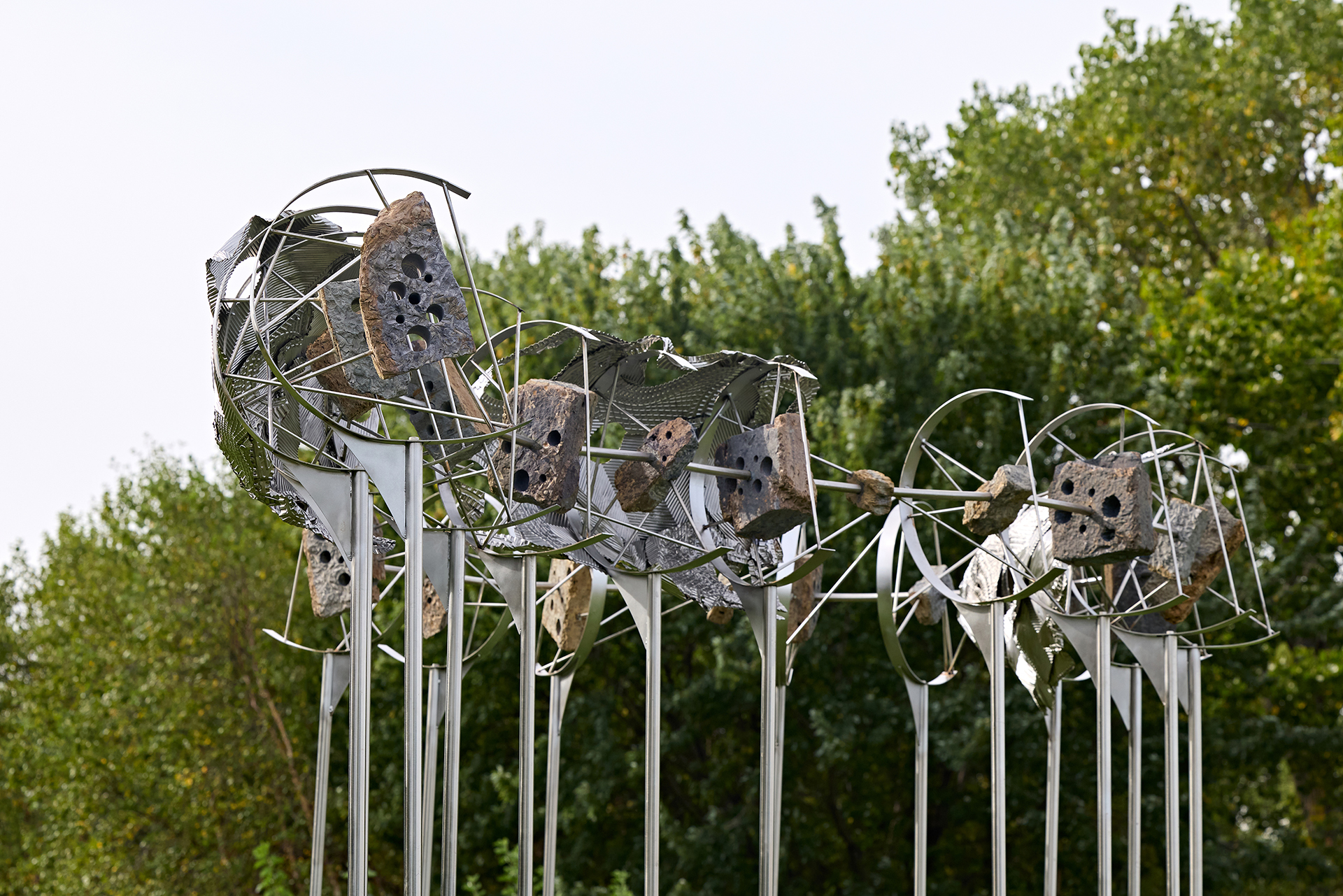
Drawing from current projects including Metabolic Rift, an ongoing investigation rooted in the Gowanus Canal superfund site, and Cradlers, a site-responsive installation at Socrates Sculpture Park, she discusses collaborations with geologists, microbiologists, and scientific glassblowers — not to extract expertise but to explore how different disciplines approach the same material. Across these works, she returns to circulatory systems that bind geology and living bodies across timescales, and to the organisms that persist within these cycles, transforming what they cannot expel.
Biography
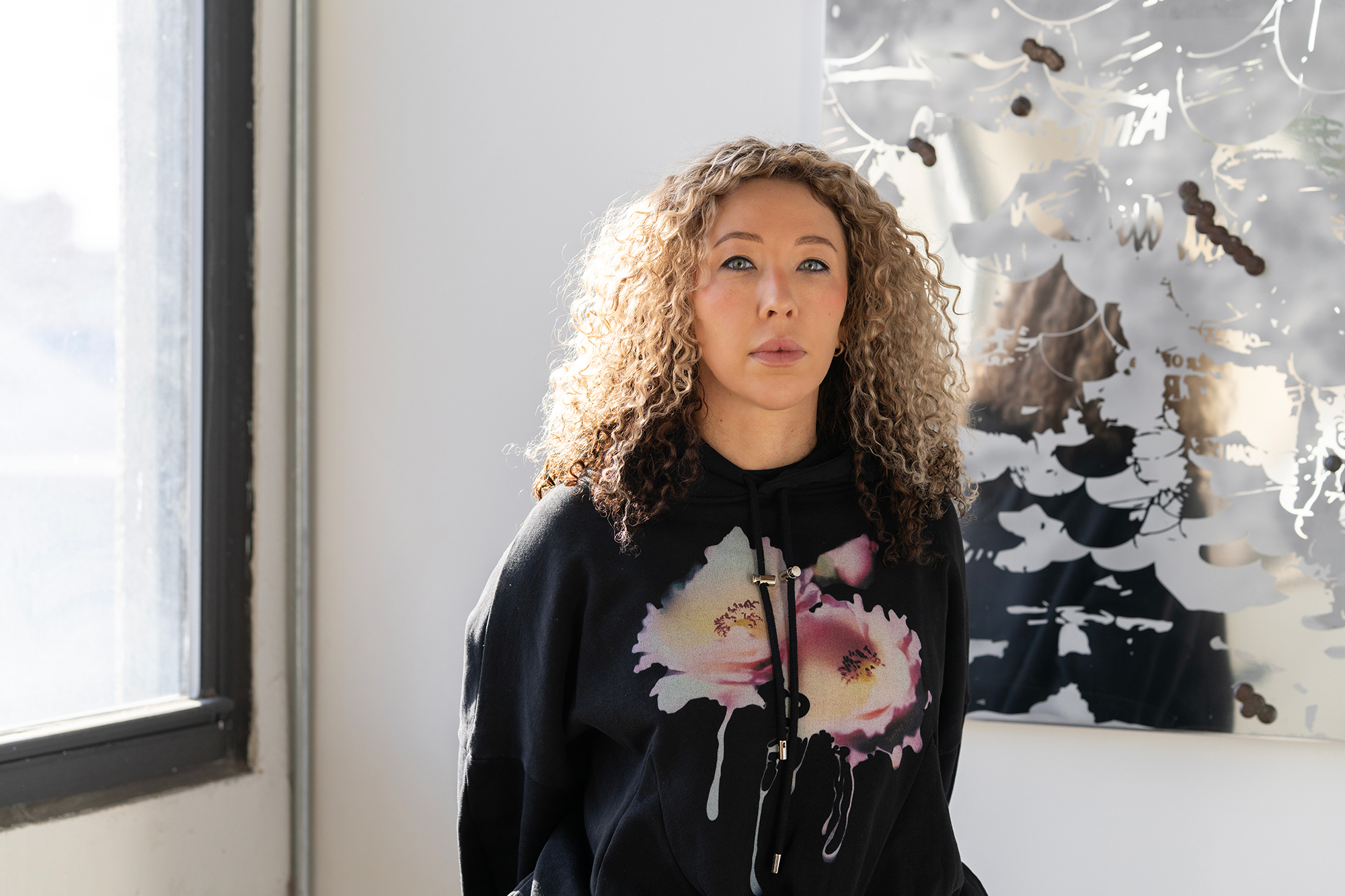
Catherine Telford Keogh
Catherine Telford Keogh (b. Toronto, Canada; lives and works in New York) is an interdisciplinary artist working with sculpture, installation, and contingent materials. Her practice investigates how materials are held, crushed, preserved, and dissolved within systems of extraction and circulation, tracing how they resist and rewrite the orders imposed upon them. Sculpture functions as a way of thinking with materials across incompatible scales and disjunctive temporal registers.
Selected exhibitions include Carriers (Gravity-Fed), Museum of Contemporary Art Toronto (2024); Shelf Life, Helena Anrather, New York (2023); and Nervous System, Helena Anrather, New York (2020). Group exhibitions include ILY2, New York; Public Gallery, London; Bronx Museum, New York; and Seattle Art Museum, among others. She is the inaugural recipient of the Jack Galef Visual Arts Award from the Guggenheim and a 2026 Creative Capital awardee. She is currently a Socrates Fellow and holds an M.F.A. in Sculpture and an M.A.R. in Women, Gender, and Sexuality Studies from Yale University.