Exhibition
Location
Olive Tjaden Gallery
Tjaden Hall
M–F, 8 a.m.–4:30 p.m.
Contact
Department of Art
(607) 255-6730
Reception
Wednesday, February 4, 6–8 p.m.
Related Links
Abstract
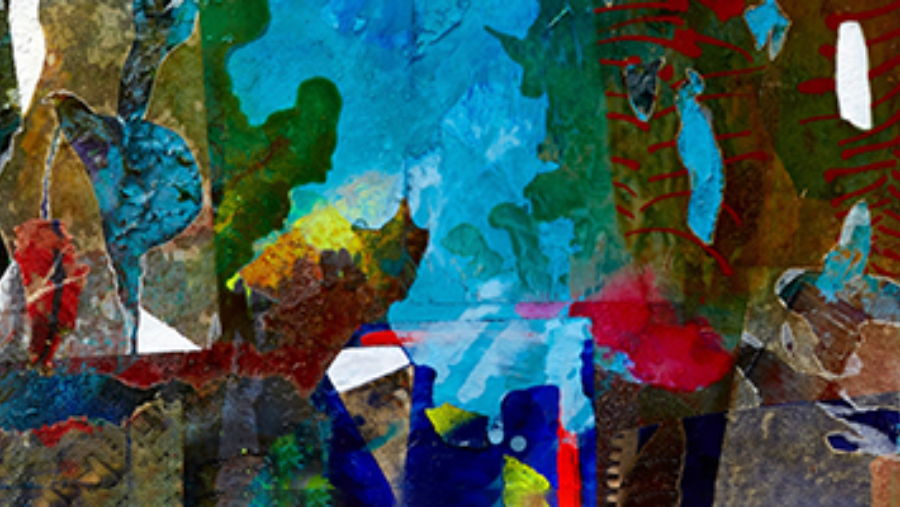
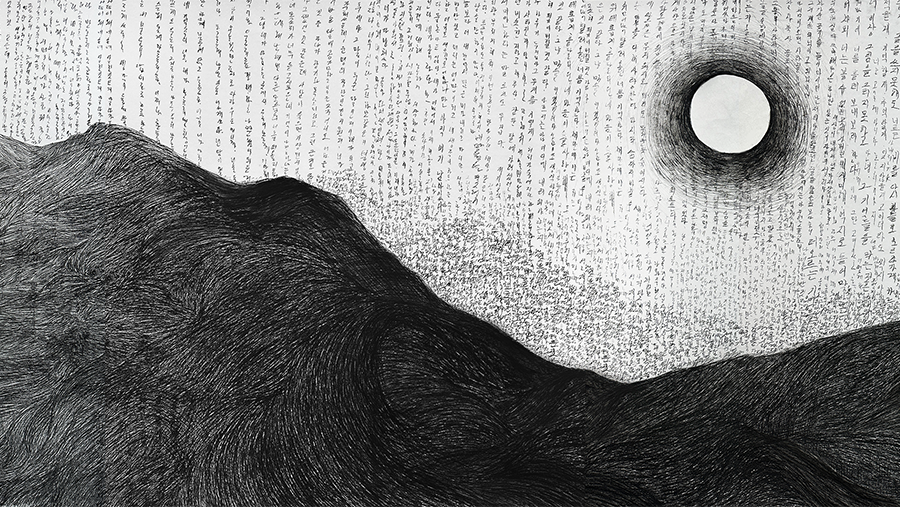
Where the Memory Flows is a solo exhibition centered on memory as an active, moving force shaped by love, loss, and emotional distance. The exhibition brings together charcoal drawings and paintings that trace where memory and feeling travel rather than where they settle. Handwritten Korean text appears as fragments of thought and recollection, not as narrative explanation but as residue of lived experience. Often left untranslated, the text resists closure and invites viewers to feel rather than decode.
The works are driven by motion. Charcoal lines surge, smear, and dissolve across the surface, suggesting memory as unstable and continually transforming. Nothing remains fixed. Some images press forward with intensity, while others recede into near erasure, echoing how emotions shift over time. Color and absence, density and restraint, all coexist as part of the same current. Together, the works form an emotional landscape in which memory is always in motion.
Language functions as movement rather than message. Korean phrases appear and disappear, crossing the drawings like currents through water. For viewers who cannot read the text, meaning is carried through gesture and material force. The exhibition proposes that memory does not need translation to be felt.
Installed as a continuous sequence along the gallery walls, the works guide viewers through a flowing rhythm of intensity and quiet. Where the Memory Flows offers a space to consider how memory and the heart move forward and how art can hold the momentum of feeling without forcing it to remain still.
Biography
Jiwon Chloe Han
Jiwon Chloe Han (B.F.A. ’26) is an undergraduate student pursuing a degree in Fine Arts with minors in East Asian Studies and Art History. She was born and raised in Gwangju, South Korea, and is currently based in the United States. Han works primarily in drawing and painting. Her practice often incorporates handwritten Korean text and engages questions of memory, language, and place. She draws from both personal experience and historical references within Korean visual culture.