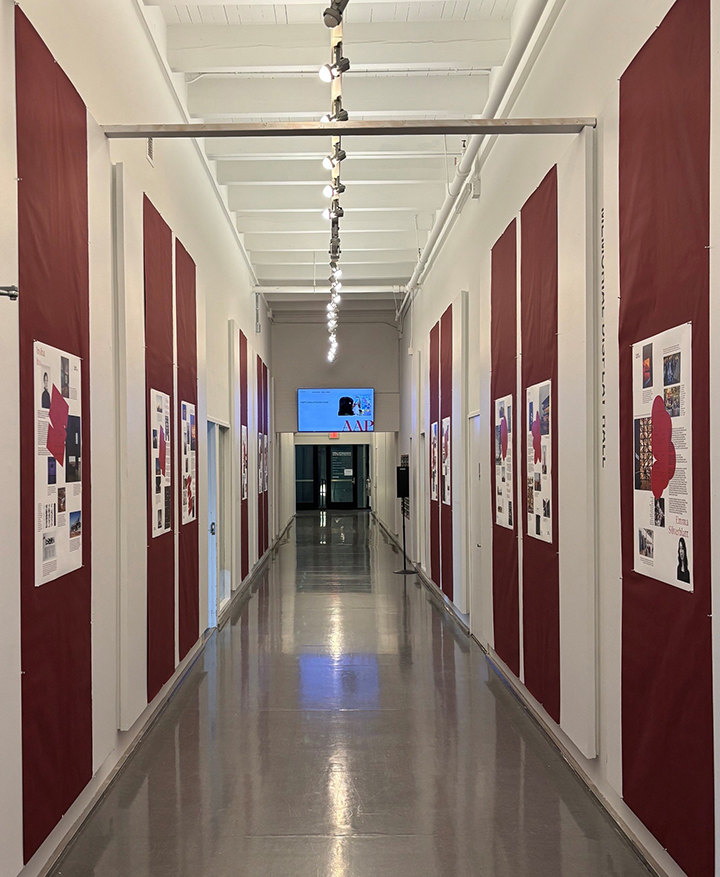
Exhibition
Location
Darcy Weiner 1990 and Glenn Weiner 1992 Memorial Display Hall
East Sibley Hall
Contact
Department of Architecture
Abstract
An exhibition highlighting the work of the newest faculty members of the Department of Architecture.
Biographies

Juan Balsa, Visiting Critic
Juan Manuel Balsa is an Argentine architect, educator, and Visiting Critic in the Department of Architecture at Cornell University. He is cofounder and principal of Balsa Crosetto Piazzi, an award-winning practice based in Argentina and the United States. His work explores the relationship between architecture, landscape, and construction through precise geometries, local building traditions, and innovative material and technical solutions.
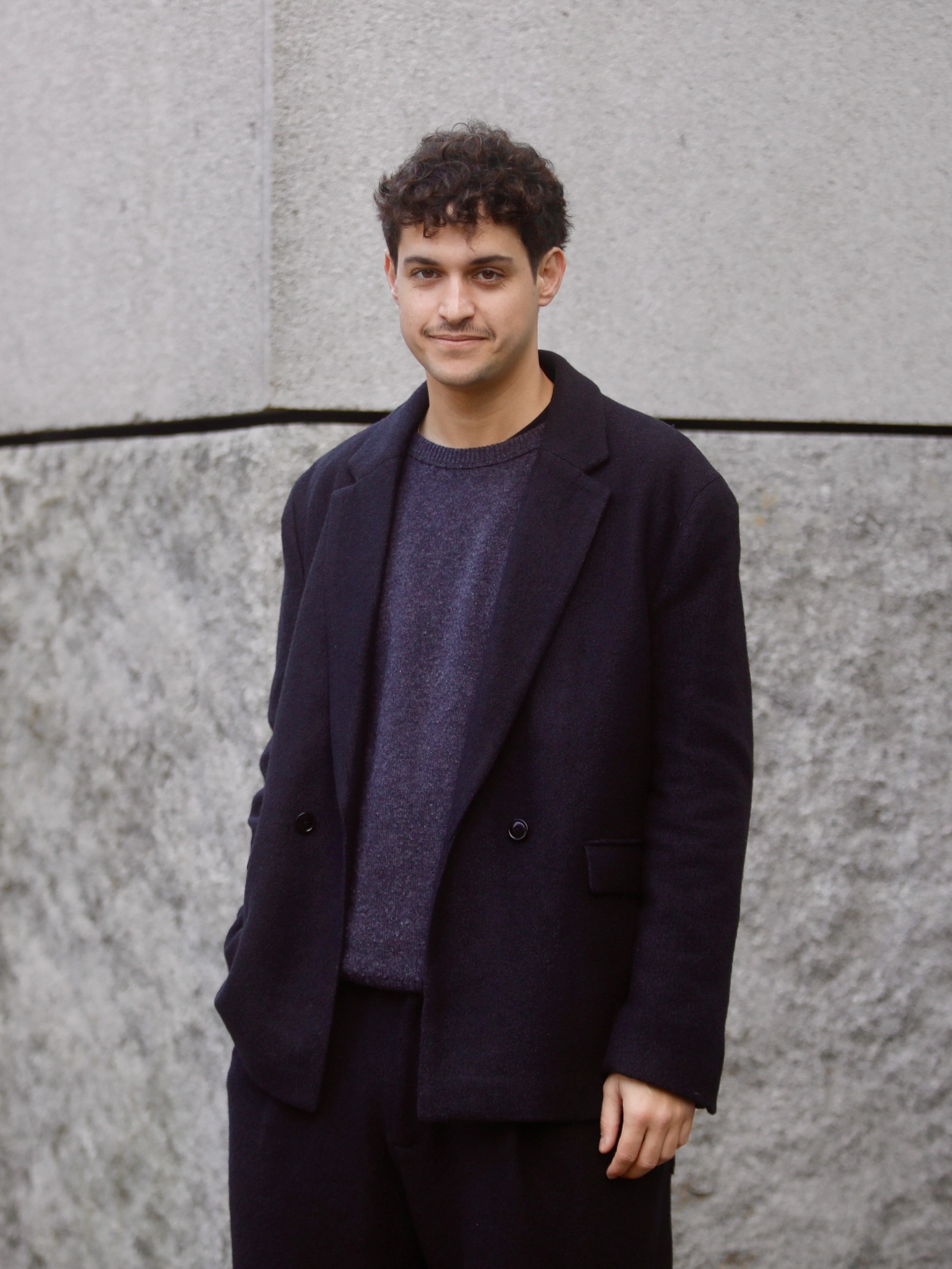
Manuel Bouzas Barcala, Assistant Professor
Manuel Bouzas is a Spanish architect who was recently hired as an Assistant Professor of Architectural Design at Cornell University’s College of Architecture, Art, and Planning after serving as a Visiting Critic. His work operates at the intersection of architecture, ecology, and material culture, spanning design, teaching, curation, and publishing. In 2025, he co-curated Internalities, the Spanish Pavilion at the 19th Venice Architecture Biennale, and received the Princess of Girona Arts Prize from the Royal Family of Spain. He is also coeditor of Obradoiro, the journal of the Galician Institute of Architects.

Ernesto Carvajal, Design Teaching Fellow
Ernesto Carvajal is an Ecuadorian designer, educator, and cofounder of Efimero, a design studio based in Cyprus and the United States. His work spans academic buildings, public installations, and international symposium curation and programming. His projects have been exhibited at Harvard University, the Larnaca Biennale, and venues in Boston, New York City, and internationally. His practice and teaching explore uncertainty, crisis, sustainability, and design as an intuitive and investigative process.

Rocio Crosetto Brizzio, Assistant Professor and Judith Kinnard Early Career Design Fellow
Rocio Crosetto Brizzio is an Argentinian architect, educator, and cofounder of Balsa Crosetto Piazzi, an award-winning practice based in Argentina and the US. Balsa Crosetto Piazzi works across commissions, public competitions, research, writing, and curatorial projects. Their work is defined by precise geometries and contextual sensitivity, with particular attention to the networks of materials, people, ecologies, and knowledge that shape architecture.

Maria Ferrari, Design Teaching Fellow
Maria Ferrari is an Argentine-born designer and educator, registered as an architect in Peru. Based in New York, she is currently a Design Teaching Fellow at Cornell AAP. Her work moves through design, image, and composition, using analog media and craft to reintroduce sensibility into contemporary architectural practice.
Her current research investigates chemical and photographic processes as design methods, with particular attention to images produced through direct encounters with material and environmental conditions. Through alternative media, she considers image-making as a site of architectural production in itself.

Iroha Ito, Design Teaching Fellow
Iroha Ito is an architectural designer, artist, and cofounding principal of LUCITO with Andrew Lucia based in Minneapolis, Minnesota.
Their work spans scale, medium, and context — from architecture and landscape to writing, printmaking, installation, and sculpture. Their creative process is one of finding the project through context, dialogue, historic reference, and material constraint. Each work is approached as an open-ended process without preconceived notions of material, form, and concept, wherein each intervention evolves out of an act of discovery and limitation.

Rosita Palladino, Lecturer
Rosita Palladino is an Italian architect, researcher, and Lecturer at Cornell AAP. Her work examines how ephemeral architecture, ritual practices, and collective labor shape civic space, moving across research, pedagogy, and design.
She is co-founder of CCCONFETTI, an open, collectively authored platform that gathers and connects dispersed cultural, spatial, and production knowledge around celebration practices.

Emma Silverblatt, Assistant Professor
Emma Silverblatt, AIA, is an architect and educator whose approach shifts architecture’s point of origin from abstract models to situated relationships, testing how design can expand access and facilitate spatial agency. Her research centers affordable housing and public space as typologies systematically underserved by design. At Cornell she teaches theory and community-engaged studios and serves as editor-in-chief of the Cornell Journal of Architecture. As principal and cofounder of the multidisciplinary firm post-, Silverblatt extends architectural practice through action research, technological integration, events, and installations.

Penny Unni, Design Teaching Fellow
Penny Unni is a Canadian designer, educator, and researcher working on forms of adaptation and the spatial politics of infrastructure amid ecological degradation. Her work has been published and received independent research awards from the Graham Foundation and the Royal Canadian Academy of Arts. She has contributed to significant cultural projects at the offices of Níall McLaughlin Architects, A+I, Powerhouse Company, and Safdie Architects.
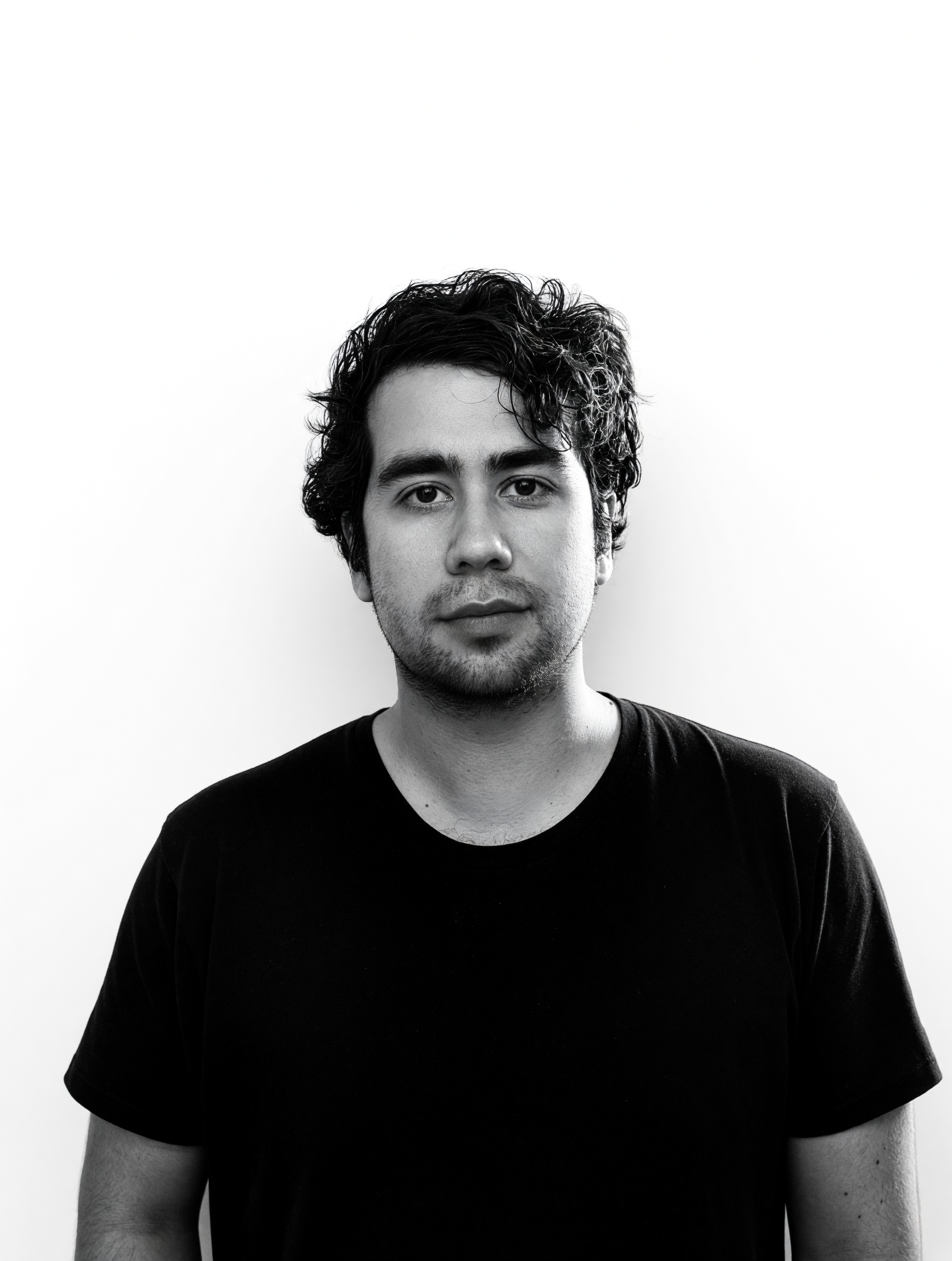
Ryan Whitby, Lecturer
Ryan Whitby is a designer and cofounder of the multidisciplinary design studio post-. His work spans architecture, interactive systems, and generative technologies, often exploring the intersection of computational processes and material phenomena. Drawing from practices in parametric design, generative modeling, realtime interaction, and digital fabrication, his work navigates multiple scales and mediums.

Zhicheng Xu, Assistant Professor
Zhicheng Xu is a Chinese architectural designer, educator, and researcher whose work examines the relationships among architecture, landscape, ecology, and material systems. He is cofounder of Hyperlocal and Assistant Professor of Architecture at Cornell University. His research examines how architecture can respond to changing ecological conditions by rethinking material sourcing, material use, land management, and relationships with non-human species.


