Contact
Clarence S. Stein Institute for Urban and Landscape Studies
106 W. Sibley Hall
Each year, the Department of City and Regional Planning (CRP) awards grants to support excellent incoming Master of Regional Planning (M.R.P.) students. The department also awards smaller research grants to encourage student research in the fields of urbanism, historic preservation, landscape architecture, land use, urban design, regional planning, residential development, and more. These research grants continue Clarence Stein’s legacy by furthering his work on the built environment. Click “Apply Now” to find out more about the research grants.
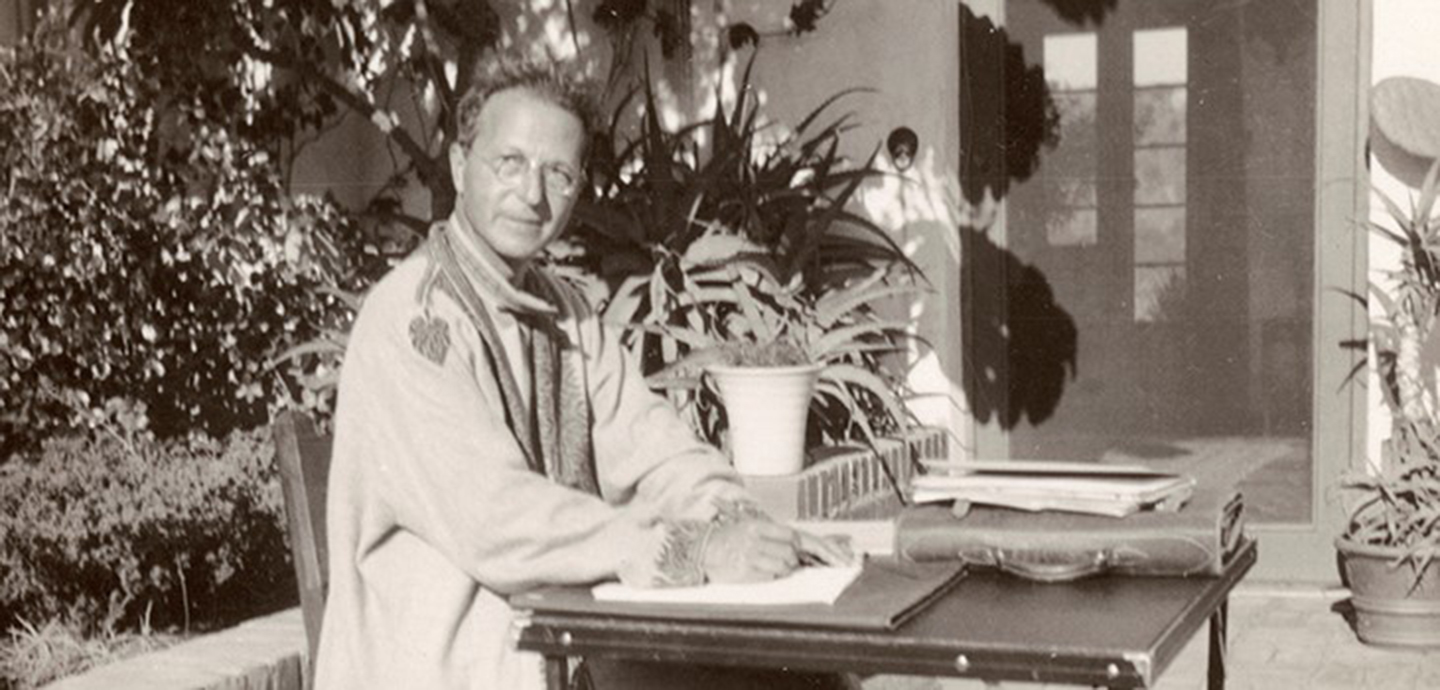
The Clarence S. Stein Institute for Urban and Landscape Studies was created in 1994 with a generous endowment provided by Aline Laveen MacMahon Stein. Clarence S. Stein (June 19, 1882–February 7, 1975) was an American planner, architect, and writer. A major proponent of the Garden City movement in the US, Stein established his planning and architecture practice in New York City in 1919 after studying at Columbia University and École des Beaux-Arts in Paris.
Stein’s legacy is one of progressive experimental architecture and planning intended to create a built environment to serve social as well as individual goals. His prominent published works include:
- The Writings of Clarence S. Stein: Architect of the Planned Community (1998, edited by Kermit Carlyle Parsons)
- Toward New Towns for America (1951)
- Kitimat: A New City (1954)
- Primer of Housing (1927, coauthor)
Stein Collection in the Cornell University Archives
This Stein Collection is one of an extensive set of Cornell collections on major figures in city and regional planning, attracts researchers from all over the world, and is currently documented on the Stein Papers in the Rare and Manuscript Collection in the Carl A. Kroch Library
Past Stein Institute Grants
Extending the ideas of Clarence Stein expressed in his book, Toward New Towns for America (Reinhold, 1957), the Institute supports graduate fellowships in the Master of Regional Planning program, an annual lecture, as well as research grants.
Awarded Grants:
2023–24 Awards
Najeh Marwan Abduljalil: Research for Change SCNY
Kanji Fateema: “The Impact of Ride Hailing Services on Urban Mobility in Dhaka, Bangladesh”
Dingkun Hu: “Enhancing Digital Twins for Planning and Disaster Recovery: A Case Study of Using UAV 3D Modeling to Rebuild Fort Myers Beach, Florida”
Su Jeong Jo: “Sustainable Planning for Local Decline: Three Case Studies in South Korea”
Yousuf Mahid: “A Critical Assissment of the Knowledge Production and Implications of Nature-based Solutions: A Social-Just Pathway for Climate Adaptation and Land Conservation Planning in Bangledesh”
Carlos Arturo Lopez Ortiz: “Moving up or down the ladder? Disentangling the effects of slum upgrading on social mobility in global South cities”
Adish Arun Parkar: “Living Waters — Pune”
Julia Spande: “Broken Thermometers, Whole Communitites: Understanding Community Heat Resilience in Marseille”
Andrea Rocio Urbina: “One Landlord and Thousands of Tenants: Corporate Landlords in Latin-America”
Antonio Moya-Latorre: “Celebratory Insurgency: The Art of Peripheral City-Making”
Professor Liu: “C. Stein’s Planning Impact on Modern China through Liang Sicheng and the Tsinghua School”
Asya Ece Uzmay: “Building with Scarcity: Rethinking Environmental Futures in Times of Urgency”
2022–23 Awards
Due to the Covid-19 pandemic, the Stein Institute did not advertise and awards were limited
Jennifer Minner: “The Wasted Imagination: How City Landscapes Can be Remade”
Michael Moynihan: “Aggregative Expertise: SIPROVI and the afterlives of Clarence Stein’s Investment Housing in Mexico, 1973—1982”
Euna Kim: “Imaging Alternatives from the Visions of Clarence Stein: Searching for New Possibilities of Long-Term Affordable Housing from the idea of ‘Investment Housing'”
2005–24 Awards
2021–22
- Sara Bronin: Research related to Stein’s work
- Dietrich Bouma: “Enabling Aspirations to Stay in the Face of Climate Change”
- Suzanne Charles: “Financialization 3.0: Real Estate Investment Trusts and the Post-crisis Financialization of Housing in the United States and the European Union”
- Ziyan Xu: “A Comparison of bike lane condition and distribution equity in New York and Shanghai”
2020–21
- Jennifer Minner: Just Places Lab
- Isaac Robb: Support for the applied research of Tim Dehm during the summer of 2021 in Cleveland, Ohio
2019–20
- Sean Becker: “Driving Municipal Land Control: How Law and Land Regulated One Another in Greater Los Angeles, 1900—1945”
- Onam Bisht: “Flood Mitigation on Coney Island”
- Jeffrey Chusid: Produced the first known exhibition of Joseph Allen Stein’s work
- Thomas Campanella: “Book of Moses”
- Thomas Campanella: “The Freedom of the City”
- Peter Ekman: “Timing the Future Metropolis: Planning, Knowledge, and Disavowal in America’s Postwar Urbanism”
- Elizabeth Fabis: “Design Connect Case Studies and Impacts: The First Decade (2008—2018)”
- Bernadette Hanlon: “Equity Planning and the New 21st Century Metropolis: Learning from the Works of Clarence Stein and Paul Davidoff”
- Jihany Hassun: “Design Connect Case Studies and Impacts: The First Decade (2008—2018)”
- Linus Kafka: “Further historic designation of the Orchard River Garden Park”
- Cleary Larkin: “Stein and Bartholomew: The idealist and the technocrat”
- Kristen Larsen: “Design for Community Resilience — The Legacy of Henry Wright”
- Daniel London: “On What Grounds: Real Estate and the Public Costs of Metropolitan Growth in New York City, 1880—1940”
- Samantha Matuke: Research of Pedestrian Malls
- Mary Woods/Vani Subramanian: “Shifting Frames: Migrants and Movie Theaters in India”
2018–19
- Merav Argov: “Lathrop — The Human Scale as a Space Holder for Equitable Renewal”
- Fatmah M. Behbehani: “The Planning and Social Implications of Morocco’s New Town Experiment”
- Rial Carver: “A beautiful day in these neighborhoods: variations in access to school, food, and healthcare in neighborhoods along an urban to rural gradient”
- Alan Hess: “Irvine: A Study of its Architecture and Planning”
- Sara Jacobs: “Warren Manning’s Regionalism and the Progressive Environment Ethic”
- Divya Subramanian: “Global Townscape: The Rediscovery of Urban Life in the Late Twentieth Century”
- Lizabeth Wardzinski: “Model of Modern Planning: The TVA and the University of North Carolina’s Department of City and Regional Planning”
- Judith Wasserman: “Preserving Modernism at the Urban Core: A Case Study of the Decline and Resurrection of Lawrence Halprin’s Manhattan Square Park in Rochester, NY”
- Dorothy Fue Wong: “Implementing HABS/HALS/CRIGIS for the Stein Garden Cities”
2016–17
- Charles Giraudet: “The Architecture of health of Isadore Rosenfield”
- Elizabeth Kancilia: “Faux Painting Your Way to Wealth: Exploring the Palatial Fantasies of Suburban Homeowners in Brevard County, Florida”
- Jeremy Kane: “Experimental Designs: The Empirical Works of Henry Wright”
- Michael McGandy: “Saving US Cities: A Progressive Plan to Transform Urban America”
- Erin McKellar: “Tomorrow on Display: American and British Housing Exhibitions, 1940–1955”
- Whitten Overby: “The Seekers: Pursuits of American Domestic Utopias, 1981201”
- Ken Reardon: “The Davidoff Tapes Research Project”
- Andrew Rumbach: “Bringing Stein back in: Regional planning, growth and equity in the 21st century American west”
- Xiaozhong Sun: “Incorporating ‘Garden City’ with Innovation Economy: Open Spaces, Urban Density, Diversity, and Dynamic Distribution of Innovation Jobs within Neighborhoods of New York City”
- Suzanne Charles: “70 Acres in Chicago: Film Screening and Panel Discussion”
2014-15
- Thomas Campanella: “The Inaugural Stein Speaker Series”
- Liz Falletta: “Lessons unlearned: Chesapeake Rodeo Apartments vs. Baldwin Hills Village”
- Lesli HoeyStein in the Tropics: “New Town Ideas at Work in Bolivia”
- Tony Rohling: “Sunnyside Gardens Oral History Program for Sunnyside Gardens and Phipps Garden Apartments”
- Joseph Rukus: “Clarence Stein and 21st Century Public Safety Challenges: An Examination of Hillside Homes and Sunnyside Gardens”
- Peter Wissoker: “Does Form Follow Financing? Using Clarence Stein’s Investor Typology to Understand the Role of Real Estate-Related Finance in Urban Change”
2013–14
- George Frantz: “A Comparison of Urban Residential Form in New York and Shanghai”
- Sangni Gao: “History and Practice of Beijing Superblock Complex”
- Laural A. Harbin: “Communitarian regionalism in India: how lessons from the New Deal Greenbelt Town programme translated to postwar India”
2012–13
- Emily Bauer: “At the water’s edge: Designing for rising water on Roosevelt Island”
- Eva Birk: “It takes more than a village: Lessons from multi-party, integrated clean water permitting in Durham, New Hampshire”
- Caleb Cheng: “A viable model for the future of Hillside Homes”
- Eden Gallanter: “Ciudad Jardín Lomas del Palomar: deriving ecocity design lessons from a garden city”
- Sophie Hochhausl: “From Vienna to Frankfurt Inside Core-House Type 7: A History of Scarcity through the Modern Kitchen”
- Caitlin Kolb: “A multitude of little worries: The construction of Clarence S. Stein’s Hillside Homes 1934 to 1935”
- Michael McGandy: “Toward New Towns for America”
- Carrie Randall: “Hammer down: A municipal guide to protecting local roads in New York State”
- Roana Tirado: “Expanding the thin park : pluralistic infrastructure at the urban margin: A design for the Caltrain Corridor at Bayview-Hunters Point, San Francisco”
- Ana Vasudeo: “Exhibiting Housing Reform: Marashartrian Chawls in Girgaum”
- Alyson Fletcher: “Houston’s power line corridors as an open space network”
2011–12
- Kenny R. Cupers: “French New Towns in Global Perspective”
- Silvano A. De le Llata: “Space, Place and Scale”
- Adrian Fine: “The Los Angeles Garden Apartments Network”
- George Homsy: “Sustainability and the small city: municipal climate change action”
- Allison James: “Toward guidelines for the design of a cultural heritage site in Erzurum, Turkey”
- Aki Marceau: “Affordable Housing in General Plans: An examination of the city and county of Honolulu”
- Sarah McKinley and Pierre Clavel: “Progressive Activists in City Hall”
- Constance Werner Ramirez: “Greenbelt Clarence Stein Symposium”
- Tony Rohling: “Oral History Coordinator, Sunnyside Gardens Preservation Alliance, Sunnyside, New York”
- Andrew Rumbach: “At the roots of urban disasters: Planning and uneven geographies of risk in Kolkata, India”
- Sally Sims Stokes: “Academic Director, Department of Library and Information Science, Catholic American University, Washington, D.C”
- Roger Trancik: “Professor Emeritus, Department of City and Regional Planning, Cornell University: Exhibit Reveals Urban Design of Panama Canal Area”
- Josi Ward: “Stein’s Role in Resettlement Administration Community Building”
- David West: “Valuation of community land trust homes in New York State”
- Yizhao Yang: “Garden City Planning and Design in Contemporary China”
2010–11
- Sandra Annunziata: “The Art of Living Together: Garden City Models of Clarence Stein and Gustavo Giovannoni”
- Lauren Weiss Bricker: “Western Pragmatists and the Modern American House”
- Andrew Buck: “Modeling the settlement patterns of Westchester County”
- Ann Forsyth: “Global suburbia and the transition century: Physical suburbs in the long term”
- Anat Geva: “Preservation Education and Research”
- Emily Goldman: “Dusting off the deeds: Land use control for sunnyside gardens, NYC (1924-2007)”
- Matthew James Gonser: “At the water’s edge: An assessment of urban waterfront transformations at Wilhelminapier, Rotterdam, and Atlantic Basin, New York City”
- Erica Gutierrez: “Perspectives and lessons from modern planning and preservation models in Barcelona and Los Angeles”
- Thomas Hahn: “New Town Planning in Bejing”
- Ashmita Krishna: “The urban heritage management paradigm: challenges from Lucknow, an emerging Indian city”
- Michael J. McGandy: “Activists in City 2″
- Constance Werner Ramirez: “Greenbelt Clarence Stein Symposium”
- Herbert Reynolds: “Oral History and Illustrated Manuscript Project for Sunnyside Gardens”
- Deni Ruggeri: “The European New Town Platform”
- Peter Sigrist: “Transitional Landscapes: Political Ecology of Public Parks”
- Clark Taylor: “Public Housing in Puerto Madero, Saavedra and Villa Lugana (Buenos Aires)”
- David Vater: “The Collection, Indexing and Conservation of an Archive for Chatham Village NHL District”
- Callie Watkins: “Brazilian Cities Research and Exhibition”
- Dorothy Fue Wong: “Disaster Planning in the Four NHL Stein Communities”
2009–10
- Pierre Clavel: “From Cornell to Community Service: The ‘Progressive Cities and Neighborhood”
- Zachary Boggs: “Urban ecologies: An urban framework to reveal ecological function, integrate social and ecological networks, an celebrate their engagemen”
- Isabel Cristina Fernandez: “Learning from the first wave of new urbanist developments: a post occupancy evaluation of the parks and open spaces at Lowry, Colorado”
- Eden Gallanter: “Learning from Garden City neighborhoods: generating community support for ecocity design and planning”
- William Goldsmith: “Saving our cities: a progressive plan to transform urban America”
- Ashima Krishna: “Preservation: Sustainability. The Stein Summer Institute”
- Kristin Larsen: “Clarence Stein and the Emergence of the Complete Community”
- Catherine Lowe: “Intersections: transit investment and multi-scalar politics”
- Andrew Rumbach: “Planning for Disaster: Clarence Stein and the Ford Foundation Plans for Calcutta and Salt Lake”
- John Sanderson: “Stein’s Vision for Open Community Space: Portland and Seattle Case Studies”
2007–08
- John Forester: “Interdisciplinary Transcriptions”
- Evelyn Israel: “Planning Family-Friendly Communities”
- Sara McKinley: “Breaking the vicious circle of urban poverty: community development corporations in Newark, NJ”
- Belinda Nemec: “Clarence S. Stein and Museums”
- Sade Owalabi: “Shifted responsibilities case studies of Kenya’s participatory Local Authority Service Delivery Action Plan (LASDAP)”
- Rolf Pendall: “Immigrants in the Polycentric Metropolis: Centers, Housing, and Dispersion”
- Krisztian Varsa: “Determining the value of collaborative watershed planning through three case studies: the Dungeness River, the Big Blackfoot River, and the Chesapeake Bay”
2006–07
- Pierre Clavel: “The progressive Cities and Neighbourhood Planning Collection: A Course Development Proposal with Research and Community Service”
- Emily A. Goldman: “Dusting off the deeds: Land use control for sunnyside gardens, NY”
- David Lessinger: “The RPAA, Race and Regionalism”
- Paula Horrigan: “Livable Communities: Engaging Stein and Comparable Companions”
- Kasbekar Prajakta: “Towards Green Initiatives in Low Cost Housing Projects: Combining Stein’s Design Theories with LEED Guidelines”
- Crystal Lackey: “Stein’s Approach: Building a Sense of Community before Building Communities”
- Daniel Pearlstein: “Utopia in Default: The Sunnyside Mortgage Strikers as Planners, 1933-1936″
- Connor Semler: “Transit-oriented development in the face of sprawl, a study of Buffalo-Niagara Falls, New York”
- Jonathan Thompson: “Progressive Innovation in the 1970s: Madison, Wisconsin, and the Conference on Alternative State and Local Public Policies”
- Jeremy Zaborowski: “Financial and sociological implications of incorporating new urbanism design principles into affordable housing projects”
- Jacob Brown: “Between garden and machine: life reform and rationalization in the Neue Frankfurt landscape”
- Liska Clemmens Chan: “Exhibition and Lecture on Clarence Stein”
- Jeffrey Chusid: “The India International Centre of Joseph Allen Stein: a story of cold war politics and the preservation of a modern monument”
- Elaine Engst: “Developing and Enhancing City and Regional Planning Resources in the Division of Rare and Manuscript Collections, Cornell University Library”
2005–06
- Gregory Donofrio: “Stein’s Planning for Markets”
- Jeremy Kane: “Progressive Plans: Greenbelt, MD and Clarence Stein”
- Roberta Moudry: “The Society of City and Regional Planning History”
- Elizabeth C. Sargent: “Utopian Pragmatism: Clarence Stein, New Urbanism and the Evolution of the American Regional City”
- Mary Woods: “Modern Havana and Miami”
- Soumya Dharmavaram: “Community- based Regional Natural and Cultural Resource Management: the Regional Planning Association of America (RPAA)”
- Kurt Massey: “Sustainable Panama: Planning and Conservation Strategies for the Panama Canal Metropolitan Region”
- Robert McCullough: “A Path for Kindred Spirits”
- Jonathan David Gunderlach: “Sound, A Character- defining Feature of Historic Places: Listening in Chatham Village, Pittsburgh”
- Elizabeth Murphy: “The Regional Planning Association’s Influence on Contemporary Transportation”
- Allyson Stoll: “The C.S. Stein Digitization Project”