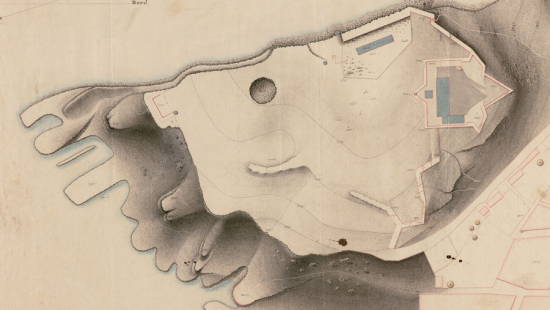
The accelerating transformation of the natural environment by humans suggests that the built environment is now becoming the context for ecosystems. It may no longer be possible to consider the built environment as merely asserting negative impact on the natural environment; instead, built and natural environments need to be equally considered as habitats for biodiversity. It now seems necessary to shift toward a non-anthropocentric model that favors the interaction of species with the built environment. On an urban scale, such efforts have long taken shape in the interdisciplinary work of urban ecology, yet on a building scale new methods are not yet clear. In light of shifts in ecological thinking, how can architecture develop to include the necessary insights, knowledge, concepts, and working methods? This symposium looks to further discussion about this changed culture of environment.
The symposium is organized jointly by the Cornell University Department of Architecture and the Oslo School of Architecture and Design Research Center for Architecture and Tectonics.
Michael Hensel, Oslo School of Architectural Design
Sustaining Sustainability: The Need for Alternative Approaches to Architectural Design and Sustainability
David Zeigler, Department of Biology, University of North Carolina
Living with Biodiversity
John Marzluff, School of Environmental and Forest Sciences, University of Washington
Sustaining the Connections Between Humans and Nature in Urban Ecosystems: a Bird’s Eye View
Birger Sevaldson, Oslo School of Architecture and Design
Expanding Contexts: A Strategy for Super-Complexity
Michael Hensel, Oslo School of Architecture and Design
Towards Non-anthropocentric Architectures
Richard Bonser, School of Engineering and Design, Brunel University
Biology, Biomimetics, and Buildings
Dana Cupkova + Kevin Pratt, Department of Architecture, Cornell University and EPYPHITE Lab
Green Negligée
Jonas Lundberg, Urban Future Organization, Chalmers University
Urban Stoichiometry
Cristina Díaz Moreno + Efrén García Grinda, Architectural Association and AMID.cero9Carnal and Mundane Assemblies: Third Natures
Claudia Pasquero + Marco Poletto, Architectural Association and ecoLogicStudio
cyberGARDENING the City
Closing Discussion
Moderators:
Jonathan Ochshorn, Department of Architecture, Cornell University
Richard Bonser is a reader in Design, School of Engineering and Design at Brunel University, Uxbridge, U.K. His postdoctoral research at Bristol, Manchester, and Oxford universities focused on the locomotory biomechanics of animals and root anchorage in tropical trees. In 1998 he became senior research scientist in biomaterials at Silsoe Research Institute, moving on to pursue a lectureship in biomimetics at the University of Reading in 2002. His current research focuses on developing novel and sustainable technologies, frequently involving inspiration from natural systems. He has successfully led research projects for numerous customers, including the European Space Agency, U.K. Sport, the European Union, and industry, and has published much of this work in leading international journals. As part of an €8m EU FP7 consortium grant, Bonser is currently working to develop a soft-bodied octopus-inspired robot. Bonser graduated from the University of Sheffield with a B.S. in zoology in 1990 and completed his a Ph.D. in the mechanics of biological materials at the University of Bristol in 1993.
Mark Cruvellier worked in New York City for several years analyzing some of the city's tallest and most slender buildings, and then in Vancouver on several unusual bridge designs. His interests and areas of expertise include tall building structures, bridge design, and the development of pedagogical materials for structures in the context of architecture. He has recently coauthored the textbook, The Structural Basis of Architecture (Routledge, 2011) together with colleagues Bjorn Sandaker and Arne Eggen of the Oslo School of Architecture and Design. At Cornell University since 1991, Cruvellier regularly teaches classes on fundamental structural concepts and the design of structural systems. He is the chair of the Department of Architecture and previously its interim chair from 1998–2001 and 2006–09. He earned his Ph.D. at McGill University, specializing in the computer modeling of tall buildings.
Dana Cupkova is a principal of EPIPHYTE Lab, an architectural research and design collaborative. Her current academic research is focused on ecologically adaptive component systems and their cultural and socio-political effects. Her work focuses on embedding the methods of contemporary fabrication technology and discreet energy harvesting systems into architectural design through a better understanding of computationally-generated geometry and its responsiveness to particular climactic conditions and has been supported by the Architectural Foundation's Arnold W. Brunner Grant and Cornell University Faculty Innovation in Teaching Grant. Since 2001, Cupkova has directed DCm-STUDIO, an architectural design practice. She received a Dipl. ING. ARCH. from the Faculty of Architecture and Urban Design at the Slovak Technical University in Bratislava and M.Arch.2. from the School of the Arts and Architecture at UCLA, where she was awarded the Unrestricted University Fellowship, the Mimi Perloff Award, and the Kate Neal Kinley Memorial Fellowship for outstanding design work.
Cristina Díaz Moreno and Efrén García Grinda are architects and cofounders of the Madrid-based office amid.cero9. Since 2009 they have been unit masters, Diploma 5, in the Architectural Association School of Architecture in London and regular contributors to El Croquis. Since 1998 they have taught at both Escuela Técnica Superior de Arquitectura de Madrid and Universidad Autónoma de Madrid, and are also visiting lecturers at Cornell University, École d’Architecture Paris-Malaquais, ESARQ, EPSA, and Universität Hannover. They have received more than 30 prizes in national and international architecture competitions and have participated in the Biennale di Venezia d’Archittetura in 2010, 2004, 2002, and 2000, the Museum of Modern Art MOT Tokyo in 2012, 2011, and 2008, other events such as the London Architecture Biennale, Bienal de Montevideo, Biennale of Sevilla, MUSAC, Oslo Triennale, CCS (Paris), Biennale of Sao Paulo, Biennale of Chile, and ArchiLab among many others. Their projects and writings have been extensively published in magazines, catalogues, books, and specialized publications.
Michael Hensel is currently a professor of architecture at the Oslo School of Architecture and Design where he directs the Research Centre for Architecture and Tectonics. He is a founding member of OCEAN (1994), founding chairman and board member of the OCEAN Design Research Association (2008) and SEA – Sustainable Environment Association (2011). He is currently a board member of the Biomimetics Network for Industrial Sustainability (2007) and editorial board member of AD Wiley. Previously, he has taught at the Architectural Association School of Architecture in London (1993–2009), where he codirected the Emergent Technologies and Design Program (2001–09). Forthcoming publications include: Michael Hensel and Mehran Gharleghi Ed., Iran – Past, Present and Futures (AD Wiley 2012); Michael Hensel Ed., Design Innovation for the Built Environment – Research by Design and the Renovation of Practice (Routledge, 2012); AD Primer – Performance-oriented Design (AD Wiley, 2012).
Jonas Lundberg is the director of Urban Future Organization Gothenburg, which has won numerous awards and has exhibited and published worldwide. Lundberg is a visiting lecturer at Chalmers University, unit master, Diploma 16, at the Architectural Association School of Architecture, London, and is the head of Digital Design at the Faculty of Architecture and Spatial Design at London Metropolitan University, London, where he is running the Master of Architecture and Digital Design Systems course. Lundberg won the RIBA Tutor of the Year prize in 2003. His current on-going research project Environmental Catalysts in collaboration with Steven Hardy is attempting to develop new holistic architectural design strategies and propositions for how we can live, mitigate, and adapt to climatic change, dwindling resources, pollution, and the consequential natural disasters through innovative use of digital design and fabrication technology in the design of increasingly resilient urban built environments.
John Marzluff is professor of Wildlife Science at the University of Washington. His current research brings a behavioral approach to pressing conservation issues including raptor management, management of pest species, and assessment of nest predation. His books, In the Company of Crows and Ravens with Tony Angell (Yale University Press, 2005), Dog Days, Raven Nights with Colleen Marzluff (Yale University Press, 2011), and Gifts of the Crow (2012 Free Press) blend biology, conservation, and anthropology to describe the cohabitation of human and animal cultures. He is a member of the board of editors for Acta Ornithologica, Landscape Ecology and Ecological Applications. He has edited Avian Conservation: Research and Management (1998, Island Press), Avian Conservation and Ecology in an Urbanizing World (Kluwer Academic Publishers, 2001), Radiotelemetry and Animal Populations (Academic Press, 2001), Urban Ecology: An International Perspective on the Interaction Between Humans and Nature (Springer, 2008), and Perspectives in Urban Ecology (Springer, 2011). He is currently leader of the U.S. Fish and Wildlife Service’s Recovery Team for the critically endangered Mariana Crow, a member of the Washington Biodiversity Council, and a fellow of the American Ornithologist's Union.
Jonathan Ochshorn is a registered architect with an academic background in structural engineering and urban design as well as architecture. Prior to joining the faculty at Cornell University in 1988, he taught at City College of New York while serving as associate director of the City College Architectural Center, a research center supplying technical assistance to community groups in New York City. Since 1976, he has practiced architecture and urban design in New York and California. His publications include studies on energy loss through tapered insulation, as well as the political and economic underpinnings of sustainable building. He is the author of Structural Elements for Architects and Builders (Butterworth-Heinemann, 2010) and has developed several interactive computer programs, many of which are available online at no cost. Ochshorn teaches in the areas of construction technology and structures, and offers an elective course focusing on the science and politics of green building.
Claudia Pasquero and Marco Poletto are the cofounders of ecoLogicStudio, an architectural and urban design practice located in London. ecoLogicStudio’s method is defined by the combination and integration of systemic thinking, bio- and socio-logic research, and algorithmic design and prototyping. ecoLogic has developed prototypes and installations for the several Architectural Biennales, including Venice in 2008 and 2010 (STEMv3.0 the lagoon experiment, the ecological Footprint grotto), Seville (STEMcloud), Istanbul (Fibrous room) and Milan Fuorisalone (Aqua Garden). ecoLogic runs international workshops and cultural activities like the Architectural Machines Symposium at the AA in 2009, the Fibrous Structures workshop, Prototyping the city in Turin and the new AA Italy Visiting Program in Milan. The work of ecoLogicStudio has featured in many international architectural books and magazines and will be collected in the forthcoming Systemic Architecture: Operating Manual for the Self-organizing City (Routledge). Pasquero and Poletto are currently unit masters at the Architectural Association and visiting master tutors at the IAAC Barcelona.
Kevin Pratt is a registered architect in the state of New York with 13 years of experience as a researcher and designer and is a principal of the multidisciplinary design and research practice EPIPHYTE Lab. He is expert in the use of computational technologies and their application to the process of sustainable design. In addition to Cornell University, Pratt has been a visiting critic and lecturer at the University of Pennsylvania. He received his bachelor’s in architecture (Magna Cum Laude) from Columbia University and an M.A. from the Environment and Energy Programme at the Architectural Association in London.
Jenny Sabin is assistant professor in design and emerging technologies in the Department of Architecture at Cornell University. Her work is at the forefront of a new direction for 21st century architectural practice—one that investigates the intersections of architecture and science, and applies insights and theories from biology and mathematics to the design of material structures. Sabin taught design studios and seminars in architecture at the University of Pennsylvania from 2005 to 2011. She is principal of Jenny Sabin Studio, an experimental architectural design studio based in Philadelphia. She is cofounder of LabStudio, a hybrid research and design network, together with Peter Lloyd Jones. She was a founding member of the Nonlinear Systems Organization, a research group started by Cecil Balmond, where she was senior researcher and director of research. Sabin holds degrees in ceramics and interdisciplinary visual art from the University of Washington and a master’s of architecture from the University of Pennsylvania where she was awarded the AIA Henry Adams first prize medal and the Arthur Spayd Brooke gold medal for distinguished work in architectural design, 2005. Sabin was recently named a USA Knight Fellow in Architecture, one of 50 artists and designers awarded nationally by U.S. Artists.
Birger Sevaldson is a professor at the Oslo School of Architecture and Design and chairman of the OCEAN Design Research Association. His research and publications focus on systems oriented design, creativity, and research by design. He is trained as an interior architect and furniture designer and has practiced in architecture and interior design, furniture and industrial design, and art. He is a member of the council of the Design Research Society and has developed research that focuses on advancing systems oriented design thinking and practice in order to meet the increased challenges of globalization and the need for sustainability. He has a Ph.D. in creative design computing and has been researching systems thinking in design for the last 10 years.
David Zeigler is currently professor and chair of the Biology Department at the University of North Carolina at Pembroke (UCNP). He has held three non-tenure teaching positions in Wisconsin, Pennsylvania, and Texas prior to receiving tenure at UNCP. He has taught a number of courses including Zoology, Invertebrate Zoology, Parasitology, Animal Behavior, Evolution, Evolutionary Zoology, and Marine Biology. He holds interests in evolution, parasitology, the nature of science, phylogeny, biodiversity, and cognitive science. He authored the book Understanding Biodiversity (Praeger, 2007) and is currently working on another book about evolution. He received his M.S. and Ph.D. from the University of North Texas in entomology and ecology doing his research in insect communication.
Dates |
February 3, 2012 – February 4, 2012 |
location |
Abby and Howard Milstein Auditorium, Milstein Hall |
contact |
Melissa Constantine
|
Related links